

Audio By Carbonatix
The International Monetary Fund (IMF) has called for stronger governance and transparency in Ghana’s Domestic Gold Purchase Programme (DGPP), warning that the financial costs of the scheme have contributed to pressure on the Bank of Ghana’s (BoG) balance sheet.
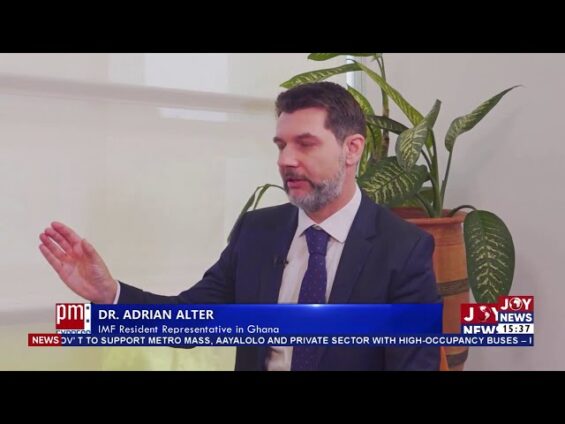
The IMF Resident Representative in Ghana, Dr Adrian Alter, said the programme had generated significant losses for the central bank, contributing to a deterioration in its financial position. He noted that the BoG’s equity stood at about 7% at the end of 2025, with the Domestic Debt Exchange Programme (DDEP) and the DGPP among the factors behind the deterioration.
Speaking to Channel One TV on Monday, August 24, Dr Alter acknowledged the important contribution of gold to Ghana’s recent economic recovery.
He said stronger gold export earnings had helped support the cedi, improve foreign exchange inflows and enable the country to rebuild its international reserves.
However, he cautioned that the benefits of gold-related activities should not obscure the costs and risks associated with the programme.
Dr Alter said the experience with the DGPP underscored the need for greater scrutiny of how such programmes are designed and implemented.
“The lessons from the Domestic Gold Purchase Programme are also that we need to be careful about governance, transparency, reporting, and care about the costs incurred by the programme,” he said.
He also raised concerns about the involvement of the central bank in what he described as quasi-fiscal activities, warning that such operations could weaken its balance sheet and potentially undermine its ability to maintain price stability.
According to him, a financially weakened central bank could face difficulties absorbing the costs associated with monetary and exchange-rate stabilisation operations.
The IMF representative further stressed the importance of preserving the independence of the BoG and avoiding fiscal dominance, arguing that the central bank should not be used as a source of financing for government entities.
He said government should instead rely on financial markets and commercial banks when it needs to raise funds.
Dr Alter noted that the gold purchasing and selling functions previously undertaken through the BoG had since been transferred to the Ghana Gold Board (GoldBod), effectively separating the activities from the central bank’s core mandate.
His comments come after an IMF assessment indicated that the DGPP was associated with losses of about GH¢22 billion, equivalent to approximately US$1.7 billion, in 2025.
Latest Stories
-
NPP’s new executives will not alter our 2028 preparations – Tanko-Computer
20 minutes -
Tema East MP urges men to take active role in breast cancer awareness
25 minutes -
Hawa Koomson vows to bring experience and maturity to NPP women’s wing
29 minutes -
Opare Addo cautions NDC against adopting NPP’s aggressive politics
31 minutes -
NPP has 35 months to prepare for 2028 after early reorganisation – Political strategist
36 minutes -
All six passengers presumed dead after plane went missing off US coast
47 minutes -
Teachers’ promotion arrears to be paid by Oct. 30 – Education Minister
55 minutes -
Stop talking too much on stage – Kafui Dey warns MCs
1 hour -
Government has Ho, Volta Region at Heart — Warlord of Asogli
1 hour -
Mahama reaffirms commitment to Volta development at Asogli Te Za
1 hour -
REGSEC orders immediate demolition of fire-ravaged building at Koforidua Jackson Park
1 hour -
Ambassador Boateng congratulates new NPP leadership, urges reconciliation, rebuilding
1 hour -
50 vetted to contest Effutu NDC executive positions
2 hours -
GACL enhances security screening at Accra International Airport
2 hours -
COCOBOD raises GH¢3.39bn at 11% in first Commercial Paper tranche
2 hours