

Audio By Carbonatix
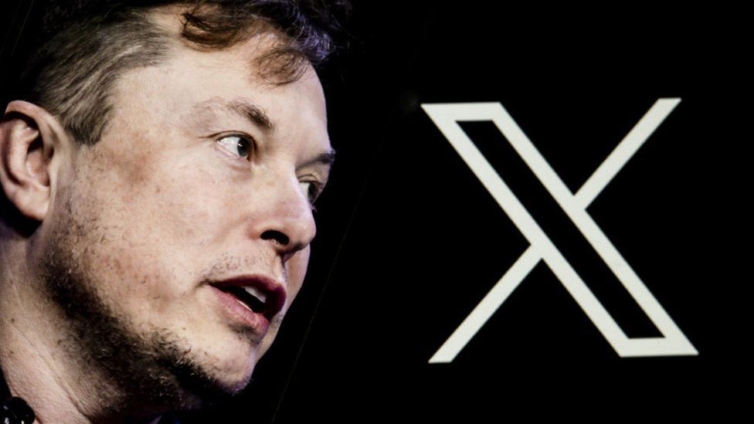
One of the most recognisable logos on the web, the tweeting blue bird, is no more. Will the black and white X replacing it prove to be a masterstroke or a branding disaster?
When Jean-Pierre Dube saw the news that billionaire Elon Musk was scrapping Twitter's logo in favour of an Art Deco-style X, the marketing professor thought it was a joke.
"Why take a recognised brand, with a lot of brand capital around it and then completely throw it away and start from scratch?" said Prof Dube, who teaches at the University of Chicago Booth School of Business. "In the short-term, it seems weird."
But in the long term, could it work?
Mr Musk's takeover of Twitter last year has been punishing for the social media platform.
Advertising revenue has dropped by half, Mr Musk said this month, as big brands pulled back, wary of changes he has made, including how the firm handles verified accounts and moderates content. Abrupt layoffs and unpaid bills have also led to bad press and lawsuits.
Estimates by Fidelity, which has a stake in the company, suggest it is now worth just a third of the $44bn ($34.3bn) that Mr Musk paid for Twitter in October.

Consultancy Brand Finance recently estimated that the firm's brand was worth $3.9bn, down 32% since last year - a fall it attributed to Mr Musk's "aggressive business approaches".
Research suggests that rebrands can pay off - particularly if a firm is in trouble or wants to change direction, said Yanhui Zhao, a professor of marketing at the University of Nebraska Omaha.
His review of 215 rebranding announcements by publicly listed companies found that more than half of those businesses saw positive returns after they rebranded.
That means Mr Musk's moves could be timely, he said, noting the multi-billionaire's ambition to transform Twitter into an "everything app" similar to China's WeChat, a social messaging service on which users can send money, hail taxis, book hotels and play games, among other functions.
"This is a much needed rebranding because of the strategic re-direction of Twitter," he told the BBC, by email.
But success becomes less likely when a company is in turmoil, warned Shuba Srinivasan, marketing professor at Boston University's Questrom School of Business. She said it was an especially risky move, given all the social media competitors, such as Mark Zuckerberg's Threads, rushing to fill Twitter's role.
"The rebranding is likely to confirm the fear of many Twitter users that the acquisition by Musk signalled the end of the Twitter they knew," she said.
Nor is it clear that a rebranding addresses Twitter's problems - many of which stem in part from Mr Musk, Prof Dube said.
"I didn't think there was a brand problem and brand identity problem as much as a leadership problem," he said.
In a May interview with satire site, The Babylon Bee, Mr Musk previewed the change, saying he thought he needed to "broaden the branding for Twitter" to help him succeed at pushing the company beyond the short text posts that made it famous.
But some analysts said that the potential of this vision being successful faces long odds.
In June, advisory firm Forrester Research published a report called "The super app window has closed," which argued that tech giants such as Google and Apple currently offer super app-like functions to billions of users in the US and Europe, while tough regulatory hurdles and fierce competition limits opportunities for others.
It noted that WeChat, the example that has been cited by Mr Musk, became dominant in China early, before other payment services emerged - and in part as a result of technical issues, such as limited phone memory, which discouraged downloading multiple apps.
"While Musk's vision is to turn X into an 'everything app,' this takes time, money, and people - three things that the company no longer has," Mike Proulx, a research director at Forrester, wrote after Mr Musk's announcement, adding that he thought the firm would shut or be be bought out in the next 12 months.
Even if Twitter's core users in media, politics and finance stay loyal, as they have in the past, making X successful would require participation from a far broader user base - no small challenge, said Harvard Business School professor Andy Wu.
But he added that, Twitter faced difficulties before Mr Musk's takeover and would benefit from some risk-taking.
"We can debate whether those changes are in the right direction, but Twitter does need changes," he said.
Latest Stories
-
GPRTU wants full TRAFFITECH-GH implementation to start in 2027
6 seconds -
Mahama announces plans to import electric wheelchairs for PWDs
4 minutes -
KGL U17 Colts 2026: Western beat Prempeh Elite Academy to set up final final with Greater Accra Region
23 minutes -
Late Solanke strike salvages 10-man Spurs draw at Man United
33 minutes -
Gender Ministry to monitor welfare of Nana Akua Addo’s children amid domestic violence case
39 minutes -
Benedict Okyere Yeboah: Ghana’s football problem goes beyond sacking a coach
49 minutes -
GPL 2026/27: Darkwah Wiafe’s winner sees All Blacks beat Kotoko
54 minutes -
ITF World Tour : Patel Wins Boys’ Singles Final at J100 Accra
1 hour -
Ghana must pursue BRICS partnership if it brings economic benefits – Kpebu
1 hour -
Success and Wright Claims J100 Accra Girls’ Doubles Championship
1 hour -
ITF J100: America’s Wright wins J100 Accra Girls’ Singles Title
1 hour -
Expedition hopes to find aviator Amelia Earhart’s plane on remote island
1 hour -
US seeks changes to rejected $109m health compact with Ghana – Mahama
2 hours -
Nine dead in mass shooting at Pennsylvania home
2 hours -
‘Time for Ukraine to get new president,’ says Trump after Zelensky condemns diesel deal
2 hours