

Audio By Carbonatix
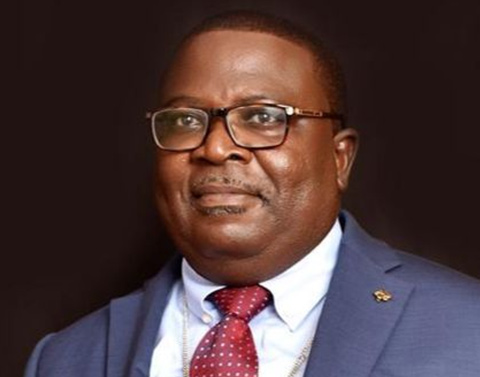
The President of the Chartered Institute of Taxation Ghana, George Kwatia, has advised government to close the tax gap by investing in existing tax laws rather than introducing new levies.
According to him, the introduction of new taxes and increases in levies without a corresponding increase in the country's Gross Domestic Product is counter-productive.
Speaking on a Joy Business discussion themed, “Ghana’s High Taxes; the causes and finding remedies”, Mr. Kwatia said a cursory look at the budget shows that shortfalls in projected revenue could be blamed on increased taxes when economic growth is low.
According to him, increasing and introducing new taxes without an assessment of growth projection will always create a gap that may lead to revenue gaps.
“If you look at total tax revenue, I have mentioned that in the revised one for 2023, government is only looking at ¢108 billion, while we have a tax gap of about ¢55 billion to ¢70 billion”, he said.
Mr. Kwatia explained that new taxes do not necessarily guarantee an increase in taxes particularly when economic activities are not encouraging in the private sector.
Providing some recommendations, he called for investments in existing taxes to close the gap between formal workers who pay majority of taxes and players in the informal economy.
“If you really are a country that wants to invest and make sure that you will get the right taxes, let me remind you it is not about more taxes, but is rather about investments into making sure that we close the tax”.
He maintained that effectively closing the tax gap will not only improve revenue collection but will strengthen the tax administration system.
Speaking on the same show, Economist at the Institute of Statistical Social and Economic Research (ISSER), Prof. Charles Ackah said government must find a better way of taxing the informal economy where much income is generated but unaccounted for.
Citing an example, Prof. Ackah revealed that there are more workers in the informal sector earning more than university lecturers, and yet pay no income taxes.
Such a development, he said is a disincentive to the few in the formal economy who pay taxes to the government.
“There are barbers in Ghana who earn more than ¢5,000 a month and yet they are not taxed. Compare that to a nurse or a teacher who earn less than that but is taxed. How can the system tax a cleaner at the university who earns about ¢800 and ignore a barber, a mechanic and all the informal workers who earn more”, he said.
Latest Stories
-
Skytrain Trial: Court rejects Ameyaw Ekumfi’s bid to halt proceedings
4 minutes -
Aggrieved Gold Coast customers petition Mahama over GH¢3.6bn outstanding payments
9 minutes -
ECG loses about 27% of electricity through technical, commercial losses – Engineer
11 minutes -
Declare foreign currency before checking in luggage – Customs cautions travellers
18 minutes -
State of emergency is no ‘magic wand’ for galamsey – Lands Ministry
23 minutes -
Bringing 10 bags of clothes as gifts? Customs explains when duties may apply
24 minutes -
Precious Mawunya-ko appointed PRO for 5th Praise Achievement Awards
27 minutes -
Don’t let poor English define your potential – Prisons Service DG to Ghanaians
28 minutes -
GRIDCo’s operating profit plunges 89% despite net profit surge in 2025
30 minutes -
IGP summons Volta Police Commander over alleged extortion of traders on Aflao–Accra route
31 minutes -
Amin Adam: Gold programme lost money despite 62.9% rise in prices
33 minutes -
Amin Adam challenges GoldBod’s GH¢5.45bn surplus
42 minutes -
Ghana’s power sector losing 27% of electricity supplied – Electrical Engineer
46 minutes -
GH¢1.5m raised to renovate historic Wa Naa’s Palace
50 minutes -
‘Still a work in progress’ – Eric Tinkler admits Kotoko have plenty to improve
51 minutes