

Audio By Carbonatix
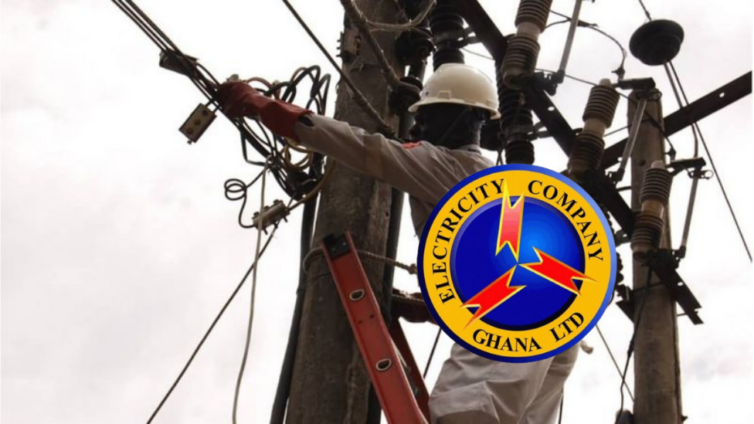
Electrical Engineer Hesford Quaye-Larbi has disclosed that the Electricity Company of Ghana (ECG) loses about 27 per cent of the electricity it receives for distribution due to technical and commercial challenges.
According to him, the losses have weakened ECG’s finances and affected its ability to meet payment obligations to independent power producers (IPPs) and other suppliers within the electricity value chain.
Speaking on the challenges confronting Ghana’s power sector, Ing. Quaye-Larbi said ECG was unable to collect revenue for all the electricity it sold to consumers.
“What ECG sells, it is unable to collect all the revenue. The system losses, which are both technical and commercial, also add up. As we speak, I think the loss is about 27 per cent,” he said on JoyFM's Super Morning Show on Tuesday, September 1.
He likened the situation to a business losing more than a quarter of the goods entrusted to it for sale.
“If you are given 100 goods to sell and 27 are lost, it means you have made losses,” he explained.
Technical losses occur as electricity travels through transmission and distribution infrastructure, while commercial losses may result from illegal connections, meter tampering, inaccurate billing and failures in revenue collection.
Ing. Quaye-Larbi said overloaded transformers and distribution lines were among the factors contributing to technical losses in the system.
He explained that when electricity demand exceeds the capacity of transformers and other infrastructure, pressure builds on the network and could lead to equipment failure, low voltage and power outages.
“If a transformer is overloaded, there are losses. The losses go back into the system, and that can trip the line,” he said.
Ing. Quaye-Larbi also identified illegal connections as a contributor to the sector’s difficulties, noting that they affect electricity generation, transmission and distribution.
He said ECG needed to reduce its losses and improve revenue mobilisation to generate sufficient funds to pay IPPs and other power suppliers.
“You need to collect the money to pay the IPPs and the power suppliers so that they can also generate. They are buying fuel to run their plants,” he stated.
The electrical engineer maintained that recovering a substantial portion of the estimated 27 per cent losses could provide resources to strengthen the power sector without necessarily increasing electricity tariffs.
He also called for greater investment in electricity infrastructure to create a robust distribution and transmission system capable of meeting growing demand.
Latest Stories
-
JoyNews’ Jacqueline Ansomah Yeboah selected for UK Media Excellence for Emerging Technology Fellowship
11 minutes -
Mental Health Alliance urges government to operationalise Mental Health Fund
26 minutes -
Ghana–Holy See agreement heads to Parliament after Cabinet approval
30 minutes -
Luv FM Corporate Games 2026: Kumasi Central Prisons, Amanfiman Bank win big amid fun
42 minutes -
WAFU B U17: Ghana top Group A after win over Togo
1 hour -
Ho Central Mosque reopens amid unresolved leadership dispute that led to closure
2 hours -
Minority caucus questions GH¢16.4m in Ablakwa’s SA evacuation spending, demands independent audit
3 hours -
Gender Ministry meets Nana Akua Addo’s husband over domestic violence after hospital discharge
3 hours -
UG Vice-Chancellor urges swift operationalisation of National Research Fund
4 hours -
Pope Leo to have surgery after lump found in lung
4 hours -
Joseph Cudjoe writes: Ghana must break free from the dangerous mindset that natural resources are the foundation for wealth
4 hours -
Children among 109 dead after boat capsizes off Djibouti, UN says
4 hours -
OmniBSIC Bank’s 11th health walk promotes fitness and business growth
5 hours -
2026 World Maritime Day: Danish Embassy organises “The Gulf of Guinea Speaks”
5 hours -
New Economy will tackle unemployment and restore hope – Ato Forson
5 hours