

Audio By Carbonatix
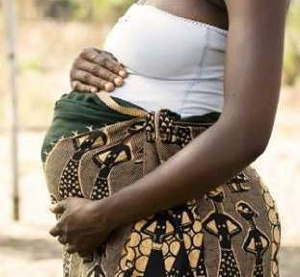
Statistics from the 2022 Ghana Demographic and Health Survey (GDHS) indicate that one in every 10 (10.9%) adolescent girls aged 15 to 19 years has had a live birth.
The survey carried out by the Ghana Statistical Service was to highlight challenges such as early marriage and childbearing, and deprivation of education that prevent young girls from reaching their full potential.
This was to mark the International Day of the Girl Child celebrated annually on October 11; this year’s theme is "Invest In Girls' Rights: Our Leadership, Our Well-being".
Findings from the survey indicate that;
The percentage of adolescents that have had a live birth increases with age, with 19-year-olds recording the highest rate of almost a quarter (23.8%).
In 10 out of the 16 regions, more than 10 percent of adolescents 15 to 19 years have had a live birth with the Bono East Region recording the highest, thus, one in every five (19.1%) girls in this age range have had a live birth.
The Savannah (17.5%) and the North East (17.5%) regions are tied for the second highest followed by the Ashanti Region (16.8%).
The Greater Accra Region (5.4%) has the lowest percentage and is the only region to record a figure less than half the national average.
The percentage of girls 15 to 19 years old that have had a live birth is almost twice in rural areas (14.4%) compared to urban (8.0%).
More than a quarter (26.5%) of adolescent girls with no education had had a live birth compared to 20.3 percent of those with primary education.
The percentage of girls with secondary education (8.6%) who had a live birth was less than half of those with primary or no education.
Adolescent girls in households in the lowest wealth quintile (17.5%) had the highest percentage with a live birth, more than four times the figure recorded for girls in the highest wealth quintile (3.7%).
Finally, about one in every 10 (9.1%) adolescents aged 15 to 19 years had been in a marital union during the 2021 Population and Housing Census: 5.5 percent were currently married, 3.2 percent were currently in informal unions or living with a partner, and 0.4 percent had formerly been married.
Latest Stories
-
Power restoration fault suspected in Kumasi Central Market fire
4 hours -
The 7-foot giant of Ngleshie Amanfro: Seven-foot Ghanaian Ephraim Saawa dreams of joining the national basketball team
5 hours -
Government promises support for Kumasi Central Market fire victims
5 hours -
Vibes The Movie: Big Ghun’s Ghanaian film earns five nominations at 2026 REFFA
5 hours -
MamaCare CEO warns unresolved conflicts among health workers could undermine maternal and neonatal care
6 hours -
Health professionals urged to translate medical knowledge into practice to save mothers
6 hours -
Conflicts among care providers linked to maternal, neonatal deaths – Expert
7 hours -
GIS marks 10th TIME conference, champions improved teaching practices
7 hours -
BRICS Or Balance? What Ghana’s bid really means
8 hours -
GPRTU wants full TRAFFITECH-GH implementation to start in 2027
8 hours -
How 10-mile walks for basic education birthed a 50-year legal career for Justice Korbieh
8 hours -
Mahama announces plans to import electric wheelchairs for PWDs
8 hours -
KGL U17 Colts 2026: Western beat Prempeh Elite Academy to set up final final with Greater Accra Region
9 hours -
Late Solanke strike salvages 10-man Spurs draw at Man United
9 hours -
Gender Ministry to monitor welfare of Nana Akua Addo’s children amid domestic violence case
9 hours