

Audio By Carbonatix
The Ghana Statistical Service (GSS) has reported that 2,087 children aged between 10 and 14 years are engaged in mobile business activities across the country.
The findings, contained in the Integrated Business Establishment Survey (IBES I), revealed that about 80 per cent of those involved were girls, raising concerns about child labour and school retention.
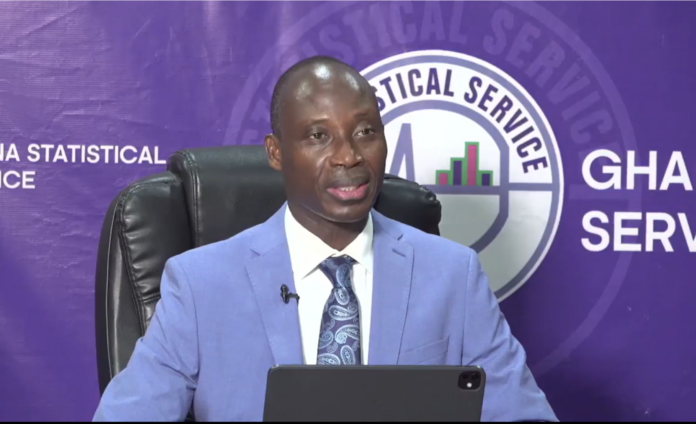
Presenting the findings in Accra on Thursday, Dr Alhassan Iddrisu, Government Statistician, said 14.7 per cent of children aged 10 to 14 owned the goods they sold, exposing them to risks and highlighting gaps in social protection.
“Social protection interventions can help reduce the economic pressures that lead to child participation in trading activities,” he explained.
Mobile businesses, defined as those operating without fixed locations, include head porterage, hawking and trading with motorised vehicles.
While they provide goods and services directly to households and communities, the Children’s Act (1998) and the Worst Forms of Child Labour Act (2020) prohibit exploitative child labour and mandate compulsory education.
The survey observed that 57 per cent of mobile traders earned less than GH¢100 per day, with more than one‑third working at least nine hours daily, creating household economic pressures that drew children into work.
Dr Iddrisu noted that mobile businesses contributed to the achievement of Sustainable Development Goals one, eight and 11 by providing income for vulnerable populations, promoting decent work and supporting inclusive urban planning.
He, however, expressed concern about children’s involvement, citing risks of lost educational opportunities, exposure to traffic and weather hazards, exploitation and early initiation into economic activities.
Dr Iddrisu urged government institutions to intensify enforcement of child labour laws and expand programmes supporting school attendance for vulnerable children.
He also encouraged agencies responsible for enterprise development to target youth engaged in mobile trading with vocational training, business development services and start‑up support.
Dr Iddrisu called on financial institutions to collaborate with authorities to provide micro‑credit, mobile savings schemes and digital payment tools tailored to informal businesses to support their formalisation.
The IBES I identified 2.64 million businesses operating nationwide, covering all regions and divided into 10,240 enumeration zones based on the 2021 Population and Housing Census.
Latest Stories
-
Amin Adam questions government bond pricing as short-term yields fall below inflation
41 seconds -
Five new telephony cell sites to be activated in October 2026 – Sam George
6 minutes -
Amin Adam raises sovereign-bank nexus concerns as banks hold GH¢190bn in government debt
11 minutes -
Government to increase Free SHS feeding allowance in 2027 Budget – Haruna Iddrisu
16 minutes -
Nadowli-Kaleo NCCE engages women’s groups on rule of law, corruption fight
17 minutes -
Mahama visits factories in Afienya/Tema
22 minutes -
TraffiTech-GH pilot reduces road crash injuries, fatalities
27 minutes -
IMF Chief identifies 2 major threats posed by AI to global economy
32 minutes -
Go back to the hand washing days – Ghanaians told
37 minutes -
GoldBod commits GH¢35m to reclaim galamsey-damaged Tano Nimri Forest Reserve
42 minutes -
Afenyo-Markin reflects on loneliness of public service, says survival is largely spiritual
49 minutes -
Achimota Court designated to handle petroleum diversion cases – NPA CEO
57 minutes -
Bekwai court jails mine worker 14 years for defiling 8-year-old girl
1 hour -
CHASS conference calls for collective action to tackle indiscipline in schools
1 hour -
Oil edges down as investors weigh possible US sanctions on ‘shadow fleet’
1 hour