

Audio By Carbonatix
A mental health advocacy organization, MindFreedom Ghana has identified the lack of financing as a major stumbling block in ensuring universal mental health coverage in the country.
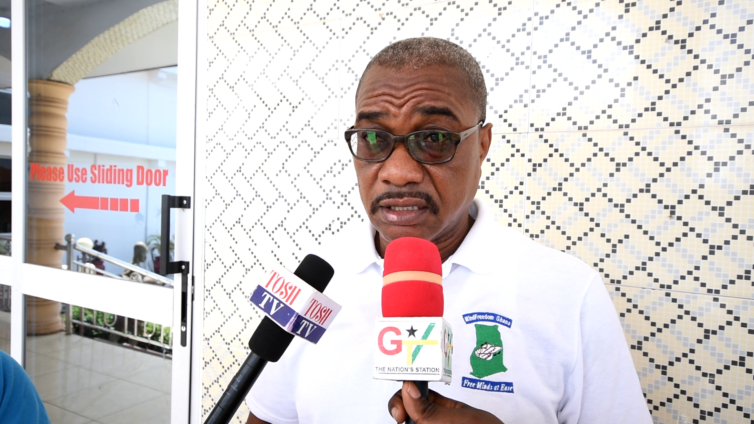
The Executive Secretary of MindFreedom Ghana, Dan Taylor indicated that though mental healthcare is free in Ghana, the lack of funding has made it practically impossible to fully treat mental health patients.
He made the remarks while speaking to the media on the sideline of a Mental Health Advocacy workshop, organized by his outfit in Ho.
He indicated that regardless of the fact that a Mental Health Fund was established, to finance mental healthcare, the fund is suffering a drought, as no proper source of raising money has been institutionalized.
He asserted that the lack of funding contributes to the continuous shortage of medication, and lack of facilities among other problems, leading to patients relapsing treatment, or not being able to access treatment.
“Mental health as a policy in Ghana is free, but currently because of a shortage of medication and other things [used] to treat, people have to buy. And there are those because of the poverty level, they are not able to buy, so relapse, they go back to their conditions”, he lamented.
Mr Taylor thus entreated the government to consider a proposal to tax public-sector workers monthly to raise money for the Mental Health Fund, to establish an effective healthcare system for mental health.
“To start with, 10pesewas should be deducted from the monthly pay of public workers in Ghana, and the number of public workers on the government payroll is about 250,000. Once we start from the public workers tangent, then gradually it will move to the private sector.
And of course, there are other suggestions that there should be some levies on alcohol and cigarettes used to feed the mental health fund”, he said.
He lauded the proposal to incorporate mental health into the National Health Insurance Scheme (NHIS) to enhance the treatment of mental health conditions.
Mr Taylor stressed that mental health conditions are treatable and hence persons identified to be having such conditions must be guided to access healthcare, be diagnosed, and be treated, so they integrate back into society.
“Mental health conditions are not spiritual and all of that, we need to diffuse that kind of thought and wrong perception. Stigma is another issue, as a family, we must not sack them. We must show that kind of love and concern for them.
I can tell you that there are incidents of people who have had mental health conditions, they were aggressive, they were violent, and all of that and they got the treatment. They were able to recollect all that happened or the way they were treated, they will tell you”, he stressed.
Latest Stories
-
Ghana Mineworkers Union demand suspension of contract mining directive, threaten industrial action
24 minutes -
ADB Ghana Medicals constructing and equipping new Cardiothoracic Centre at Komfo Anokye
31 minutes -
AFREIKH Summer School challenges Africa to harness critical minerals
41 minutes -
Government plans 2,000-acre pharmaceutical innovation park in Osudoku to boost local drug production
43 minutes -
Partey undergoes medical ahead of Al Shabab move in Saudi Arabia
45 minutes -
Today’s front pages: Friday, August 21, 2026
1 hour -
Power outages could drive up cost of digital services — NITA
1 hour -
Patients face basic sanitation gaps in West African health facilities — WHO / UNICEF
1 hour -
Competence has no age; let’s stop punishing new businesses
1 hour -
JoyNews Republic Bank Habitat Fair 2026 opens today at Achimota Mall
2 hours -
What Is Wrong With Us: The roads that keep counting our dead
2 hours -
MTN condemns recent xenophobic attacks on Ghanaians in South Africa
2 hours -
Philip Nai: What happens at your front desk can make or break your brand
2 hours -
Ghana’s mining deaths fall sharply, but Chamber insists ‘three deaths are too many’
3 hours -
Tatale Sanguli officials destroy expired food products, warn traders
3 hours