

Audio By Carbonatix
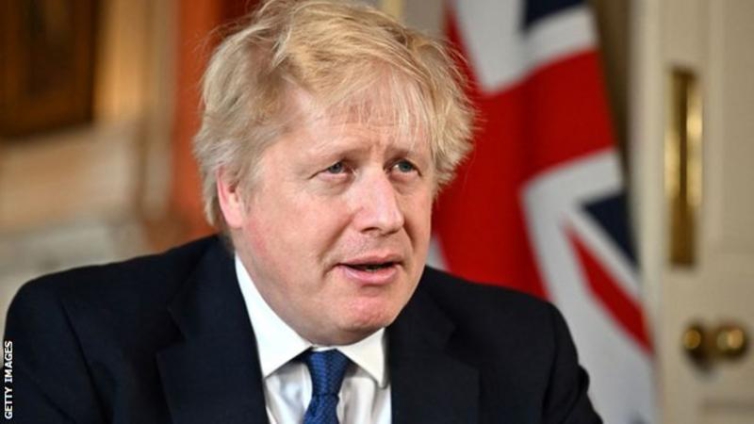
Boris Johnson has said he should have "twigged" the seriousness of Covid sooner, conceding earlier action could have been taken against the virus.
Giving evidence to the Covid inquiry, the former prime minister said he had underestimated the "scale and the pace of the challenge" posed.
But he said this was also true of scientists and the "entire Whitehall establishment".
And he insisted ministers did their "level best" in the circumstances.
In the first of two days of testimony, Mr Johnson sought to defend his record in office, which has come in for criticism from other witnesses who have given evidence to the inquiry.
He defended the timing of the first lockdown, saying that modelling had been incorrect and he had been advised not to impose measures too early.
He admitted to a "certain amount of incoherence in our thinking," but added: "Once we decided to act, I think it was pretty fast from flash to bang."
He began his testimony by saying he was sorry for the "pain and the loss and the suffering" people experienced during the pandemic.
His comments were interrupted by protesters, who were ordered to leave the inquiry room. Some members of bereaved families stood up holding pieces of paper, spelling out the message: "The dead can't hear your apologies."
Mr Johnson has been criticised for being slow to make decisions during the pandemic and being unable to make up his mind about what to do.
Over several hours of questioning by lead inquiry lawyer Hugo Keith KC he put in a measured performance, which largely lacked the tetchy exchanges seen during his grilling over Partygate by a committee of MPs earlier this year.
But the former prime minister had to take back an accusation that Mr Keith had suggested he "put his feet up" at his official country retreat during the 2020 February half-term, adding he had confused it with comments from someone else.
And he choked up when he described the return of the virus after the first national lockdown, describing 2020 as a "tragic, tragic year".
Mr Johnson defended his overall approach to the pandemic, adding that Covid had required "completely novel" measures and it was his job to "go through the arguments".
He added that people within government had collectively been reluctant to believe worse-case predictions about the impact of the virus, given the experience of previous diseases.
"It would certainly be fair to say of me, the entire Whitehall establishment, scientific community included, that we underestimated the scale and the pace of the challenge," he said.
He added that he was subsequently "rattled" by scenes of chaos in northern Italy in mid-February, when pictures of swamped hospitals hit the world's media.
"We should have collectively twigged much sooner. I should have twigged," he added.
Over more than five hours of testimony, he also:
- Said the gender balance of his team should have been better and "too many meetings were male-dominated"
- Admitted he had been unable to retrieve around 5,000 WhatsApp messages from his old phone between January and June 2020, blaming technical problems
- Denied deleting any messages, adding he had done "his best" to hand over all relevant evidence to the inquiry
- Said he regretted describing long Covid as "bollocks" in a handwritten note on a document from October 2020
- Conceded he should not have shaken hands with patients during a hospital visit in March 2020, adding he should have been more "precautionary"
He added, however, that given what is known now, mass gatherings should have been stopped earlier than they were.
"With hindsight, as a symbol of government earnestness rather than just being guided by the science, we should perhaps have done that," he said.
He also defended his decision to keep Matt Hancock as health secretary, despite being urged to sack him by his former adviser Dominic Cummings, telling the inquiry he considered him a "good communicator".
WhatsApp messages
He rejected suggestions that expletive-laden WhatsApp messages between his advisers revealed by the inquiry showed a "toxic" culture in his Downing Street operation.
The language in the messages reflected the "deep anxiety" of people doing their best, he said.
He added it also showed that the people around him were "naturally self-critical, and critical of others," adding that this was "creatively useful" when it came to making decisions.
And he revealed that he had spoken to former civil servant Helen MacNamara, who has previously accused him of failing to tackle "misogynistic language" used about her in a WhatsApp group by Mr Cummings.
"I don't remember seeing it at the time, but I must have seen it because I was on the group," he told the inquiry.
"I have rang Helen MacNamara to apologise to her for not having called it out."
Latest Stories
-
President Mahama ends Resetting Ghana tour of Ahafo Region
1 hour -
African negotiators seek delivery of climate commitments at COP31
1 hour -
BoG develops AI rules for financial sector
1 hour -
‘Big Push’: Government assures contractors of prompt payments
1 hour -
Court fines miner for breaking into gold buying shop
1 hour -
Tarkwa court jails labourer for three years over GH¢123,000 theft
2 hours -
GAEC must retain nuclear scientists for Ghana’s nuclear ambitions – Minister
3 hours -
Man reportedly mistaken for game and shot by hunter dead in forest
3 hours -
19-year-old mason jailed 15 years for defiling seven-year-old pupil
3 hours -
Ghana’s banking sector assets rise 20.47% to GH¢500.2bn – BoG Governor
3 hours -
22 injured as Sprinter bus overturns at Sege after tyre burst
3 hours -
UN housing expert urges Ghana to strengthen Rent Control Department amid housing affordability concerns
3 hours -
Delta-BCI partnership reaches 166,000 people with breast cancer education
3 hours -
Power restoration fault suspected in Kumasi Central Market fire
9 hours -
The 7-foot giant of Ngleshie Amanfro: Seven-foot Ghanaian Ephraim Saawa dreams of joining the national basketball team
9 hours