

Audio By Carbonatix
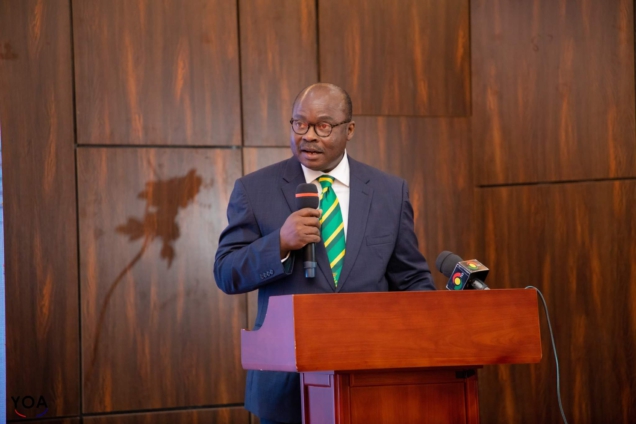
The Governor of the Bank of Ghana, Dr. Ernest Addison, has stated that his administration started with a robust fiscal stance as the central bank financing from 2017 through to 2019 and 2021 was zero, even though the Bank of Ghana Act pegged it at 5% of the previous year’s tax revenue.
According to him, this pushed inflation down quickly.
Therefore, he added, the monetary policy rate also came down, and growth rebounded strongly, alluding that “This was the context for the first three years of the current administration”.
Furthermore, the Governor said on the sidelines of the ECCB 40th anniversary and Central Banking Autumn meetings in Saint Kitts and Nevis that “The early stages of the Covid-19 crisis also seemed manageable, growth was robust, but debt built up and restructuring was a challenge. The Bank of Ghana also engaged in monetary financing at a time when many central banks adopted accommodative policies.”
He mentioned that it was difficult to finance the government before the Covid-19 pandemic as “Prior to that, we had not done any monetary financing, that is financing of the budget had been zero”.
Providing financing support to government was not easy
Therefore, providing financing support to the government, he pointed out, was not an easy transition for the Central Bank to make.
“We had some good discussions going into it. The Finance Minister [Ken Ofori-Atta] went to Parliament and requested for a suspension of the Fiscal Responsibility Act due to the pandemic. This enabled us to trigger emergency provisions in the Bank of Ghana Act to provide exceptional financing for the government budget. And that’s what we did.”
“For me, it was a big reawakening, because I did not foresee that the Central Bank would be drawn into budget financing. But, given global developments, especially with central banks in advanced economies, it seemed like monetary accommodation of fiscal policy to meet Covid expenditures had become part of the norm.”, he noted.
In addition, the Governor said, the International Monetary Fund itself allocated additional SDRs, which are assets held by central banks, and designated these SDRs to help governments meet their Covid expenditures.
This meant the central bank could automatically lend on these additional resources to meet the needs of the budget, adding, this changed the psyche – having to on-lend IMF resources plus triggering the emergency provisions to provide central bank financing to the budget. This was difficult for me.
“Even in 2021, the government was able to successfully issue nearly $3 billion in debt. That helped to ensure the central bank didn’t have to provide financing", he concluded.
Latest Stories
-
Unauthorised drone flights banned at Manhyia Palace
23 minutes -
Aksa bribery scandal: Ghana’s probe must be pursued with speed – Dafeamekpor
39 minutes -
Samson’s Take: When religion threatens peace, sanity must prevail
1 hour -
Friendship: Why time matters less than continuity
1 hour -
Africa’s AI moment: They say data is the new gold. But who is drilling it?
1 hour -
Ghana delivers strong performance in retail market in half-year; value up 15.6% – Maverick Research
1 hour -
The world’s oldest president left for a ‘brief stay’ in Europe. He hasn’t returned in two months
2 hours -
Parliamentary committee commends GIPA’s investment drive, backs key reforms
2 hours -
Livestream: Newsfile discusses AKSA energy deal, legal vacation and GoldBod losses
2 hours -
Jason Arday: 10 things you may not know about British-born Ghanaian former Cambridge professor found dead at 41
4 hours -
KNUST partners with government to manufacture locally-made agricultural machines and smart traffic lights
5 hours -
Government to add constitutional referendum to 2027 District Assembly elections
5 hours -
Ambassador Nancy Sam meets South Africa’s Thanda to strengthen Africa tourism collaboration
6 hours -
Government disburses GH¢23.1 billion to clear road contractors’ arrears – Roads Minister
6 hours -
NPP Ashanti elections: 1,020 delegates to choose 11 regional executives
7 hours