

Audio By Carbonatix
On 30th January, 2024, the Court of Chancery of the State of Delaware delivered a 200-page post-trial opinion, in a stockholder derivative action, Tornetta v Musk, invalidating Elon Musk’s $56 billion performance-based equity compensation plan at Tesla, Inc.
In an immediate reaction, Musk posted on X thus: “never incorporate your company in Delaware.” He followed it up two weeks later with an announcement that SpaceX had moved its state of incorporation from Delaware to Texas. He advised companies to move from Delaware to “another state as soon as possible.”
Delaware is the second smallest state in the United States and yet about 1.9 million legal entities and 68% of Fortune 500 companies are incorporated there. In 2022 alone, approximately 79% of all initial public offerings (IPOs) in the U.S. were registered in Delaware. This is not mere happenstance.
Prior to Delaware’s emergence, New Jersey was the standard-bearer with the adoption in 1896 of “the first modern liberal corporation statute,” under which the “trusts” (corporations operating as consolidated or holding companies) such as Standard Oil Company, operated.
By removing limits on the size and powers of business entities, New Jersey saw increased revenue which incentivized other states to follow suit. Delaware “seeking new sources of revenue, copied very largely from the New Jersey act to establish its own statute.”
When New Jersey under the leadership of then Governor Woodrow Wilson passed the Seven Sisters Act in 1913, with its antitrust legal burdens, Delaware “took the lead at that time and has never lost it.”
Owing to its Delaware General Corporation Law (DGCL), a legislature that gives pride of place to matters affecting businesses, an unwritten but willing collaboration between its lawmakers and the Corporation Law Section of the Delaware Bar Association and an efficient Secretary of State’s office, Delaware has cemented its place as the go-to place for business formation in the U.S.
Perhaps, the greatest attraction has been the unique Chancery Court system which some opine cannot easily be replicated elsewhere. Dating back to 1792, the Court took a cue from Norman England to limit its function to matters of equity as distinguished from issues of law and operated without jury participation. The Court system fields judges who have “familiarity with complex business transactions and insight into the inner workings of corporations.”
The former Chief Justice of the United States Supreme Court, William Rehnquist, is on record to have declared that “the Delaware state court system has established its national pre-eminences in the field of corporation law…”
Interestingly, it is said that the Delaware courts, with the exception of take-overs, are not awash with litigation. However, if like Elon Musk, you do find yourself in the Chancery Court, depending on what took you there, you may well be confronted with doctrines such as the duty of care, indemnification, directors’ and officers’ insurance, and the business judgment rule. You may also encounter the duty of loyalty, corporate waste, enhanced scrutiny, and the entire fairness standard, among others.
In Delaware, directors usually get the benefit of the business judgment rule if they properly exercise their duty of care – “on an informed basis, in good faith and in the honest belief that the action taken was in the best interest of the company.”
Duty of loyalty impinges on interested corporate actions and specific impositions by law on the discretion of directors. It calls up situations where directors or controlling shareholders have “personal financial interests that affect the continuous existence or identity of the company.”
If a majority of the board is interested or will receive a material benefit, a director has financial incentive adverse to the company, a conflicted director controls or dominates the board or a director appears on both sides of the transaction, the entire fairness standard may be triggered.
Before then, the plaintiff carries the burden of proving that entire fairness is warranted. If the plaintiff discharges the burden, the burden of proof shifts to the defendants to prove that the transaction was entirely fair. If the defendants succeed, the burden shifts back to the plaintiff.
Fairness in this sense covers fair dealing (timing, initiation, structure, negotiation, disclosure, how approval was obtained etc.) and fair price (assets, market value, earnings, future prospects, the effect on the value of the company’s shares, etc.).
To discharge their burden, the defendants (usually the directors or controlling shareholders) must prove that “the transaction was approved by a special committee of independent directors or by an informed vote of the majority of the disinterested shareholders,” wielding real bargaining power “at an arm’s length.”
In the opinion of the Court, Musk’s $56 billion package, which was 250 times larger than a contemporaneous median peer package and 33 times larger than the plan’s closest comparison, failed the entire fairness test because Musk dominated the process that led to the board approval and the shareholder votes were not “informed” seeing as “the proxy statement inaccurately described key directors as independent and misleadingly omitted details about the process.”
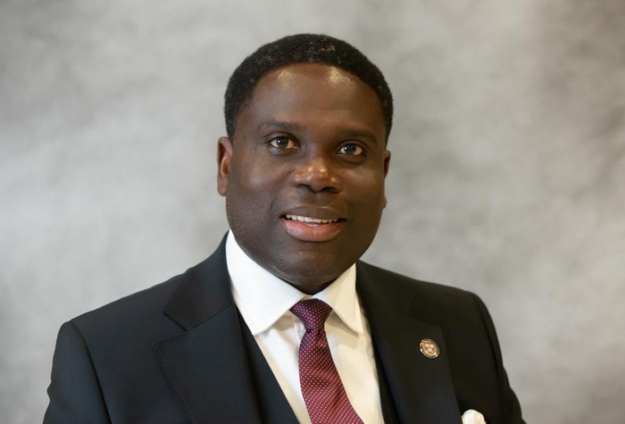
The writer is the Senior Partner at Clegg & Prempeh, a law firm in Accra, Ghana. He is admitted and licensed to practice as an Attorney & Counselor-at-Law (New York State) and is also a Barrister and Solicitor of the Supreme Court of Ghana. He holds a Master of Laws (LL.M.) degree in Corporate Law, Finance & Governance (Harvard Law School) with cross-registration in Boards of Directors & Corporate Governance (Harvard Business School)
Latest Stories
-
Founder’s Day: We face forward, but are we moving?
4 minutes -
Sheenah Naturals unveils Akuaba Collection at Beauty Inside Out Conference
13 minutes -
T-bills: 91-day, 364-day yields to trade slightly higher in second half of 2026
18 minutes -
Black Stars: It’s our decision to leave Kudus to recover – Queiroz
43 minutes -
Sammy Gyamfi backs Mahama’s directive to restore NACOC’s at ports
46 minutes -
Queiroz provides insight into Kudus’ decision to withdraw from Black Stars squad
57 minutes -
I’m not changing after 47 Years – Queiroz fires back at critics
1 hour -
Nkrumah Never Dies: Celebrating the visionary who awakened a continent
2 hours -
Hassan Ayariga calls for Ghanaian ownership in strategic investment deals
2 hours -
Black Stars: Thomas-Asante receives late call-up for September-October games
3 hours -
NPP Techiman South demands immediate release of detained Nurse Salomey Awiti Baffoe
3 hours -
‘Let’s stop the politics’ — Dafeamekpor calls for united fight against drug trafficking
3 hours -
Chief Justice Baffoe-Bonnie leads new 11-member Council for Legal Education and Training Board
3 hours -
Decades of silent diplomacy: Baba Issifu Kamara at 70
4 hours -
30% transport fare hike still on the table, talks resume Tuesday – GPRTU
4 hours