

Audio By Carbonatix
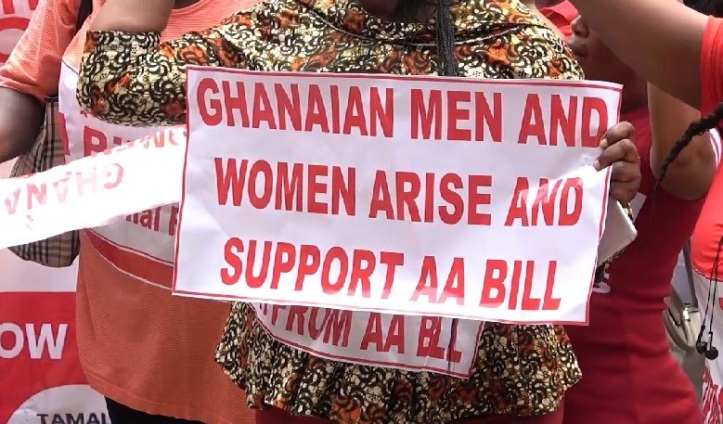
The Programs Officer of the Center for Democratic Development (CDD) Ghana, Vera Abena Addo, has emphasised the crucial need for the Affirmative Action Bill in addressing the historical marginalisation of women in decision-making roles.
Speaking on JoyNews’ The Probe, Madam Addo underscored that women, constituting more than half of Ghana's population, have long been excluded from significant decision-making processes.
She highlighted that such exclusion not only hampers development but also undermines the principles of democracy and inclusion.
“The Affirmative Action Bill recognizes the marginalization of women, and for a very long time, women who make up more than half of the population have not been part of decision-making. This undermines our development, democracy, and issues about inclusion participation among others,” she said on Sunday.
She noted that the implications of the bill extend beyond women's issues, pointing to evidence indicating improvements in decision-making outcomes when women are actively involved.
According to her, the country needs to prioritise the inclusion of women in decision-making and leadership roles, not just in politics but also in private and public spheres.
"We must recognise the Affirmative Action Bill is not just a women’s issue but that of a country that we all need to come together to support.
“If you look at Ghana’s population based on the 2021 Census, 51 percent of the population are women, then we need to create that platform and opportunity for more young girls to have an equal playing field to take up positions,” she told host Emefa Apawu.
Highlighting the significance of the Affirmative Action Bill, Madam Addo called on the nation to reevaluate women's participation in politics and decision-making, emphasising the need for a more equitable representation of women in various sectors.
Background
In the early days after Ghana gained its independence, the country legislated an Affirmative Action Act in the middle of 1960 allowing 10 women members to represent the regions of the country in the then legislature.
The law recognised that women’s political participation is a critical component of democratic dialogue and social cohesion.
However, it was lost under the weight of the political upheavals which took place in the intervening years of the country.
The nation has since made various commitments by signing to global declarations and protocols that advocated for increased women’s participation and representation in public life.
Ghana’s Parliament in 2011 re-initiated processes to have the Affirmative Action bill passed into law, but the efforts have suffered setbacks and to date, the bill has failed to pass the basic parliamentary proceedings.
After nearly 60 years following the Affirmative Action move of the 1960s, Ghana has failed to meet the minimum UN recommended threshold of 30 per cent women representation in either the local or the national level decision-making process.
The Bill seeks to encourage efforts towards addressing socio-cultural, political, economic, and educational gender imbalances in private and public sectors in accordance with Clause 4 of Article 17 of the 1992 Constitution.
This is in spite of various calls made by civil society groups, gender advocates and importantly female parliamentarians.
Latest Stories
-
Photos: Pete Edochie meets GoldBod CEO Sammy Gyamfi over African youth mentorship initiative
55 seconds -
Black Maidens: Ghana’s envious record at U-17 Women’s World Cup ahead of seventh appearance
13 minutes -
BoG cautions public against 20 unlicensed mobile loan apps
22 minutes -
Mahama urges tougher enforcement of building regulations over recent collapses
26 minutes -
FWSC denies reports of salary deductions for striking teachers
30 minutes -
Rooted like a tree, responsive like a river: Dr Amin Adam calls for new model of Imamship to meet modern realities
38 minutes -
La Traditional Council secures suspension of SSNIT’s La Pleasure Beach redevelopment plans
43 minutes -
Joy FM listeners support mother seeking treatment for 3-year-old daughter after alleged sexual abuse
47 minutes -
German Unity Day celebrated with music, art and Ghana-Germany friendship in Accra
50 minutes -
MEHSOG and GFD build capacity of Ashanti Region journalists on inclusive disability reporting
51 minutes -
A woman should not have to choose between being fed and being safe
56 minutes -
“Wontumi doesn’t like where he is”– Palgrave Boakye
1 hour -
The Labadi shoreline demolitions: Who owns the beach?
1 hour -
Cedi will continue to be stable – Deputy Finance Minister
1 hour -
Minority urges full probe into World Cup visa allegations after Ampofo Ankrah’s removal
1 hour