

Audio By Carbonatix
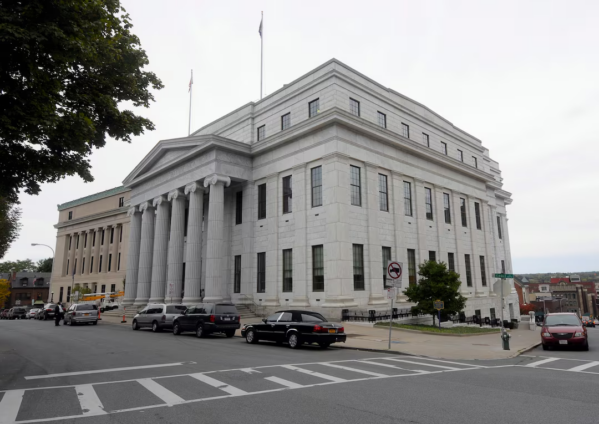
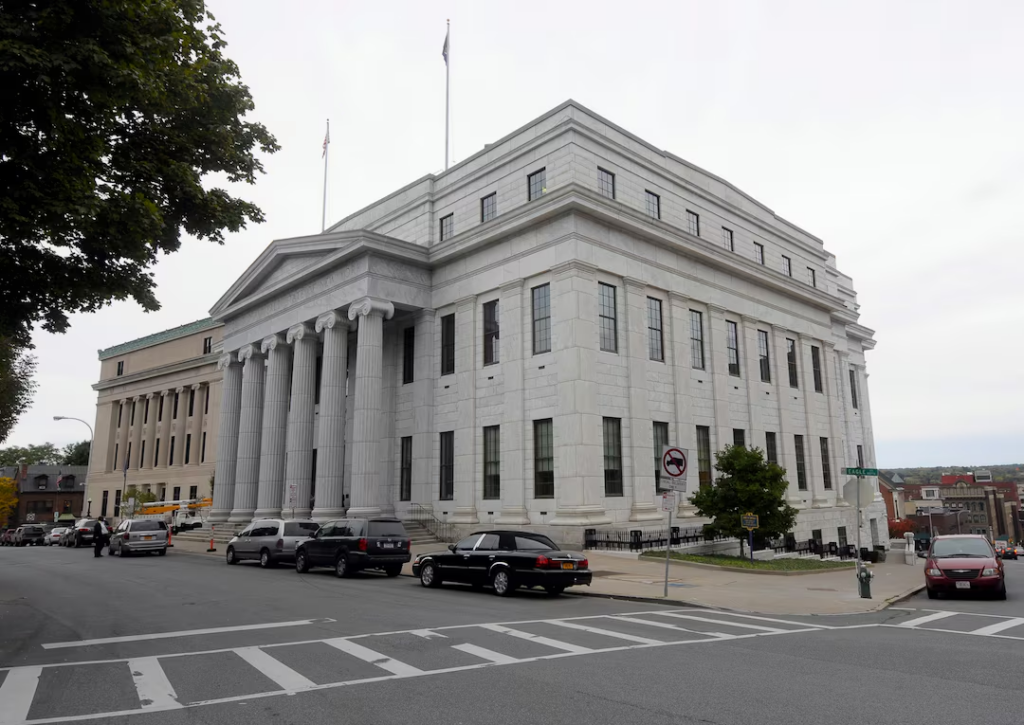
New York's highest court on Tuesday ruled that employers' health insurance plans have to cover medically necessary abortions, rejecting a lawsuit by the Roman Catholic Diocese of Albany claiming that the law's exemption for religious employers was too narrow.
The New York Court of Appeals found that the rule, passed in 2017 by the state's Department of Financial Services (DFS), did not violate religious employers' freedom because both the rule and its religious exemption were neutral and generally applicable to all employers.
The 2017 rule was made into law by the state legislature in 2022, though the law was not challenged in the lawsuit.
"We continue to believe that the regulatory action by the state, as well as subsequent legislative action, requiring religious organizations to provide and pay for coverage of abortion in its employee health plans is unconstitutional and unjust," Dennis Poust, executive director of the New York State Catholic Conference, said in a statement. He said the Diocese would appeal to the U.S. Supreme Court.
"DFS's actions have ensured that women in New York have control over their reproductive choices, and that insurers cover abortions and contraceptives with no copayments, deductibles or any out-of-pocket costs," DFS Superintendent Adrienne Harris said in a statement.
The religious exemption in the rule applies to non-profit entities whose primary purpose is the "inculcation of religious values" and that primarily employ and serve people who share its religious beliefs.
The Diocese alleged that this exemption was too narrow because it would not include religious organizations with a broader purpose than inculcating religious values, such as serving the poor, or that employed or served a large number of people who did not share their religion.
The Court of Appeals previously rejected the diocese's challenge in 2020, citing an earlier case upholding a contraception coverage requirement with a similar religious exemption.
In June 2021, the U.S. Supreme Court ruled that Philadelphia could not refuse to place foster children with a Catholic agency that turned away same-sex couples as would-be foster parents. It then ordered the New York court to reconsider the abortion coverage case in light of that ruling.
The court said in Tuesday's decision that the Supreme Court's ruling did not change the outcome because it was narrowly focused on the facts of that case, and did not overturn the longstanding precedent that neutral, generally applicable laws can sometimes restrict religious expression.
Republican-led states have banned or restricted abortion in the wake of the Supreme Court's 2022 ruling eliminating a nationwide right to abortion. Democratic states have moved to safeguard and expand abortion access.
Latest Stories
-
Amazon eyes Ghana for broadband expansion after talks with Mahama
28 minutes -
National Investment Quiz 2026: Six schools qualify for quarter-finals
56 minutes -
‘Do not let Russia pay for its madness with lives of your people’ – Zelensky to Ghana, 46 other countries
1 hour -
6,079 promotion cases fully processed and paid – CAGD says amid nationwide teachers’ strike
1 hour -
Teacher unions to meet government Monday over nationwide strike
2 hours -
Photo story: Republic Bank-JoyNews Habitat Fair clinic wraps up after three days of housing solutions, expert engagement
2 hours -
National Peace Council urges investment in youth to sustain Ghana’s peace
2 hours -
Afenyo-Markin urges youth to speak up against injustice
2 hours -
CAF annuls Edo Queens victory, orders WAFU B final to resume from extra time
3 hours -
Interior Minister urges traditional authorities to enforce anti-bushfire bye-laws
3 hours -
3rd Republic Bank-JoyNews Habitat Fair Clinic ends on a high note after three days of strong patronage
3 hours -
Ten climbers missing after avalanche hits Himalayan base camp
3 hours -
NPP had more permanent fuel relief measures than current GH¢2 diesel cut – Amin Adam
4 hours -
Photos from the 3rd Republic Bank-JoyNews Habitat Fair Clinic
4 hours -
Ethiopia’s army promises restraint amid fears of new civil war
4 hours