

Audio By Carbonatix
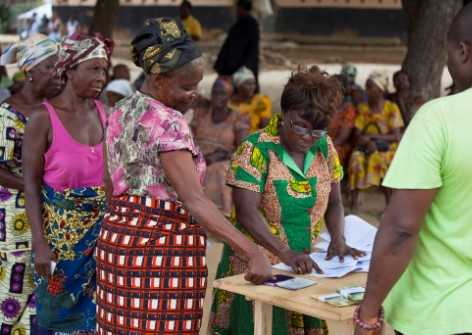
Some beneficiaries of the Livelihood Empowerment Against Poverty (LEAP) programme have commended the government for increasing the cash grant from July this year.
They said they had benefitted from the programme in diverse ways and were appreciative of the government.
LEAP is to smoothen consumption, promote access to social services through linkages and stimulate behavioural change toward productive activities by the provision of cash grants to extremely poor and vulnerable households.
Beneficiaries include extremely poor, elderly, 65 years old and beyond support, orphaned and vulnerable children, persons with severe disabilities who cannot work, and pregnant women or mothers with children under age one.
LEAP is a cash transfer programme introduced by the government in 2008 for extremely poor and vulnerable households, orphaned and vulnerable children, persons with severe disabilities who cannot work, and elderly persons who are 65 years of age and older.
In July 2024, the amount paid to beneficiaries was doubled, one eligible member household, from GH₵128.00 to GH₵256.00, two-member households, GH₵152.00 to GH₵304.00, three-member households, GH₵176.00 to GH₵352.00 and four-member households GH₵212.00 to GH₵424.00 bi-monthly.
This, the Minister for Gender Children and Social Protection, Dakoa Newman, said was to provide relief and support to the beneficiaries to enable them to meet their basic needs more effectively as well as invest in their future well-being.
Mr Kwaku Opoku, a beneficiary, said his family had benefited from the programme since its inception.
He said with his wife, they managed to own a palm oil plantation on his wife’s land.
Mr Opoku said the purpose of the programme would have been defeated if they had only fed on the money without investing in a "small venture".
He said they had been empowered to an extent that when LEAP payments were delayed, no matter how small the farm was, they were able to feed from its proceeds.
‘‘I remember a friend who was sick used his share of the grant to buy medicines and feed himself; he has moved to another region, but he still receives his money," Mr Opoku recounted.
Madam Rebecca Mettle, a caretaker of four orphaned children under the programme, said catering to the needs of the children was possible because of the grant.
She said her earnings from the sale of cassava and plantain were used to buy school uniforms and to pay for the school fees of the children.
Mr Zacharia Yakubu expressed appreciation to the Government for the increase in the cash grant, attributing his well-being to the LEAP programme.
Latest Stories
-
He entered at eight. He is now 16: Ghana’s children growing up in prayer camps
20 minutes -
‘Development must not always begin from Accra’ — Anwelle Foundation launched in Jirapa
23 minutes -
PKO trio eye victories at Odwira Festival
3 hours -
346 Ghana Navy recruits pass out after 26 weeks of intensive training
3 hours -
Newsfile to discuss EOCO-MP arrest, drug trafficking, speech arrests and $235m water debt
4 hours -
JoyNews gets results as listeners raise GH¢40,000 to help 17-year-old student with cerebral palsy attend SHS
4 hours -
Vice President calls for stronger local pharmaceutical production to reduce medicine imports
4 hours -
The brewing tension at KNUST; Beware the Ides of October….
5 hours -
Health Ministry moves to integrate traditional medicine into mainstream healthcare
5 hours -
550 pupils in Kintampo South get educational lifeline as ‘Seeds of Hope’ reaches farming communities
5 hours -
Opoku Mensah urges Christian Council, House of Chiefs to speak up on democratic freedoms
6 hours -
Teacher unions’ strike: Minority demands immediate payment of teacher arrears, 20% deprived area allowance
6 hours -
The Accra-Kumasi Expressway: Building it right
6 hours -
Beyond gold exports: Building value and economic resilience from Ghana’s gold
6 hours -
2027 AFCONQ: Ghana under pressure as Gambia beat Somalia 2-1
6 hours