

Audio By Carbonatix
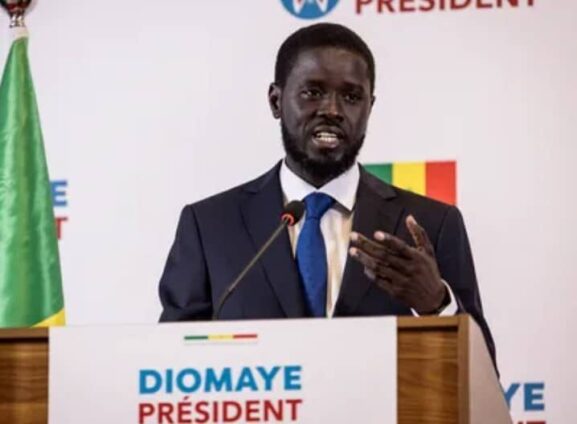
Senegal's President Bassirou Diomaye Faye appointed a seasoned economist and former central banking executive as the nation's new prime minister on Monday. The decision follows the dramatic dismissal of the prime minister and his entire cabinet last week. This high-stakes political realignment comes at a critical juncture for the West African nation. The country is currently navigating a crippling debt crisis alongside an internal fracture within the ruling party that has rapidly escalated into a full-scale institutional standoff.
According to a statement read on national television, President Faye named Ahmadou Al Aminou Lo as the head of government, replacing Ousmane Sonko. However, the political landscape shifted violently on Tuesday morning when the National Assembly defiantly elected the freshly ousted Sonko as its new parliament speaker, threatening total legislative deadlock.
A Sudden Rupture in the Ruling Coalition
Sonko was sacked on Friday, after months of simmering tensions between him and the president. The abrupt dismissal triggered the resignation of all the members of the government and its dissolution.
The political partnership between Faye and Sonko was once the cornerstone of the ruling party, Patriotes Africains du Sénégal pour le Travail, l’Éthique et la Fraternité (Pastef). Pastef had ridden into office in the March 2024 parliamentary election after a fierce campaign against the then-ruling party, Alliance pour la République. That campaign was fueled by widespread speculation that former President Macky Sall wanted to use a 2016 constitutional change to revise his term in office.
Faye essentially owes his position to Sonko, his one-time mentor, who would almost certainly have taken the top job had he not been barred from running in the last presidential election due to a defamation conviction. When the Supreme Court upheld the conviction and the Constitutional Court dismissed his candidacy, Faye ran instead. Following his victory, Faye appointed Sonko as prime minister.
Sonko generated a passionate following among Senegal's disaffected youth ahead of the 2024 poll. However, under Senegal's constitutional framework, it is Faye who wields the real power as president, meaning he could fire his head of government by simple decree.
Economic Ideology and the IMF Standoff
The political split between the two leaders ultimately widened into a fundamental disagreement over how to resolve Senegal's severe financial distress. Senegal is labouring under a huge debt burden amounting to 132 per cent of GDP. When Faye and Sonko came to power in 2024, they accused former president Macky Sall's government of hiding a part of the debt. This discovery of misreported debt led to the suspension of a $1.8 billion IMF aid program that t had been agreed in 2023.
The two men have fallen out in recent months as Senegal battles public debt. Faye wants to discuss a new aid programme with the IMF, while Sonko prefers a domestic, sovereignist approach. Ousmane Sonko, the outgoing prime minister, had opposed any restructuring of the debt, estimated at $13 billion, which he said the IMF was advocating, while Faye has been less vocal on the issue. Faye and Sonko had openly disagreed on key policies over the past few months, including about the negotiations for a loan from the International Monetary Fund. Earlier in May, Faye said Sonko would only keep his job if he did it properly.
The New Premier Pledges Continuity and Stability
In choosing Lo, President Faye selected a technocrat with extensive financial credentials. Lo formerly served as head of the Senegal branch of the Central Bank of West African States, where he played a significant role in shaping monetary and economic policies at the regional level. He also possesses close knowledge of the current administration, having served as state minister to the president and secretary-general of Sonko’s government. A decree on Monday announcing his appointment said Lo knows "the inner workings of the economy and finance."
Lo will now have to form a new government. Appearing on state television for the announcement of his appointment, Lo said he wanted to reassure the local private sector and foreign investors even as he acknowledged Senegal's difficult financial position.
"We must all be aware of the state of emergency our country currently finds itself in. In particular, the state of public finances and its impact on the economy," Lo said. "Senegal is a safe and reliable country and intends to remain so."
Lo sought to frame his appointment as a procedural adjustment rather than an ideological shift from the platform that brought Pastef to power. In his remarks on Monday, Lo said his appointment did not signal a retreat from Senegal's commitment to "systemic transformation" under Faye, but instead reflected a new approach aligned with the president's vision.
"This is not a change of direction but of method," Lo said, citing integrity and transparency and "economic and cultural sovereignty" – all of which Sonko had espoused.
Lo also offered conciliatory words for Sonko, praising the record of the government he led, including an economic recovery plan announced last year that featured a heavy reliance on domestic funding.
A Looming Battle in Parliament
The focus of the political crisis now shifts to the National Assembly, where Pastef holds a commanding majority of 130 deputies out of 165. Having been elected as a lawmaker in the November 2024 legislative elections, Sonko had, a month later, according to his party, requested his mandate be suspended after Faye made him prime minister days after his poll triumph the previous April.
On Sunday, speaker and close Sonko ally El Malick Ndiaye resigned, clearing the way for Sonko to return to the legislature. Parliamentarians are called to vote at 9:00 am Tuesday (0900 GMT) on the "reinstatement of the deputy Ousmane Sonko" and to elect the next president of the National Assembly, according to an official document published late Sunday.
If elected speaker, Sonko could potentially use his legislative platform to challenge the authority of Faye. In March, Sonko warned he could take the ruling Pastef party, which dominates the National Assembly, into opposition if the president strayed from the party's agenda. This threat looms over the government's ability to pass any reforms needed to unlock IMF support.
Constitutional Concerns and Future Rivalries
The opposition has sharply criticised the rapid political manoeuvring, raising concerns about the legality of the process. Aissata Tall Sall, who heads the main opposition coalition, denounced an "institutional coup" prepared under "pressure that the majority wants to impose."
Sall said she believed Sonko, to become a lawmaker again, should first have resigned as prime minister to sit even temporarily in parliament before returning to government. She urged Faye to refer the matter to the Constitutional Council to avoid what she termed "an illegal diktat of the majority" and to protect the country's institutions.
Significant legislative hurdles remain for the executive branch. Parliament must approve Faye's choice of successor to Sonko as premier within three months of his nomination. Under current law, the president cannot dissolve parliament until November, marking two years after the last parliamentary election.
Furthermore, a recent reform of the electoral code just approved by parliament means Sonko is now eligible to run for the presidency. This legal shift alters the long-term political landscape, raising the distinct possibility that the two former political allies might at some point run against each other for the top job.
Regional Implications for the ECOWAS Bloc
The high-stakes fallout between President Faye and Sonko ripples far beyond the borders of Senegal, catching the keen attention of observers in neighbouring West African nations, particularly Ghana. For a region grappling with complex transitions of power and economic instability, the institutional stability of Senegal has long served as a baseline of democratic health within the Economic Community of West African States (ECOWAS).
Politicians and civic leaders across the continent are closely watching how President Faye balances executive authority with legislative consensus. The political showdown presents an essential case study in constitutional checks and balances. The development is highly relevant to regional peers who face similar challenges in managing robust, youth-driven populist movements alongside traditional state institutions.
The Shared Continental Battle with Sovereign Debt
The core policy split driving the rupture in Dakar resonates directly with broader African economic debates. Much like Ghana, which has recently engaged in intensive domestic and external debt restructurings to manage its fiscal recovery, Senegal faces the acute challenge of balancing social mandates against strict multilateral conditions.
Sonko’s staunchly sovereigntist, anti-restructuring rhetoric mirrors a growing school of thought among African populations weary of austerity measures. Conversely, Faye’s pivot to a pragmatic technocrat like Lo highlights a trend among African heads of state who prioritise global market integration and international credibility. Furthermore, Lo’s extensive background within the regional central bank brings his long-standing defence of the CFA franc’s monetary stability into sharp relief, directly contrasting with the radical currency reforms originally championed by the populist wing of the Pastef party. The outcome of Senegal's fiscal course under Prime Minister Lo will likely serve as an influential benchmark for economic management across the continent.
As the political showdown shifts to the legislative floor, Senegal—long considered one of West Africa’s most stable democracies—finds itself balancing on a delicate scale. The coming weeks will determine whether the resource-rich nation can smoothly execute its promised economic overhaul. While the rift at the top of the ruling party introduces a rare period of executive volatility, the resilience of Senegal’s democratic institutions will face its ultimate test as it seeks to reassure both anxious global investors and an expectant domestic populace.
Latest Stories
-
Pope walking and recovering ‘as expected’ after surgery, doctors say
2 hours -
Total expenditure as of July 2026 amounted to GH¢147.07bn, 16% below target – BoG
3 hours -
Total revenue & grants stood at GH¢144.5bn in July 2026, slightly below target – BoG
3 hours -
Ghana Sports Fund urges sports federations to submit credible proposals and measurable targets
4 hours -
Sally Rooney books withdrawn in UK over Palestine Action support
4 hours -
Musk says US government may be behind slowdown of Ukraine drone speeds
4 hours -
Picking Chief Justices nearing retirement could give Mahama immense power – Bentil
4 hours -
Netflix to shed 1,000 jobs in steepest cuts since 2022
4 hours -
Burnham had two hospitality dinners with Man City chairman, deleted records show
4 hours -
Semenyo ‘froze’ after alleged racist abuse, court told
5 hours -
‘Shameless’ – Mourinho critical of Vinicius Jr ban timing
5 hours -
Loyalty can outweigh competence in Chief Justice selection – Bentil
5 hours -
Man City suffer as PSG masterclass sets up Champions League win
5 hours -
Customer Service Africa CEO urges business leaders to observe staff and customer interactions
6 hours -
On night of mayhem for Liverpool, Barcola arrives in style
6 hours