

Audio By Carbonatix
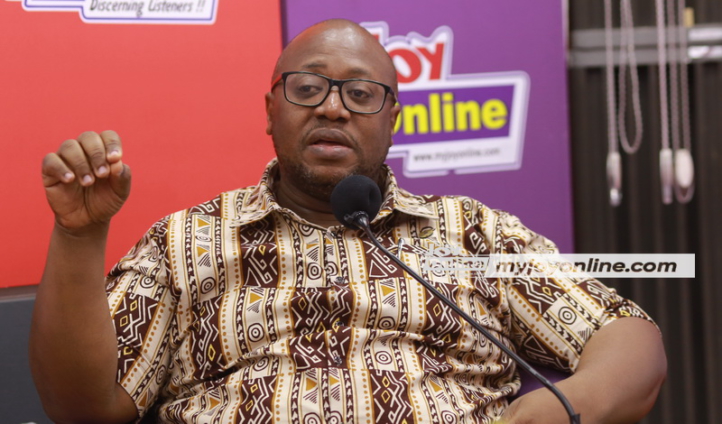
The Director of Advocacy and Policy Engagement at CDD Ghana, Dr Kojo Pumpuni Asante, has argued that the lax approach to holding public officers accountable has led to widespread unaccountability.
“We have created a system where there is really no incentive for accountability. There is no incentive for you to restrain yourself when you have to make decisions that can be reckless and completely impoverish people, like what we have done with Domestic Debt Restructuring and destroyed people’s savings,” he said on Joy News' PM Express.
Dr Asante explained that these officers evade accountability because “when their time is done, they just walk away,” indicating a significant flaw in the country’s accountability structure that needs urgent attention.
He blasted the ineffective oversight of government spending by Parliament, particularly through the GIFMIS system, which is supposed to regulate financial transactions.
“What is the incentive for the Finance Minister to put all transactions through GIFMIS if Parliament only makes Appropriations but does not put a conditionality for all transactions to go through the system?” he questioned.
Dr Asante stated the need for robust accountability measures within the political system, arguing that without the right incentives, it will be challenging to address the ongoing issues.
“People are not angels, so if they fail because the political party is corrupt or have created a corrupt culture, we cannot expect that somehow, they will carry that through the office when appointed and become angels,” he said.
He stressed that for any reset to be effective, the governance structure must include proper incentives to hold people accountable.
Prof. Baffour Agyeman-Duah, a former UN Senior Governance Advisor, likened achieving this to "looking for a needle in a haystack." He stated that within the current political context, such change seems unattainable.
“We cannot even change because the constitution has created this system, and we respect that. The people who have been elected to operationalise the constitution claim to be working based on the constitution,” he stated.

Prof. Agyeman-Duah argued that the desired change cannot solely depend on the political elite and urged the masses to actively seek reform.
“I see a real need to reform the constitution in the first place to reform the way we do our politics and the way we govern ourselves. Inherent in the current structures are the challenges that are being discussed,” he said.
He noted the president holds almost unlimited powers, with wide discretionary authority, which needs to be decentralized to empower local communities and districts, forming the foundation of true democratic practice.
“We are practising democracy at the top and neglecting the bottom, which is the true meaning of democracy,” he concluded.
Latest Stories
-
National Day of Prayer and Thanksgiving an annual national observance, not a response to floods – Elvis Afriyie-Ankrah
29 minutes -
India issues notice to Telegram, Signal on concerns over usernames, source says
36 minutes -
You can’t trade lives for fiscal discipline – Oppong Nkrumah blasts government over flood deaths
43 minutes -
Flood disaster must spur urgent action, government should fast-track relief – CPS
55 minutes -
Ghana cannot afford bureaucracy if it wants billions in green investment, says Annoh-Dompreh
1 hour -
PrepMaster launches platform to help Ghanaians prepare for exams and visa interviews
1 hour -
Groundwater Galamsey: The silent crisis beneath our feet
1 hour -
A mayor in Japan announced her maternity leave – and got the whole country talking
2 hours -
Ebola treatments trial begins in the Democratic Republic of Congo
2 hours -
Instagram running ads promoting child sexual abuse material in India, BBC finds
2 hours -
Burna Boy breaks record for most monthly listeners by African artist in Spotify history
2 hours -
Burna Boy’s mum asks singer to get married, have children
2 hours -
Mediocres more likely to succeed than professionals in Nigeria – Deyemi Okanlawon
2 hours -
Portugal beat Croatia in chaotic finish to reach World Cup last 16
3 hours -
Ghana must not become a haven for fake carbon projects – Annoh-Dompreh
3 hours