

Audio By Carbonatix
Point of Sale (POS) is a backbone of modern payment systems. Every day, around the world, billions of transactions run through POS as consumers pay for goods and services. However, millions of micro, small and medium-sized businesses globally cannot accept electronic payments. SoftPOS is opening doors for these businesses to receive payments, promoting payment processing democratisation.
The history of POS dates back to 1879, when the first POS system was invented in Ohio, USA, by a saloon owner called James Ritty; he designed this cash register to ensure error-free recording of transactions, leading to better bookkeeping and cash management. In 1884, the National Cash Register Corporation (NCR) bought this invention from Ritty.
Over the years, POS has grown into a sophisticated system which oils the wheels of commerce by ensuring that consumers can pay merchants seamlessly and integrate with other business systems such as customer relationship management (CRM), employee scheduling, order processing, accounting, or inventory software.

Soft POS versus Traditional POS
Traditionally, POS was designed as a special device that allows merchants to calculate the amount owed by a customer, process its payment, and issue a receipt. The core of the POS system is hardware, which works with software to manage sales, inventory and customer data. The evolution of POS has led to a new development called soft POS (Software Point of Sale) which can be described as a mobile or software-based solution.
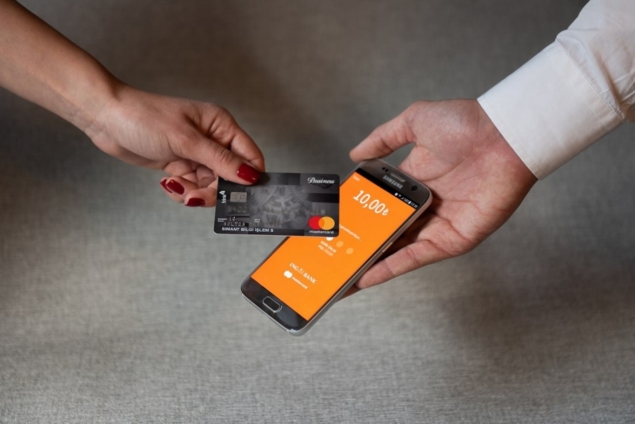
This innovative system enables merchants to process payments directly from clients using a smartphone or tablet without the need for a POS card reader or traditional POS machine. Running on Near Field Communication (NFC) technology, customers can tap their contactless cards or mobile wallets against the merchant's device to make payments. The key advantage of Soft POS systems is the ability to enable small businesses or mobile vendors to accept payments since they are cost-effective and easy to set up.
Another important characteristic of soft POS is the ability for merchants to use existing hardware to process payments without the need to invest in the POS card reader which means greater flexibility and convenience for not only the merchants but the customers as well. Also, since soft POS does not require additional hardware, it is easy to setup and may not come with monthly POS card rental costs.
Further, soft POS can support the expansion efforts of merchants since they are able to roll out multiple points, for example, outdoor spaces, live events, pop-up venues, remote locations, and service providers who are on the move, like plumbers, cleaners, electricians, technicians, etc can all receive payments since they are not constrained by the need to invest in traditional POS system. The main advantage of soft POS is the provision of a cost-effective payment processing solution for merchants with relatively lower volume of transactions in comparison to bigger entities running thousands of transactions which justify investments in traditional POS devices.
How does soft POS work?
The core value of soft POS is its ability to replace the hardware-centric model with a more user-centric approach. Therefore, its design and operationalization are premised on simplicity. Merchants need a Consumer Off-The-Shelf (COTS) device, such as a smartphone or tablet with near-field communication (NFC) capabilities, to process payments using soft POS. This short-range wireless technology enables secure communication and data exchange between two devices when placed close to each other without an internet connection, typically within a few centimetres. To accept payments, the merchant downloads a contactless payment acceptance app; after that, a customer taps their contactless payment card on the merchant's device to make payments. Soft POS requires minimal training and most payment giants support soft POS solutions, making them easy to adopt across multiple payment platforms.
Disadvantages
Some major disadvantages of soft POS is the need for robust standards and the security concerns they pose. Traditional POS card readers are certified under the Payment Card Industry Data Security Standard (PCI DSS), a set of security standards designed to ensure that all companies that accept, process, store, or transmit credit card information maintain a secure environment. PCI DSS is vital since it protects cardholder data and reduces the risk of fraud through comprehensive security measures.
However, most devices or smartphones used in soft POS are not PCI DSS compliant, creating a challenge. Some companies are providing a solution by offering SmartPOS Android devices which have PCI-validated P2PE (Point-to-Point Encryption), which is a security standard established by the Payment Card Industry Security Standards Council (PCI SSC) to ensure that payment data is protected from the point of entry (when the card is swiped, dipped, or tapped) through to the secure decryption endpoint.
Based on a PCI-validated P2PE solution, cardholder data is immediately encrypted at the point of interaction and remains encrypted until it reaches the payment processor, where it is decrypted securely. Other disadvantages of soft POS are the risk of hardware failure, the setup of soft POS app could be time-consuming, accepts only low-value payments, and some soft POSs do not accept Chip and PIN payments.
In conclusion, the advancement in digital payment landscapes means that payment solution providers are investing to deliver new and innovative ways of enabling merchants to process payment transactions in a timely and cost-effective manner. Soft POS it offers flexibility, convenience, adaptability, and provides a better customer experience while ensuring especially small and micro businesses, can participate in the digital payment system by lowering barriers to entry.
Written by Kwami Ahiabenu, II (Ph.D.) is a Technology Innovations Consultant E-mail: kwami@mangokope.com
Latest Stories
-
Dorimon Traditional Council endorses policy to formalise female chieftaincy
2 minutes -
DVLA expands from 33 to 63 offices after opening 30 new service centres across Ghana
3 minutes -
State Housing Company offers 195 homes with a 5% discount; prices start at GH¢950,000
6 minutes -
Learn Deutsch opens German language examination centre in Accra
7 minutes -
Decline in external buffers complicates foreign exchange outlook – IC Insights
8 minutes -
Ghanaian filmmakers urged to tell local stories and take them to the world
12 minutes -
Educated but unable to communicate? The missing link in Ghana’s University education
15 minutes -
Informant demanded $20 million from NACOC for information on major drug consignment – Muntaka
21 minutes -
Gov’t introduces mental health and drug tests for security recruits amid suicide concerns – Interior Minister
22 minutes -
DVLA generates GH¢27.14m from dealer plates between January and September 2026
25 minutes -
DVLA registers over 7,700 excavators in Ghana under new tracking initiative
30 minutes -
DVLA introduces six Ghanaian languages for driving theory tests
31 minutes -
DVLA prints 440,000 licences to clear backlog dating to 2023
31 minutes -
Yagaba chief calls for sanitation officers as Mamprugu Moagduri prepares to enforce bylaws
32 minutes -
One Million Coders programme shifts focus to third- and final-year university students
37 minutes