

Audio By Carbonatix
The Minister for the Interior, Mubarak Mohammed Muntaka, has revealed that an informant recently demanded US$20 million from the Narcotics Control Commission (NACOC) in exchange for information that could lead to what he described as a “huge” drug bust.
He said the demand was unreasonable given the commission’s limited budget and appealed to the public to assist law enforcement agencies with credible intelligence without imposing excessive financial conditions.
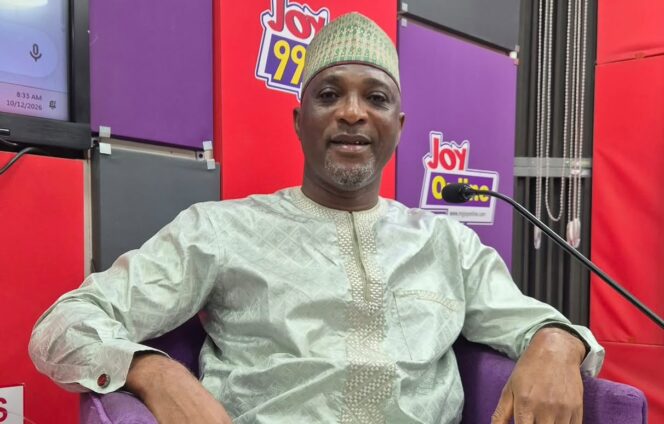
Speaking on Joy FM’s Super Morning Show on Monday, October 12, Mr Muntaka said the government was prepared to compensate informants who provided credible intelligence but stressed that such payments had to be reasonable and within the financial capacity of the institutions involved.
He cited a recent case in which an individual allegedly approached the Director of the Narcotics Control Commission (NACOC), offering to lead the commission to a major drug consignment in exchange for US$20 million.
The minister questioned how NACOC could be expected to meet such a demand, considering the commission’s budget and the financial resources available to support its operations.
“What is the budget of the whole Narcotics Control Commission that somebody, an informant, is making this kind of demand?” he asked.
Mr Muntaka said the incident highlighted the challenges authorities faced in obtaining intelligence from the public, despite the critical role such information played in preventing crime and apprehending suspects.
The minister stressed that the government was not opposed to compensating informants whose information helped uncover criminal activities.
He said that since assuming office at the Interior Ministry, several people had approached him with intelligence about suspected illegal activities, sometimes requesting money to support their cooperation.
He maintained that where informants provided reliable intelligence, and the authorities agreed to compensate them, the state had a responsibility to honour its commitments.
However, he urged the public to recognise that law enforcement agencies operated with limited resources and could not meet every financial demand made in exchange for information.
“We are pleading with our citizens that we need to keep all of us safe. We don't have unlimited resources. Sometimes we do this from our own pocket. Please, help us,” he said.
He added that the government could assist informants with reasonable expenses, including transportation, where necessary, but appealed to them not to make excessive demands.
Beyond the concerns over informants’ demands, Mr Muntaka said Ghana was making progress in identifying and arresting people suspected of involvement in drug-related offences.
He attributed the progress to cooperation with international partners and improvements in the ability of authorities to trace suspects after drug-related incidents were reported or uncovered.
“Previously, identifying individuals suspected of involvement in such crimes could take a long time. Today, however, we can identify suspects and make arrests within three to four days,” he said.
Mr Muntaka said the developments reflected the work being undertaken by the relevant agencies and their international counterparts to identify those involved in drug trafficking and pursue them through the justice system.
The minister cautioned against the assumption that Ghana could tackle drug trafficking independently, arguing that the activities of international criminal networks required a coordinated response involving other countries.
He called for continued intelligence sharing and collaboration among countries to help authorities identify trafficking networks, track suspects and prevent illicit drugs from moving through the region.
Mr Muntaka also urged members of the public to adopt the principle of reporting suspicious activity, stressing that citizens had a role to play in supporting law enforcement agencies.
“You see something, say something,” he said.
He reiterated that credible information from the public, combined with international cooperation and the effective use of available resources, remained important to Ghana’s efforts to combat drug trafficking.
Latest Stories
-
Bond market: Turnover increases by 47% to GH¢4.07bn
7 minutes -
DVLA prepares electronic queue system to reduce congestion
13 minutes -
Hearts of Oak coach Kapor raises alarm over poor pitches in Ghana football
24 minutes -
Dorimon Traditional Council endorses policy to formalise female chieftaincy
27 minutes -
DVLA expands from 33 to 63 offices after opening 30 new service centres across Ghana
28 minutes -
State Housing Company offers 195 homes with a 5% discount; prices start at GH¢950,000
32 minutes -
Learn Deutsch opens German language examination centre in Accra
32 minutes -
Decline in external buffers complicates foreign exchange outlook – IC Insights
33 minutes -
Ghanaian filmmakers urged to tell local stories and take them to the world
38 minutes -
Educated but unable to communicate? The missing link in Ghana’s University education
41 minutes -
Informant demanded $20 million from NACOC for information on major drug consignment – Muntaka
47 minutes -
Gov’t introduces mental health and drug tests for security recruits amid suicide concerns – Interior Minister
47 minutes -
DVLA generates GH¢27.14m from dealer plates between January and September 2026
50 minutes -
DVLA registers over 7,700 excavators in Ghana under new tracking initiative
55 minutes -
DVLA introduces six Ghanaian languages for driving theory tests
56 minutes