

Audio By Carbonatix
The Ghana Revenue Authority (GRA) is targeting to rope in two million informal sector workers into the tax net through the implementation of a modified tax system.
The new tax regime, which is expected to be implemented by 2025, is aimed at widening the country’s tax base, to include the informal sector in tax compliance.
Kumasi Area Director of the GRA, Agnes Akosua Boateng, says the new system will simplify tax assessment and reduce compliance costs.

“We want to simplify our tax system so that everybody will be captured. We are expecting to bring on board 2 million people. We want to widen the tax net,” she said.
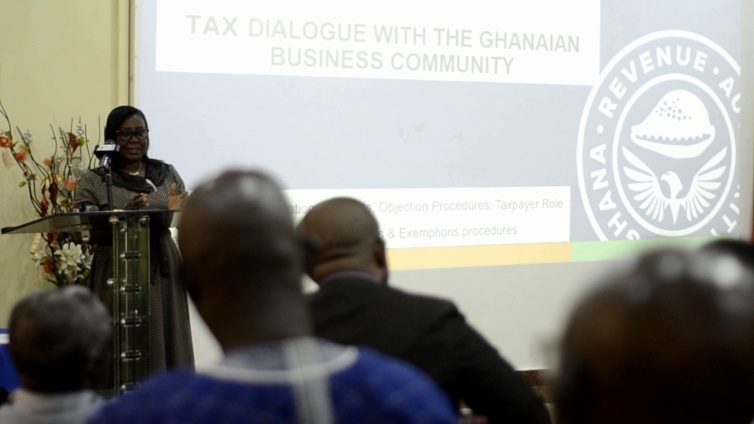
The GRA hosted a tax education seminar with faith-based organisations in the Ashanti region as part of activities geared towards mobilizing more revenue from the informal sector.
Many players in the informal sector are failing in their tax obligations, mainly due to the complexity of the tax system.
Ms. Boateng explains the categories expected to be captured under the new tax regime.
“For the first category, it is going to be paid in instalment. This is going for those selling on tables. With the second one, we look at the turnover for the year from 20,000 to 500,000 cedis then add 3% to it and spread it over the four quarters for payments,” she said.
Through its tax education program for the month of August, the GRA engaged traders, and other stakeholders in a series of dialogue to enhance voluntary tax compliance.
Ms. Boateng charged religious leaders to encourage members to honour their tax obligation for national development.
"If the church is operating businesses like printing press or book shop, they ought to pay taxes. We realise those who sell at the various market centres are the very ones that go to church and mosques. So, it is prudent we engage the religious leaders to encourage their members to honour their taxes," she added.
Chief Revenue Officer at the Kumasi Collection of the Customs Division, Evans Teye Agbozo assures of transitioning from robust to friendlier transactions.

“This year is our customer-based strategy where we are moving from that robust way of dealing with taxation to a more friendly approach in transacting,” he said.
While assuring to oblige the tax payments, participants at the program anticipate purposeful use of the collected revenues.
"It is expedient for us as clergy to educate our people to pay their taxes just as they do with their tithes. But if these mobilized revenues could be utilized effectively, I think paying wouldn’t be a problem," one of the participants said.
Latest Stories
-
Let’s satisfy everyone’s curiosity – Agalga backs early GoldBod probe
37 minutes -
GoldBod is ready to account – Agalga defends Gold Board as calls for probe intensify
54 minutes -
Don’t limit GoldBod probe to 2025 – Agalga demands full audit of gold trading scheme
1 hour -
GoldBod has never incurred losses – Agalga challenges claims as Minority pushes probe
2 hours -
NAIMOS raids Ankobra, destroys 86 chanfang machines in fresh galamsey crackdown
2 hours -
GoldBod is the tool behind Ghana’s stability – Agalga defends gold strategy
2 hours -
Trump administration moves to impose more than $100,000 fee for H-1B worker visas
2 hours -
Oil prices steady as investors weigh impact of expanded US sanctions against Iran
4 hours -
Trump administration plans to revoke visas of foreigners seeking asylum
4 hours -
US appeals court considers reassigning case from judge over AI use
5 hours -
Trump bought shares in Elon Musk’s SpaceX in June, financial disclosure shows
5 hours -
MTN approves $375 million share buyback after profit rise
5 hours -
Ghana gold buyers went weeks without funds, sources say
5 hours -
Nevada sues to block Trump administration’s Colorado River plan
5 hours -
Tunisian hospital receives 19 bodies after migrant boat sinks
5 hours