


Audio By Carbonatix
Ghana’s raw rubber export sector is under scrutiny following revelations of widespread under-invoicing and export irregularities exceeding $70 million over a two-year period.
Investigations indicate that exporters significantly understated both the value and volume of shipments, raising concerns about revenue losses and the sustainability of the country’s local rubber processing industry.
Data from the Ghana Revenue Authority (GRA) shows that in 2024 alone, Ghana exported about 89,680 tonnes of raw rubber despite the Tree Crops Development Authority (TCDA) issuing no export permits for that period.
In 2025, the TCDA approved permits for just 13,000 tonnes, yet export figures excluding October and November already stood at 39,000 tonnes, representing nearly 200 per cent above the authorised limit.
Further analysis points to significant under-declaration of export values. While the TCDA set minimum prices at GH¢8.62 per kilogramme in 2024 and GH¢9.08 in 2025, exporters declared average Free on Board (FOB) prices of just GH¢0.99 and GH¢1.91 respectively.
This translates into an average under-invoicing margin of more than GH¢7 per kilogramme across both years.
In monetary terms, the discrepancies amount to nearly $50 million in 2024 and over $21 million in 2025, with exporters declaring only a fraction of the actual value of shipments.
The practice has serious implications under Ghana’s foreign exchange regulations. Under Section 15 of the Foreign Exchange Act, exporters are required to repatriate full export earnings through licensed banks.
However, analysts say under-invoicing creates room for exporters to retain substantial portions of revenue offshore, depriving the local economy of much-needed foreign exchange.
Available customs records suggest that the export trade is heavily concentrated, with two companies dominating shipments over the period under review.
In one instance, a single exporter accounted for more than 90% of total export value in 2024, while another controlled nearly the entire market in 2025.
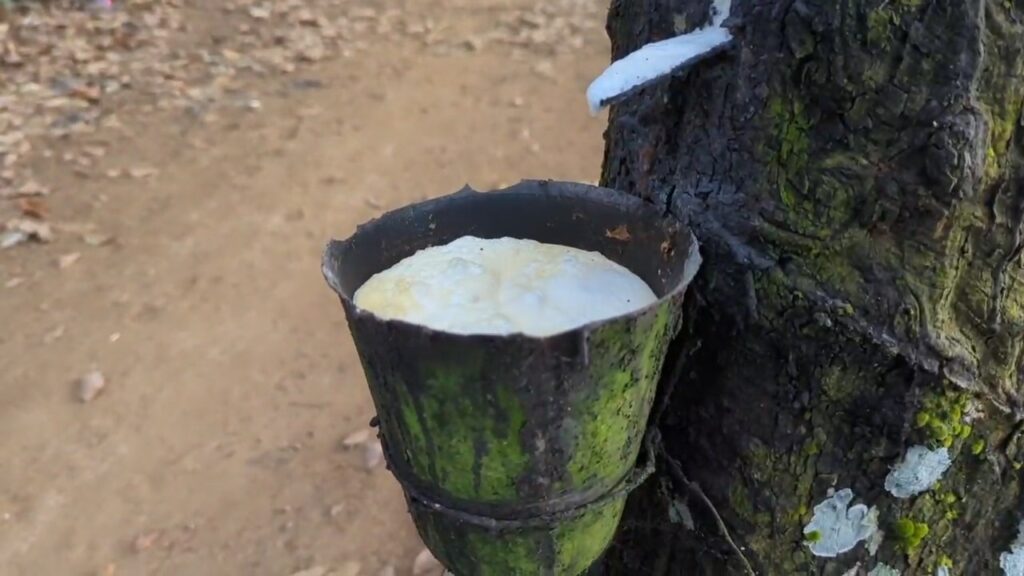
Despite prevailing market prices, some exporters reportedly declared values as low as $0.069 per kilogramme far below the benchmark set by regulators.
At the production level, farmers say raw rubber is currently sold locally at around GH¢8.30 per kilogramme, highlighting the stark disparity between actual market prices and declared export values.
Beyond revenue losses, the situation is placing significant strain on Ghana’s local rubber processing industry.
Industry data show that while processing plants have a combined annual capacity of over 171,000 tonnes, national production stood at just about 110,800 tonnes in 2025—creating a supply deficit of more than 60,000 tonnes.
The shortfall has left factories operating far below capacity, with some companies scaling down operations and cutting jobs.
One processing firm has reportedly halted operations entirely since 2024, while others are running at less than 40% capacity.
The developments have intensified calls for stricter enforcement of export controls.
Government has already signalled policy action, with restrictions on raw rubber exports announced to ensure adequate supply for local processors.
The Minister for Trade, Agribusiness and Industry, Elizabeth Ofosu-Adjare, said the move is aimed at protecting domestic industries and strengthening value addition within the sector.
Earlier, Finance Minister Dr Cassiel Ato Forson had outlined similar measures during the presentation of the 2026 Budget Statement.
Industry players, however, say enforcement remains weak.
The Association of Natural Rubber Actors of Ghana (ANRAG) has raised concerns over continued exports within the Tema Port enclave, warning of the long-term impact on jobs, investments and the broader economy.
In response, the TCDA maintains that while it has tightened regulatory controls, it lacks the legal authority to unilaterally halt the operations of licensed exporters.
The unfolding situation underscores deeper structural challenges within the sector, with implications for revenue mobilisation, industrial growth and employment
Latest Stories
-
Power restoration fault suspected in Kumasi Central Market fire
41 minutes -
The 7-foot giant of Ngleshie Amanfro: Seven-foot Ghanaian Ephraim Saawa dreams of joining the national basketball team
1 hour -
Government promises support for Kumasi Central Market fire victims
1 hour -
Vibes The Movie: Big Ghun’s Ghanaian film earns five nominations at 2026 REFFA
2 hours -
MamaCare CEO warns unresolved conflicts among health workers could undermine maternal and neonatal care
2 hours -
Health professionals urged to translate medical knowledge into practice to save mothers
2 hours -
Conflicts among care providers linked to maternal, neonatal deaths – Expert
4 hours -
GIS marks 10th TIME conference, champions improved teaching practices
4 hours -
BRICS Or Balance? What Ghana’s bid really means
5 hours -
GPRTU wants full TRAFFITECH-GH implementation to start in 2027
5 hours -
Mahama announces plans to import electric wheelchairs for PWDs
5 hours -
KGL U17 Colts 2026: Western beat Prempeh Elite Academy to set up final final with Greater Accra Region
5 hours -
Late Solanke strike salvages 10-man Spurs draw at Man United
5 hours -
Gender Ministry to monitor welfare of Nana Akua Addo’s children amid domestic violence case
6 hours -
Benedict Okyere Yeboah: Ghana’s football problem goes beyond sacking a coach
6 hours