

Audio By Carbonatix
An Associate Professor at the School of Law, University of Ghana, Professor Kwadwo Appiagyei-Tuah has stated that the right to demonstrate is deeply entrenched in the 1992 Constitution of Ghana and supported by the Public Order Act.
According to him, the participants in the Democracy Hub protests had the legal right to protest.
Speaking on Top Story on Wednesday, September 25, Prof Appiagyei-Tuah raised concerns about human rights violations in the way the protesters were handled by the Ghana Police Service.
He mentioned key issues such as the reasons for the arrests, the transfer of protesters between prisons without notifying their families or lawyers, and the fact that some were brought to court without any formal charges, saying that these are critical human rights issues that touch on the dignity of the individual.
This, he questioned the nature of the offense that would warrant the denial of bail to the arrested protesters.
“Of course, bail conditions are supposed to be directed by the court on an individual case-by-case basis so it is not that we say that everybody should be granted bail but what is the nature of the offense?
“Sometimes the nature of the offense and the circumstances surrounding it determines if a person should be granted bail or not. And if you look at the surrounding circumstances where these alleged violators were scattered at various police stations and were not allowed access by their lawyers, they constitute various violations of the rights and dignities of these demonstrators,” he said.
Commenting on the police claim that the protesters engaged in unlawful assembly, he argued that the demonstrators were simply exercising their right to assemble as part of their protest.
“So if they go on demonstration, they are assembling and so what is the unlawfulness about this?
“...But if it is unlawful, it could mean that they may have violated some laws which include vandalising property or doing anything that obstructed the rights of other people. I don’t have the facts to speak to that but that may be a case where you can talk about unlawful assembly," he said.
Prof Appiagyei-Tuah added that if the police have evidence to show that the demonstrators engaged in such activities, they have the right to charge them and even request that bail be denied "but the situation where some are denied opportunity or access to a lawyer, these are serious violations.”
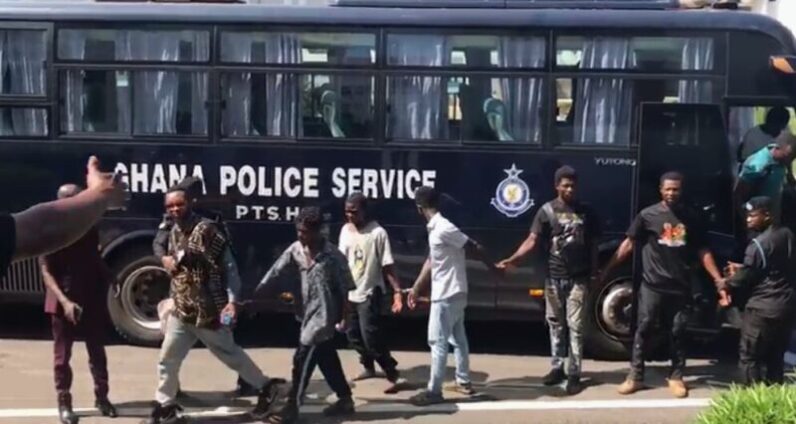
A good number of protesters are facing trial after the police arrested them and accused them of breaking various public order provisions.
Latest Stories
-
Prof. Kwofie urges publishers to use indigenous knowledge systems to decolonise AI
20 minutes -
NDC’s two years of economic gains not enough to establish stability – Alan Kyerematen
29 minutes -
AFCON 2027Q: Nine new call-up for Cote, The Gambia matches
49 minutes -
Ghana’s MSMEs: Burdened by regulation and overtaxed; why the system isn’t working
1 hour -
Patience Akyianu, former Barclays Bank Ghana MD and Hollard Group CEO, reported dead
1 hour -
Mahama pushes ‘health sovereignty’ agenda, says Global South needs control over resources
1 hour -
Mahama: We are reforming systems, fighting corruption and improving use of public funds
1 hour -
Catholic Bishops welcome task force to tackle drug menace, acknowledge inter-agency efforts
2 hours -
Ghana Catholic Bishops demand urgent action against drug trafficking
2 hours -
Tamale: 5 arrested over suspected drug activities; police seize pistols, narcotics
2 hours -
We have lost a great developer – Mankranso residents pay tribute to late DCE
2 hours -
Ghana Law Society sets September 30 for maiden Bar Conference on legal reforms
2 hours -
GPL Week 3: Port City’s Gyetuah bags a brace as 9 outstanding players named NASCO Players of the Match
2 hours -
Visibility without substance is just noise; I don’t seek popularity—Dr Oppong-Fosu
3 hours -
The late Abubakar Sedik was an exceptional DCE – Ashanti Regional Minister
3 hours