

Audio By Carbonatix
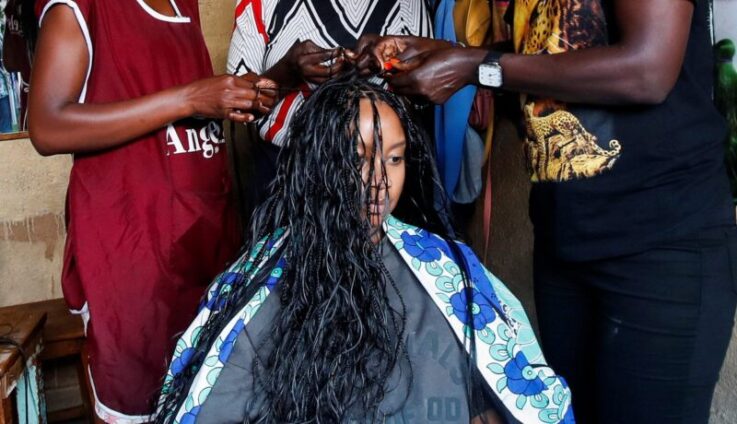
Kenyan hair braider Jemima Atieno spent decades building her business in Nairobi's bustling Kenyatta market, only to lose ground to social media after the pandemic as her customers went online to find similar services.
"I don't know how somebody can get to social media," the 52-year-old told Reuters, reflecting a gender divide that has seen Kenyan men reap benefits from the country's expanding online gig economy while women have been left behind.
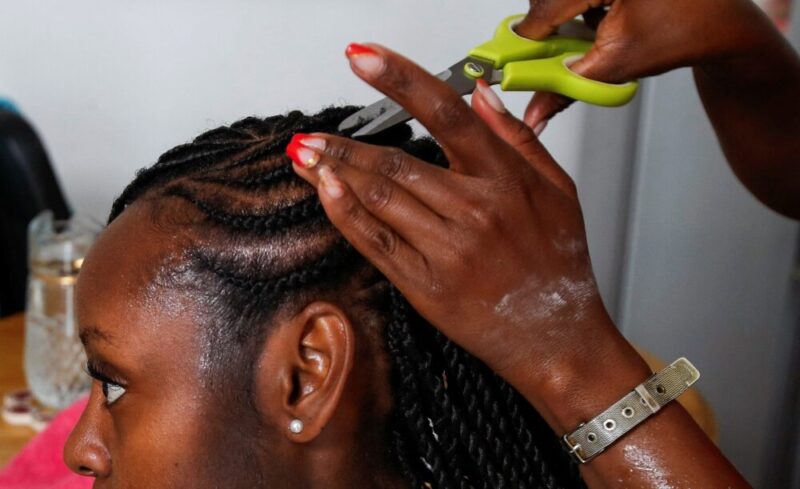
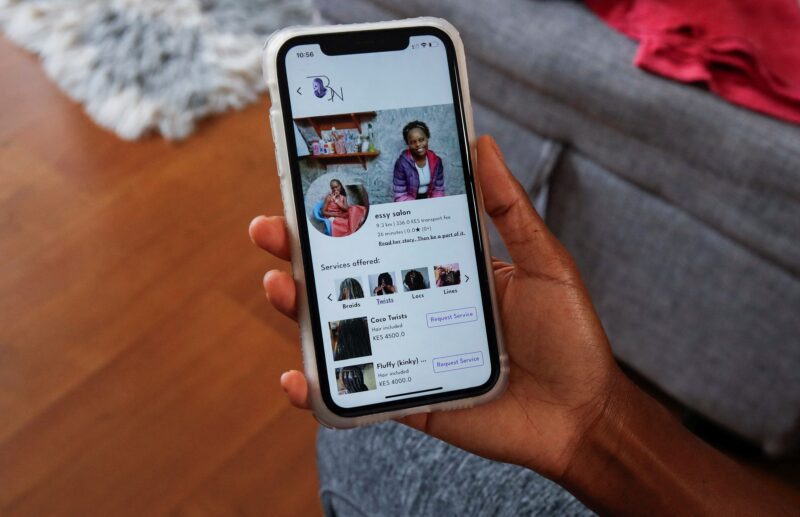
But her business received a boost when she discovered "Braiding Nairobi," an app where users can order braiding services directly to their home, similar to what Uber, Glovo and other digital platforms have done for food and grocery deliveries.
Founder Natachi Onwuamaegbu, 25, told Reuters she launched the app in May after interviewing braiders at Kenyatta market, home to hundreds of salons, for a storytelling project.
Braiders told Onwuamaegbu their business went up after she published their stories on Instagram and an online blog.
She realized she could create an even playing field "where you don't have to be super proficient in Instagram and social media to be able to gain access to a wider web of customers."
Kenyan women have less reliable internet access than men, and lower education levels translate to fewer digital literacy skills, according to a 2023 International Labour Organisation report.
Only 28% of gig workers in Kenya are female, and a majority are under 25, according to a 2023 study supported by the Alexander Von Humboldt Institute for Internet and Society.
Some braiders don't have reliable data or are not comfortable using the app, so Onwuamaegbu calls them directly to confirm orders.
So far, 180 customers and around 100 hair braiders have signed up, with more on the waitlist as Onwuamaegbu seeks to expand the app slowly.
Experts warn that Kenya lacks laws to regulate the gig economy.
"There needs to be in place some sort of policies to ensure some security for the gig workers," said researcher Kutoma Wakunuma. "But these policies are slow in the making."
But braiders told Reuters the economic benefits outweigh the risks.
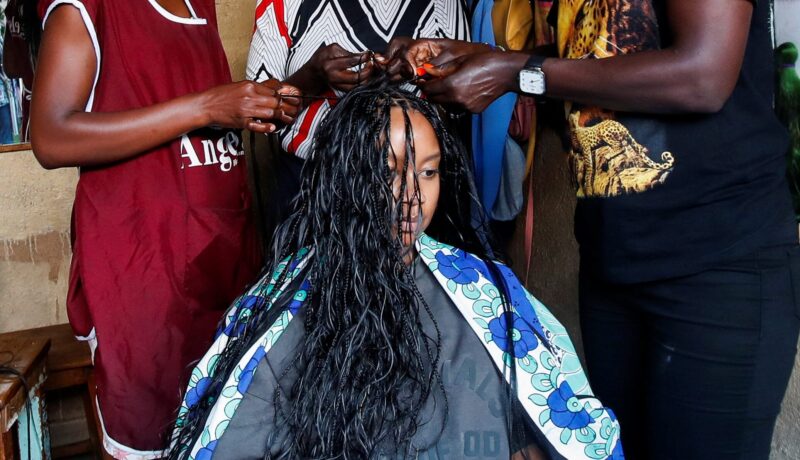
"In this app, everything is convenient -- the prices, the style, the client needs," said Esther Mulandi, deftly weaving a customer's braids. "For me, it's working and growing very fast."
Latest Stories
-
ECG procurement is where politicians ‘milk’ the company – Ben Boakye
21 minutes -
IPPs’ contractual arrangements partly to blame for energy sector problems – TUC’s Dr Otoo
33 minutes -
Like Benzema & as good as Haaland – Alonso on Joao Pedro
36 minutes -
Check out 41 countries Ghanaians can visit without a visa on ordinary passports
46 minutes -
I disrupted pre-season travel plans to prepare players – Arteta
53 minutes -
Richarlison’s move to Vasco da Gama falls through
1 hour -
Dictator meme shows lack of human awareness – Mbappe
1 hour -
2030 World Cup: Moroccan official told to stop making 2030 final promise
1 hour -
Mourinho compares Mbappe and Vini Jr to fruit trees after boos
1 hour -
Lewis Hall signs new contract with Newcastle until 2031
2 hours -
Signed instead of Rashford, Gordon is proving worth at Barca
2 hours -
2026 BECE automatic placement rate hits 87.3%, highest since 2021 — CSSPS data
2 hours -
Ghanaian youngster Zayan Omar joins Spanish side Málaga
2 hours -
New Man City signings desperate to win – Dias
2 hours -
Morocco rejects Spain blame game, warns against using kingdom as political pawn
2 hours