

Audio By Carbonatix
Ghana like most developing countries in Africa is vulnerable to climate change impacts and drastic action is required to turn the tide.
Emissions in Ghana are expected to rise from 28 Mt CO2e in 2021 to over 140 Mt in 2050, with the bulk of emissions growth coming from transport, driven by population growth, GDP per capita growth, and vehicle ownership.
Over the past decade, the oil sector has contributed around $6.5 billion of direct revenue to Ghana’s budget. This sector is an indicator and driver in the growth of the economy and for decades the country still depends heavily on this sector to run its industries, transportation, economy and a determinant of prices of goods and services in the country.
Determined to achieve her Sustainable Development Goals 7 (Affordable and Clean Energy) and 13 (Climate Action) by 2030, while demonstrating action against climate change it is possible to bring the energy-sector-related carbon emissions to net zero without serious effects on the economy Ghana’s Energy Transition and Investment Plan was recently launched by the President recently, describing the plan as, “Ghana’s journey to achieve net-zero emissions by 2060 based on the latest data and evidence, ensuring that as the economy thrives, it does so in harmony with the environment.”
Energy experts have described this plan as ambitious than the previous energy transition framework as this plan reflects its clear and comprehensive strategy for achieving significant carbon emissions reduction and transitioning to cleaner energy sources.
The use of sustainable sources or alternative sources of energy is still in its budding stages. Oil reserves in Ghana are very limited hence the country relies heavily on imported petroleum fuel. The import of oil puts a strain on the country’s economy. The dependence on fossil fuels makes energy security very fragile in supply. Environmental sanitation is a topical issue in Ghana as the sanitation value chain has serious gaps which renders it ineffective and needs to be addressed. According to the World Bank as of 2021, only 25.3% (PHC 2021) of the national population had access to improved sanitation that is not shared.
About 17.7% of Ghanaians still practice open defecation. Poor sanitation costs Ghana $290 million annually, underscoring the need for improved infrastructure and practices. Faecal sludge is an environmental nuisance from the sanitation service chain. It is estimated that 36,685 m3 of faecal sludge is generated on a daily basis in Accra alone.
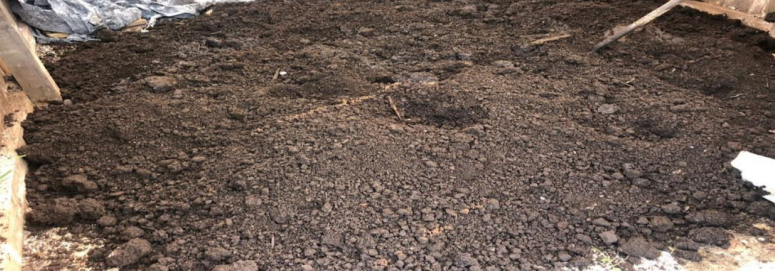
Infrastructure for sanitation service chain is insufficient and hardly accessible in a lot of cities, an estimated 72% and 43% of the sludge produced in Accra and Kumasi ends up untreated in the environment or the sea.
The intersections of escalating poor sanitation services, transitioning to sustainable energy sources and the deepening climate crisis presents a triple challenge of high significance to a developing country like Ghana. To achieve SDGs and transform the economy, it's crucial to transition to sustainable, affordable, and green energy sources, reducing emissions and promoting renewable energy to fuel economic growth and development.
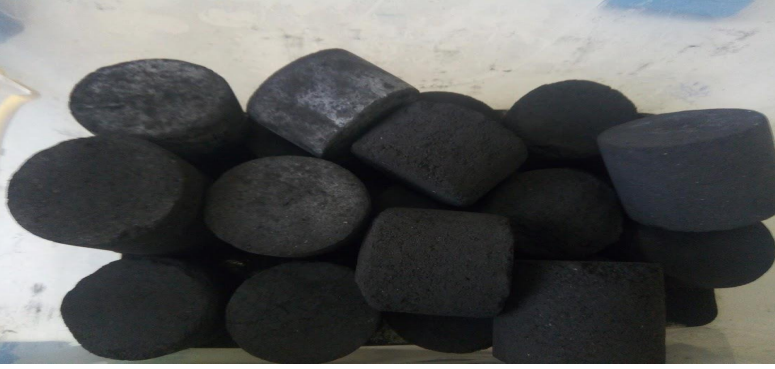
Conversion of Faecal Sludge to biofuels such charcoal briquettes, biomethane and biodiesel as a source of energy presents an alternative and innovative solution to the looming economic and sanitation issue.
A car powered by human waste completed a 2,000 km European road trip, showcasing Germany’s Fraunhofer Institute's technology to produce 50,000 liters of biocrude oil from 500 tons of sewage sludge. Moreover, Columbia University's Engineering School, Waste Enterprisers Ltd working with Kwame Nkrumah University of Science and Technology (KNUST), and the Kumasi Metropolitan Assembly, launched a pilot facility in 2017 to convert faecal sludge into biodiesel fuel.
The largest Faecal Sludge Treatment facility in Accra is presently in the production of charcoal briquettes from Faecal Sludge for the local market and this was aired on CNN on its Innovative Cities Documentary. Through proper planning and investment into production of biofuels the nation has the potential to address and win the battle against Climate Change and solve to a larger extent the poor sanitation problem and emissions and this would not only reduce our emissions but mitigate the sanitation problem and solve the upsurge and dependency on imports of petroleum products.
The author Felix Safo Danquah (PE-GhIE) is a Master’s Candidate in Climate Project Management at Peoples Friendship University of Russia (RUDN).
Contact: fsdanquah@gmail.com Russia
Latest Stories
-
Mahama warns against weaponising identity to fuel exclusion and conflict
41 seconds -
Mahama calls for global equality, says “no race is superior, no nation is inferior”
59 seconds -
24-Hour Economy will transform Ghana into industrial hub – Mahama
2 minutes -
Mahama highlights MahamaCare, Free Primary Health Care at UN
4 minutes -
Mahama says Big Push will bridge Ghana’s rural-urban infrastructure gap
5 minutes -
MPC maintains policy rate at 14% for third consecutive meeting amid inflation risks
9 minutes -
Freedom of any nation is insecure unless linked to freedom of all humanity – Mahama
10 minutes -
Mahama backs stronger global action to lift Cuba embargo
10 minutes -
Full Text: President Mahama’s speech at 81st Session of the United Nations General Assembly
13 minutes -
Climate finance must come as grants, not loans – Mahama
14 minutes -
Mahama demands climate finance as he recounts Ghana’s deadly June floods
16 minutes -
Mahama outlines Ghana’s priorities ahead of 2027 AU chairmanship
17 minutes -
Mahama urges world leaders to build bridges instead of walls
19 minutes -
Mahama highlights Ghana’s economic recovery, healthcare expansion at UN
19 minutes -
Mahama: Africa will no longer export raw minerals without value addition
28 minutes