

Audio By Carbonatix
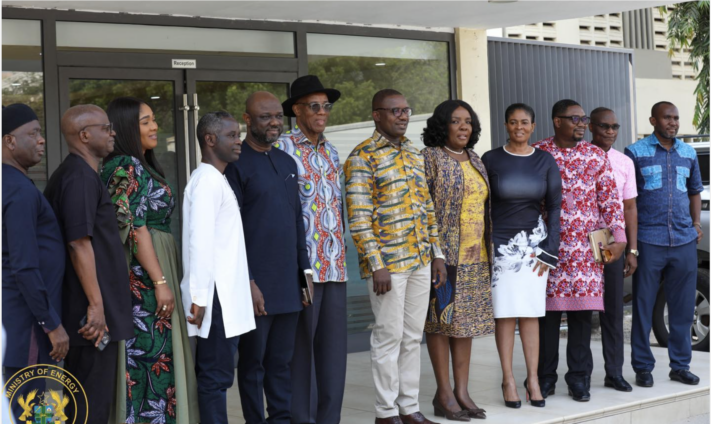
The Energy and Green Transition Minister, John Abdulai Jinapor on Friday inaugurated a seven-member committee to explore options for private sector involvement in the operations of the Electricity Company of Ghana (ECG).
The move is part of the government’s efforts to revitalise the state-owned entity.
The committee has Mr Jabesh Amisah-Arthur, an energy consultant, as Chairman and Dr Shafic Suleman as Secretary.
Other members are Mr Benjamin Boakye; Dr Simon Akorli, Mr Ebenezer Baiden, Mr Emma Akua Bulley and Mr Edward Abrokwah.
The Minister said the move came in response to longstanding challenges faced by ECG, including inefficiencies, financial losses, and growing debt, which had hindered its ability to deliver reliable electricity to Ghanaians consistently.
“…. We believe there should be private sector participation,” he said.
Privatisation or some form of private-sector involvement could provide the resources, expertise, and efficiency required to turn around ECG’s fortunes and enhance electricity supply across the country, Mr Jinapor said.
He, therefore, emphasised a non-partisan approach to the process, stating the importance of neutrality and expertise in the committee's composition.
“… We will stay off as politicians and let them develop a framework in a transparent, open, and frank manner. Once we get the buy-in of Ghanaians, we can set standards using a Request for Proposal (RFP) or competitive tender process,” he said.
During Mr Jinapor’s vetting on Monday, January 13, he explained that the committee’s primary task would be to examine and propose viable models for private-sector involvement that could enhance ECG’s financial and operational sustainability.
Mr Amisah-Arthur, the committee chairman, pledged to work diligently to address the concerns of customers, stakeholders, and the sector as a whole.
While acknowledging the importance of financial sustainability in the sector, he promised the Committee would give attention to recommendations, interventions, and lessons from past efforts.
That would be done by emphasising the Committe’s commitment to prioritising homegrown approaches and strategies, to ensure local private sector entities had the opportunity to contribute to the sector’s development.
“We will do our best to address the concerns of our customers, the owners of the business, the staff, and management,” Mr Amisah-Arthur said.
“… We will consider the main weaknesses of the distribution sector and give priority to homegrown approaches and strategies.”
He expressed the committee’s gratitude for being called upon to provide service through the members expertise to bring benefits to the sector and its customers.
Latest Stories
-
Fisheries Commission inaugurates national-level fisheries co-management committees with support from GFRA
17 minutes -
Rafatu Inusah appointed Chef de Mission for 2027 Commonwealth Youth Games
18 minutes -
Production, market risks and poor records constrain agricultural lending – GIRSAL
23 minutes -
Photos: Gender Ministry presents 2027–2030 priorities at budget technical hearing
33 minutes -
Photos: Mahama engages global leaders in Presidential Roundtable in New York
34 minutes -
Ecobank deepens support for agriculture with dedicated expertise and training – Charlotte Amanquah
38 minutes -
High collateral, documentation requirements limiting farmers’ access to finance – PFA
50 minutes -
NPP will be out of opposition in just two years – Afoko vows
58 minutes -
5-month-old baby stolen at Asafo Market, police launch manhunt for female suspect
1 hour -
Forklift kills roadside pawpaw seller at Asokwa Brewery
1 hour -
When market traders want to lose weight: What are they doing and who are they listening to?
2 hours -
‘I made the decision for him’ – Adebayor on Senaya representing Ghana
2 hours -
Livestream: Ecobank-Joynews financial dialogue series
2 hours -
AFCON 2027Q: Ghana faces ‘difficult’ Ivory Coast clash without Kudus – Adebayor
3 hours -
Daily Insight for CEOs: Understanding the Competitive Landscape
3 hours