

Audio By Carbonatix
The Ghana Integrity Initiative (GII) has suggested measures to identify individuals who own or control companies and other legal entities in the country.
The organisation said that having detailed information about decision-makers, also known as “Beneficial Owners,” would help combat corruption and illicit transactions.
In a report titled “Assessment of the Beneficial Ownership Regime in Ghana,” GII noted that despite existing legal and regulatory frameworks to identify ‘legal and natural’ persons behind companies, there were still gaps that needed to be addressed.
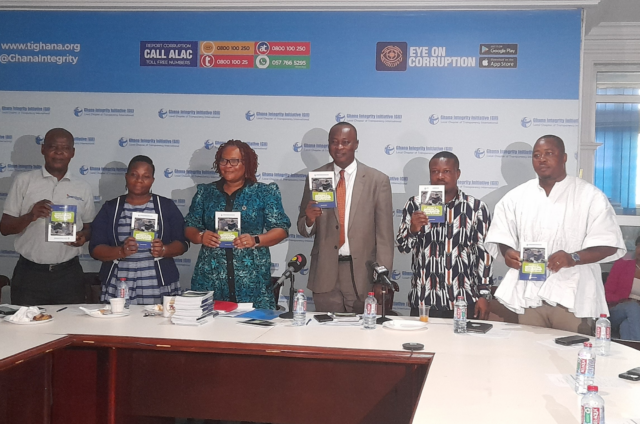
The report, launched Wednesday in Accra, assessed the extent of Ghana’s compliance with Beneficial Ownership (BO) standards under international law and other global initiatives.
It is part of a GII project titled “Increasing Domestic Revenue Mobilisation by Promoting Corporate, Natural Resource, and Professional Integrity,” funded by the Norwegian Agency for Development Cooperation (NORAD) through Global Financial Integrity (GFI).
To address the identified lapses in Ghana’s Beneficial Ownership regime, the report proposed several actions for relevant authorities.
One recommendation was for a system that would grant law enforcement and anti-corruption agencies “access rights” to a Central Registry (CR) or database at the Office of the Registrar of Companies (ORC), which holds such information.
The report also suggested making the database available to the public for “free in accordance with open data principles.”
“The state should, therefore, resource the ORC and free it from the requirement to raise internally generated funds for government from the management of the CR,” the report stated.
It further noted that the CR is “not freely accessible, downloadable, searchable, and reusable by the public,” which contradicts Act 992 that mandates access to BO information in the CR in line with open data principles.
The GII was optimistic that the assessment would help strengthen the Beneficial Ownership Transparency (BOT) regime in Ghana to “address corruption, combat illicit financial flows, and improve domestic resource mobilisation.”
Mary Awelana Addah, Executive Director of GII, said BOT was not “merely an administrative process but a fundamental pillar in the fight against corruption.”
“We need to be more robust in our approach to dealing with the issues around Beneficial Ownership disclosure, because it is the antecedent factors that culminate in all the illicit issues that happen,” she stated.
She said the report would raise awareness on the issue and encourage relevant authorities to take action.
Maxwell Kuu-Ire, Country Representative for Global Financial Integrity (GFI), expressed the organization’s commitment to advancing transparency and accountability.
He stressed the need to address “inconsistencies” in the definition of Beneficial Ownership in the country’s legal framework.
Stephen Azantilow, Director of Anti-Corruption at the Commission on Human Rights and Administrative Justice (CHRAJ), noted that BOT prevented individuals from “hiding behind corporate structures to engage in indecent activities.”
He urged authorities to go beyond business registration documents and verify the persons listed as Beneficial Owners of registered entities.
BOT is considered one of the “most potent measures” for fighting corruption, controlling Illicit Financial Flows (IFFs), and combating organized crime, money laundering, drug trade, and human trafficking.
Madam Sandra Korkor Quarcoo, Director of Inspection and Compliance at the ORC, said the institution is taking steps to provide real-time Beneficial Ownership information to stakeholders.
In addition to recommendations to the Attorney-General and Minister of Justice, the GII report also called for an extension of the five years during which financial institutions are required to keep records and books.
Latest Stories
-
Ghanaian youth demand 40% of climate adaptation budget for four northern regions
1 hour -
Wengam cautions African pastors against materialism, complacency
1 hour -
Nine of the best TV shows to watch this September
2 hours -
Lionel Messi scores 4 goals as Inter Miami net 7 in record win
3 hours -
‘No alcohol on duty’ — Bagbin warns parliamentary security officers
3 hours -
Canada installs large Lake Ontario sign in latest jab at US
4 hours -
Sand-winning destroys over 50 acres of farmland at Tsumkpo
4 hours -
Akufo-Addo praises Dagbon for upholding Peace Accord
5 hours -
Ghana High Commission to UK steps in as stranded musician Barosky considers returning home
6 hours -
Norway’s new king remembers ‘my dear father’ in first speech
6 hours -
5 Fiscal Council members cleared
6 hours -
At least 37 dead and hundreds evacuated after strike on Kyiv weapons depot
7 hours -
Guinea-Bissau chosen to pilot ECOWAS community health policy
7 hours -
Health service support centres to give patients in 3 West African countries a stronger voice in healthcare
7 hours -
Thieves steal 600-diamond necklace from Vienna museum in broad daylight
7 hours