

Audio By Carbonatix
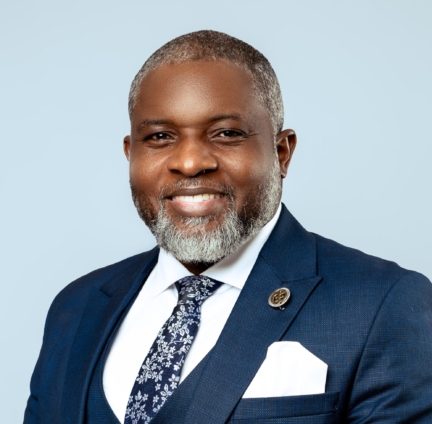
After the first COVID-19 vaccines landed in Ghana under the COVAX initiative, it was hailed as a breakthrough. But for Dr. John Amuasi, a global health expert, it was also a sobering reflection of global inequity.
“It took so much effort and was a clear reflection of how, without constraints being placed, countries would always seek their own interests ahead of global interests,” said Dr. Amuasi, the lead for the Global Health and infectious diseases Research group hosted at both the Kumasi Centre for Collaborative Research (KCCR) at KNUST and the Bernhard Nocht Institute of Tropical Medicine in Hamburg, Germany.
“Pathogens know no borders and don’t carry passports, but when there’s trouble, the world somehow forgets this.”
That hard truth now underpins a global turning point: the adoption of the WHO Pandemic Agreement, a landmark accord ratified at the 78th World Health Assembly in Geneva.
The agreement aims to reshape how the world prepares for and responds to pandemics, placing equity, solidarity, and scientific cooperation at the core.
READ ALSO: Ofosu-Dorte warns of potential dollar dumping as cedi strengthens
As one of Africa’s most vocal advocates for research-driven public health policies, Dr. Amuasi sees the agreement as a global framework and a call to action for all, including the institutions he works with.
“We would need to carefully study the agreement and use it to inform research prioritisation and strategy,” he noted, “so in the event of a pandemic, we’re ready to hit the ground running with important research contributions.”
He added that Ghana must invest in clinical trial infrastructure. “Building our capacity for phase I, II and III clinical trials is critical... particularly for generating data in a timely fashion to guide vaccine, drug, and diagnostic development, deployment, and monitoring.”
The agreement also outlines mechanisms to ensure timely access to life-saving health products. Under the WHO’s new Pandemic Access and Benefit-Sharing (PABS) system, participating manufacturers must commit to making 20% of their real-time production of vaccines, diagnostics, and therapeutics available to the WHO, 10% as donations, and the remainder at affordable prices.
This, Dr Amuasi argues, is where countries like Ghana can lead by example.
“To ensure equity becomes a reality... Ghana would need to take the lead and support the process of getting as many countries as possible to ratify the Agreement as quickly as possible. This is arguably the most critical next step.”
WHO Director-General Dr. Tedros Adhanom Ghebreyesus hailed the agreement as a breakthrough in multilateral cooperation: “The world is safer today thanks to the leadership, collaboration, and commitment of our Member States,” he said.
He called the agreement a “victory for public health, science, and multilateral action”, asserting that it would protect societies and economies from suffering losses akin to those endured during the COVID-19 pandemic.
Importantly, the agreement reinforces national sovereignty. The text states unequivocally that WHO will not have the authority to mandate or impose public health measures such as travel bans, lockdowns, or vaccine mandates on any country.
“Nothing in the WHO Pandemic Agreement shall be interpreted as... mandating or otherwise imposing any requirements that Parties take specific actions,” the text reads, ensuring that national policies remain firmly in domestic hands.
Still, the accord represents a significant evolution in global health governance. Dr Teodoro Herbosa, President of the 78th World Health Assembly, described it as a “once-in-a-lifetime opportunity to build on lessons learnt... and ensure people worldwide are better protected.”
“Now that the Agreement has been brought to life,” he urged, “we must all act with the same urgency to implement its critical elements.”
The resolution now calls upon all states and regional organisations to ratify the agreement “at the earliest opportunity” and urges immediate steps to begin implementing its provisions even before it enters into force.
For Dr. Amuasi and many in the global health community, this diplomatic achievement is a moral imperative. The world cannot afford to forget the chaos, inequity, and lost time on account of the last pandemic.
“This Agreement,” he said, “is a chance to get it right before the next crisis hits.”
Latest Stories
-
Global health must be led by countries, not designed for them – Mintah Akandoh
41 minutes -
Mahama honoured at 2026 World Health Summit in Berlin for global health leadership
50 minutes -
Breast cancer is not a death sentence – Besease Kontire Obaapanin, Magmina Foundation lead awareness campaign
52 minutes -
EcoBank invests in digital education of 4 Garisson School to mark 40 years in Africa
1 hour -
AGI urges investment in skills and raw materials to strengthen local manufacturing
1 hour -
GPL 2026/27: ‘We have to rectify our mistakes’ – Boadu reacts to Aduana FC defeat
1 hour -
No disability access, no building permit – KMA declares
1 hour -
Asantehene to lead environmental restoration effort at Jimi Land Reclamation Site
2 hours -
Poor Ghanaians are being jailed because they cannot afford justice – Crime Check Foundation
2 hours -
No conflict in appointing Emelia Agbenyo as Deputy EC Chair – NDC
2 hours -
87-year-old man jailed 20 years for defiling 9-year-old girl at Ofankor
2 hours -
Sankofa Gold targets 70kg output after 9-month shutdown
2 hours -
Tamale, Bolgatanga had just one Legal Aid lawyer between them – Kwesimintsim MP
2 hours -
PAC orders eviction of former irrigation company MD from official residence
2 hours -
Legal Aid Commission has offices in only 45 of Ghana’s 261 districts, needs 180 more staff
2 hours