

Audio By Carbonatix
Minister for Government Communication, Felix Kwakye Ofosu, has attributed Ghana’s mounting energy sector debt to deliberate policy decisions and what he described as “criminal mismanagement” of the exchange rate under the previous administration.
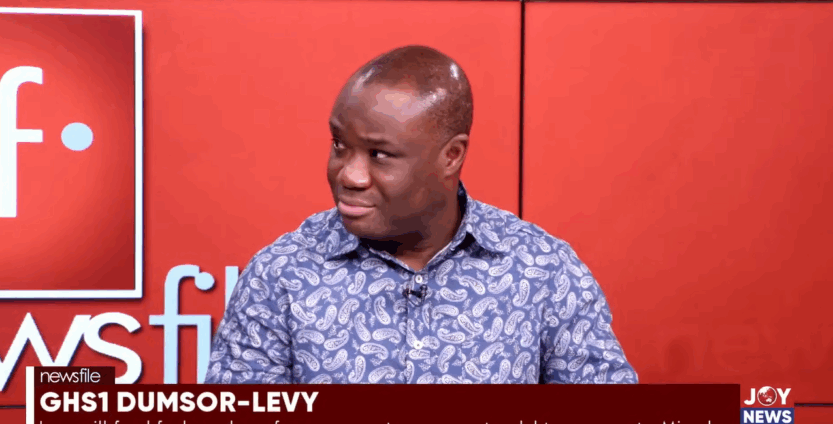
Speaking on JoyNews’s Newsfile on Wednesday about the recently introduced GH¢1 fuel levy, Mr Kwakye Ofosu stated that the current government inherited an energy debt of GH¢67 billion.
“Even before this government took over – and let me stress that this is a government that has been in power for barely six months – we had to deal with what we call energy legacy debt of 67 billion Ghana cedis. That was even before we lifted a finger as a government,” he said.
He explained that the bulk of the debt stems from chronic operational shortfalls at the Electricity Company of Ghana (ECG), largely due to a tariff system that does not fully recover the cost of power production and distribution.
“This debt has come about because … even if ECG collected all the money due them, it would still not match how much is spent to produce and distribute power. That is because of the way the tariff is structured. So under-recoveries are one of the reasons why we have the 67 billion Ghana cedis, and this has been the case for decades,” Mr Kwakye Ofosu noted.
The Minister further criticised the former government’s decision to exclude fuel costs from the electricity tariff, shifting that burden to the state.
“For many years, a critical component for producing power – which is the purchase of fuel – was not added to the tariff. The president and cabinet at the time decided that consumers should not pay for that, and government would cover the cost. Unfortunately, they did not pay for it. So all the liquid fuel they bought, a significant part of it remains unpaid for – and that is the debt we now have to shoulder.”
Kwakye Ofosu also laid blame on the former Vice-President Dr Mahamudu Bawumia for mismanaging the exchange rate, which he claimed worsened the debt situation.
“The criminal mismanagement of the exchange rate … led to a situation where, between July 2022 and November that year, it rose from 6 cedis to a dollar to 17 cedis. And you know that Independent Power Producers are paid in dollars, and some of the inputs into power generation are also bought in dollars, so once this happened, huge debts were accrued.”
Latest Stories
-
Final day of Joy FM Back-to-School Fair: Come shop, save and prepare for the new school year
19 minutes -
GSE showed strong performance in August 2026 despite recording more stock losses
2 hours -
If CJ needs ethics law to know SOE comments were wrong, he may not be worthy of office – Arthur Kennedy
3 hours -
Stop touring state agencies and focus on the Judiciary’s problems – Arthur Kennedy to CJ
3 hours -
Apologise and don’t do it again – Arthur Kennedy to Chief Justice over SOE comments
3 hours -
Chief Justice remains committed to judicial independence, justice and equality – Judicial Service
4 hours -
Ghana concludes evacuation of citizens from South Africa; total returnees reach 1,900 – Ablakwa
4 hours -
Africa must define its own green transition path – Prof Fatima Denton
5 hours -
WASSCE 2026: English Language performance falls to 62.4% – WAEC
5 hours -
WASSCE 2026: Social Studies records sharp rebound as Maths, Science also improve
5 hours -
2026 WASSCE entry rises by 11% as 512,862 candidates sit exams
5 hours -
WASSCE 2026: English Language performance falls to 62.4% – WAEC
6 hours -
WAEC cancels 2026 WASSCE results of 8,295 candidates over examination irregularities
6 hours -
WAEC releases provisional 2026 WASSCE results for 512,862 candidates
6 hours -
CJ’s remarks on SOEs were made in good faith, not to undermine judicial independence – Judicial Service
9 hours