

Audio By Carbonatix
You need deep roots, not deep pockets, to stand firm. This truth defined this year’s World Health Assembly, where the focus shifted from grand posturing to real change: ownership, inclusion and trust.
In a world of spectacle, that quiet honesty made the World Health Assembly historic.
The truth was clear: the era of ever-expanding global health budgets is over. Even the WHO cut evening sessions to save money. But this wasn’t an Assembly of despair - it was one of reinvention.
I attended the World Health Assembly - my second in 25 years - with a conviction: Africa is not too poor to deliver health care. What it needs are deep roots - ownership, inclusion & trust.
By ownership, I mean leadership and political commitment. Inclusion ensures no one is left out. And trust is built through credible partnerships to deliver on promises. This belief echoed through the sessions.
There was criticism. Some predictable, others profound. The US Health Secretary, in a recorded message, called the WHO outdated and proposed a new framework. U.S. abstained from the first pandemic agreement, backed by 124 nations.
The voices for change came from within. Do we need so many global health agencies? Can the WHO become smaller and leaner, as Thailand’s Suwit Wibulpolprasert asked? Former New Zealand Prime Minister Helen Clark called it a moment for reinvention.
That spirit turned into action. China pledged $500 million - now the WHO’s top state donor. Angola’s $8 million pledge signaled that Africa is stepping up. Novo Nordisk Foundation, CIFF, Nippon Foundation, Switzerland, Sweden, Qatar, and others added over $170 million.
The tone had changed: less posturing, more pragmatism.
Innovation and data are no longer buzzwords. They’re seen as vital tools for all countries - rich and poor - to guide investment, improve quality & rebuild trust.
Ghana, Egypt and Rwanda, among others, showcased health insurance schemes rooted in sovereignty, not dependency.
Pharma and big firms showed up in smaller forums that they once ignored - not to market products, but to discuss sustainability and trust.
NCDs - now causing 74% of global deaths - got deserved attention. HIV pooled procurement has cut ARV prices from $10,400 to $40. Could the same be done to make insulin and hypertensive medicines affordable?
Malaria, TB, maternal health and neglected diseases sessions echoed a shared truth. We don’t suffer from ignorance, but from the failure to deliver what we already know.
The workforce crisis was reframed. It's not just a migration issue. It's about systems that fail to absorb and empower talent. Wasted capacity is a policy failure.
The cracks in global health are visible - but they’re also seen as entry points for real reforms.
I left Geneva with hope, not hype.
Money is tight. But the resolve for impact felt real.
-
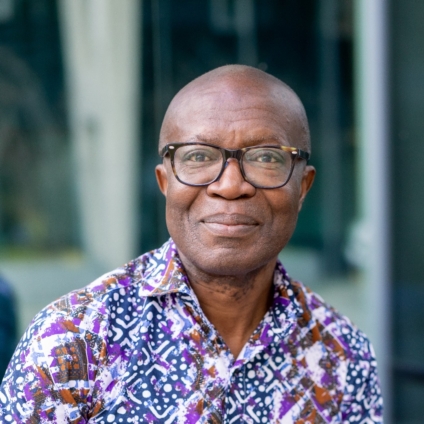
By Kwasi Boahene, Director of Health Systems, PharmAccess
Latest Stories
-
Jordan Ayew, Yirenkyi feature as Ghanaian trio exit Carabao Cup
2 hours -
Microsoft says AI rival Anthropic could have ‘disastrous impact’ on humanity
2 hours -
De la Fuente extends Spain contract to 2032
2 hours -
Raphinha hat trick in Barcelona’s 7-goal rout of Santander
2 hours -
Carabao Cup fourth-round draw: Liverpool to host Chelsea as Arsenal drawn away to League Two Fleetwood
2 hours -
Mbappe, Vini and Konate obscure Real’s Ceuta message
2 hours -
Reggie Rockstone named Unichem Ghana brand ambassador
3 hours -
Man United lose to Brighton from 2-0 up to end 50-year record
3 hours -
Man United lose to Brighton from 2-0 up to end 50-year record
3 hours -
Petrol and diesel price rises push UK inflation higher
3 hours -
City of David Foundation donates to Koforidua Hospital, Koforidua Prison
3 hours -
AMA says Konkomba traders were consulted ahead of Agbogbloshie 24-hour market project
3 hours -
Let’s pilot Chinese in public schools before scaling up – EduWatch
4 hours -
Ghanaian tech professionals develop SMS-based AI tool for non-smartphones
4 hours -
MTN@30: Three customers drive away brand-new Land Cruiser Prado in Kumasi
5 hours