

Audio By Carbonatix
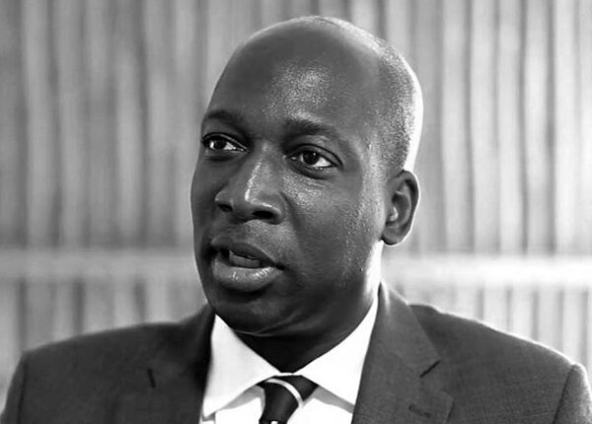
Former Executive Vice President of Unilever Ghana and Nigeria, Yaw Nsarkoh, says the collapse of local governance represents the “final nail” in what he calls the illusion of democracy.
Speaking on JoyNews’ PM Express following his provocative lecture titled “Iniquities of Iniquity in Our Santa Claus Democracy”, he argued that democracy in Ghana has been reduced to “a public auction for the highest bidder,” with the electorate treated as passive ballot boxes rather than active agents of change.
“The space in which we are now,” he said flatly, “Local Government has essentially collapsed. It is non-functional. People don’t feel represented, and the structures meant to connect power to the people have withered.”
He painted a picture of a democracy that wears the clothes of electoral procedure but lacks the lifeblood of true participation and accountability.
“We have a dark-skinned president and a national anthem, but we are not in control of our sovereign productive forces. That doesn’t make you independent — and certainly doesn’t make you democratic,” Nsarkoh said, referencing ideas from Kabral Blay-Amihere’s Return to the Source.
In his view, Ghana’s political trajectory has been fatally compromised by both historical burdens and present-day dysfunctions.
He dismissed simplistic comparisons between Ghana and countries like Singapore, insisting that starting points and institutional histories matter.
“The starting points were different,” he explained. “When Europe was democratising, capital accumulation had already begun. They were distributing wealth that had been created. We, on the other hand, were navigating post-colonial chaos.”
He further cited Claud Ake’s critique of post-colonial governance in Africa, arguing that Ghana’s ruling class quickly became what he called “the new colonialists.”
“The post-colonial elite took over the facilities of the state and looked after themselves,” Yaw Nsarkoh said. “The system is not broken — it is working exactly as it was re-engineered to: to serve a tiny elite.”
He condemned the monetisation of politics as a core reason for citizen alienation, saying, “Our politics has become transactional. It’s a bidding war. And the people are no longer citizens — they are spectators.”
According to Yaw Nsarkoh, democracy cannot be sustained without functioning local governance, deep civic consciousness, and a re-imagining of how sovereignty is exercised in a post-colonial state.
“Until the people are empowered not just to vote, but to shape and own the governance process, we will continue this theatre — democracy as choreography, not transformation.”
As he sees it, Ghana is now dangerously close to the tipping point. “You can’t run a country from Accra alone,” he warned.
“And when people can’t feel power where they live, the legitimacy of the whole system begins to rot from below.”
Latest Stories
-
Defence Ministry welcomes Kenneth Gilbert Adjei as new Defence Minister
10 seconds -
Bawumia charges NPP executives to rebuild party for 2028 victory
3 minutes -
Unite the region and deliver victory in 2028 – Dr. Bawumia to new Greater Accra NPP executives
3 minutes -
Ukrainian strikes kill six in Russia, acting governor says
3 minutes -
The goal is to win 2028 polls – Bawumia
3 minutes -
GoldBod secures 30% of large-scale gold output for Ghana’s strategic reserves
4 minutes -
FDA warns against unauthorised chemicals for ripening plantain
5 minutes -
‘If you sell gold at a loss, you’re not a good trader’ – Afenyo-Markin jabs Sammy Gyamfi
8 minutes -
Dr. Bawumia meets new Greater Accra NPP executives; charges them to bring all talents on board
12 minutes -
Before the Next Jason: When seniority becomes a weapon against young academics
25 minutes -
For President Mahama, every mother must live. What about you?
33 minutes -
OMCs commence fuel price reviews; Star Oil sells petrol at GH¢14.97, diesel kept at GH¢16.97
1 hour -
Residents of Brekusu-Kwabenya-Kitase protest over deplorable roads
1 hour -
Genser Energy secures 456m euros to accelerate next phase of growth across West Africa
1 hour -
COKA visits Kokofu after Ashanti NPP win, calls for unity ahead of 2028
1 hour