

Audio By Carbonatix
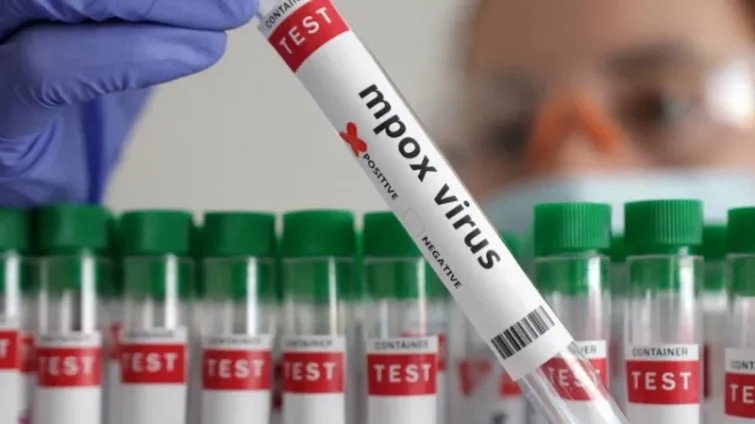
The World Health Organization (WHO) has renewed its declaration that Mpox (formerly monkeypox) remains a Public Health Emergency of International Concern (PHEIC). WHO Director-General Dr. Tedros Ghebreyesus made the announcement following a recent round of deliberations by the International Health Regulations (IHR) Emergency Committee. A task force comprising leading global health experts reviewed the situation and advised that the emergency status must continue.
In a joint statement, Dr. Ghebreyesus noted that despite progress in some countries, the global situation remains alarming due to rising Mpox cases, including a recent surge in West Africa and likely underreported transmissions elsewhere.
“Ongoing operational challenges, including inadequate surveillance and diagnostics and a lack of funding, make prioritising response interventions difficult and require continued international support,” he said.
The Heavy Cost of Unseen Gaps
Mpox, a viral disease related to smallpox, has re-emerged with devastating effects across parts of the African continent, particularly in Central and West Africa. WHO data shows the Democratic Republic of the Congo (DRC) remains a hotspot, recording between 200 and 600 new cases weekly. These figures reflect widespread suffering, disrupted lives, and massive pressure on already fragile healthcare systems.
According to UNICEF, children are disproportionately affected. In Burundi, they account for nearly 60% of infections, while in the DRC, 77% of Mpox-related deaths are among children under 15. Ongoing violence and instability in countries like the DRC have severely hampered public health interventions and limited access to basic services for displaced populations. WHO estimates that more than US$220 million is urgently needed to respond effectively to the crisis in affected countries.
A Spreading Shadow Over the Continent
The outbreak continues to expand across Africa. While Uganda and Burundi are seeing moderate increases, new cases in Nigeria, Sierra Leone, and Liberia are raising alarms, particularly because these countries had previously reported few or no cases.
The US Centers for Disease Control and Prevention (CDC) has confirmed that Clade I Mpox is driving transmission in countries including Uganda and Zambia. The virus is also widespread in Burundi, the DRC, Kenya, Malawi, Rwanda, South Sudan, Tanzania, and Zambia. Continued transmission has also been reported in the Central African Republic and the Republic of the Congo. Nigeria has so far recorded 332 cases and three deaths.
Global Reach of Mpox
Clade I Mpox has also caused localised outbreaks outside Africa, transmitted through sexual contact, household exposure, and healthcare-related infections—especially in the absence of infection control precautions. Since early June, Clade I Mpox cases linked to travel have been reported in Australia, Brazil, China, Germany, India, the United Kingdom, the United States, and several other European countries.
Meanwhile, the CDC has reported that the global Mpox outbreak driven by Clade IIb has surpassed 100,000 cases across 122 countries—including 115 that had never previously reported Mpox. The scale of this spread highlights the disease’s capacity to cross borders and underlines the global nature of health security threats.
Ghana’s Determined Fight
In Ghana, the WHO’s renewed alert reinforces an urgent national call to action. The Ghana Health Service (GHS) remains vigilant, with local reports indicating an increase in confirmed Mpox cases. To date, Ghana has reported 133 confirmed cases across more than ten regions, with the Western and Western North regions most affected. Males constitute the majority of these infections.
Ghana’s first Mpox case was recorded in June 2022. Since then, the country has reported 127 confirmed cases and four deaths to WHO. Drawing from that experience, the GHS is stepping up surveillance and planning to procure Mpox vaccines.
Dr. Franklin Asiedu-Bekoe, Director of Public Health at the GHS, confirmed that efforts are underway to identify vulnerable populations for targeted vaccination. GHS has also advised citizens to maintain high personal hygiene, avoid direct body contact with symptomatic individuals, and seek medical attention promptly if experiencing rashes, fever, or swollen lymph nodes. This proactive approach aims to curb further spread and protect communities.
WHO: Updated Recommendations
WHO has also issued revised temporary recommendations for member states experiencing Mpox outbreaks. Dr. Ghebreyesus recalled that the initial PHEIC declaration for Mpox was made on 14 August 2024 in response to the outbreak in the DRC and its spread to neighbouring countries.
“Since then, the committee has met three more times, and on each occasion has recommended that the event still constitutes a PHEIC,” he said.
Countries are now urged to strengthen disease surveillance, enhance diagnostic capacity, investigate outbreaks to understand transmission dynamics, and roll out vaccines where possible. WHO emphasises that a comprehensive strategy combining preventive measures and rapid response is essential to contain the escalating threat posed by Mpox globally.
Latest Stories
-
He entered at eight. He is now 16: Ghana’s children growing up in prayer camps
1 hour -
‘Development must not always begin from Accra’ — Anwelle Foundation launched in Jirapa
1 hour -
PKO trio eye victories at Odwira Festival
4 hours -
346 Ghana Navy recruits pass out after 26 weeks of intensive training
4 hours -
Newsfile to discuss EOCO-MP arrest, drug trafficking, speech arrests and $235m water debt
4 hours -
JoyNews gets results as listeners raise GH¢40,000 to help 17-year-old student with cerebral palsy attend SHS
5 hours -
Vice President calls for stronger local pharmaceutical production to reduce medicine imports
5 hours -
The brewing tension at KNUST; Beware the Ides of October….
6 hours -
Health Ministry moves to integrate traditional medicine into mainstream healthcare
6 hours -
550 pupils in Kintampo South get educational lifeline as ‘Seeds of Hope’ reaches farming communities
6 hours -
Opoku Mensah urges Christian Council, House of Chiefs to speak up on democratic freedoms
7 hours -
Teacher unions’ strike: Minority demands immediate payment of teacher arrears, 20% deprived area allowance
7 hours -
The Accra-Kumasi Expressway: Building it right
7 hours -
Beyond gold exports: Building value and economic resilience from Ghana’s gold
7 hours -
2027 AFCONQ: Ghana under pressure as Gambia beat Somalia 2-1
7 hours