

Audio By Carbonatix
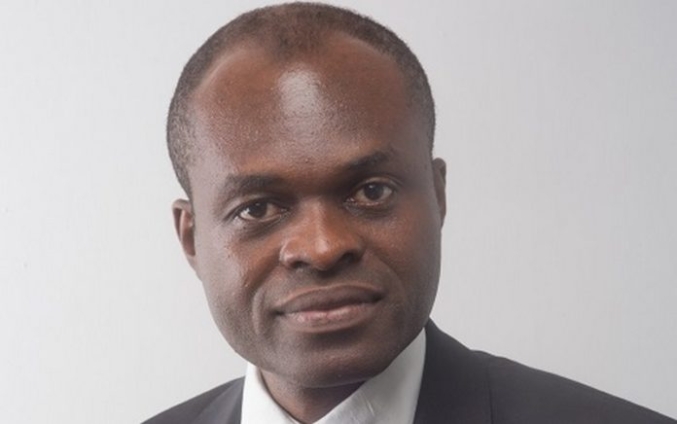
Prominent private legal practitioner, Martin Kpebu, has backed the Attorney-General’s decision to enter a nolle prosequi in the high-profile criminal case involving former Finance Minister Dr Kwabena Duffuor and seven others over the collapse of uniBank.
The discontinuation of the trial, formally known as The Republic v. Kwabena Duffuor & 7 Others (CR/0248/2020), was announced on Tuesday, 22 July, by Deputy Attorney-General Dr Justice Srem-Sai.
According to the Attorney-General’s Office, the decision was informed by the successful recovery of significant public funds, rendering further prosecution both costly and unnecessary.
The Attorney-General’s Department defended its decision, citing a 60% recovery of funds and assets from the accused as justification for halting further prosecution, arguing it no longer served the public interest.
While critics, particularly from the opposition New Patriotic Party (NPP), have accused the current administration of promoting impunity, Mr Kpebu has taken a pragmatic and opposing stance.
Speaking on Joy FM’s Super Morning Show, the lawyer said the AG’s action was consistent with international best practices in non-conviction-based asset recovery.
“I embrace it fully. It is a bold decision, and it is the right thing to do,” he said. “We’ve said we need to improve our laws in respect of non-conviction-based asset recovery, this is one of them, even though we have not written it in law.”
Mr Kpebu explained that pursuing drawn-out prosecutions against politically connected individuals often proves ineffective.
“Most of the time, if we insist on the conviction of the person first before we recover, it takes years, because these people are often strong, rich — they can get the best lawyers in town. They can get lawyers to delay and delay, and eventually, the cases don’t end in conviction, and we’ll lose everything. So, half a loaf is better than none.”
He added that the AG’s decision should not be seen as a failure of justice but rather as a bold and efficient application of restorative justice principles.
Background: Financial Sector Clean-Up
Between 2017 and 2019, Ghana’s banking sector underwent major reforms following a period of systemic distress that led to the collapse of several indigenous banks, including uniBank, UT Bank, Capital Bank and others.
The Bank of Ghana launched a comprehensive clean-up and recapitalisation exercise, citing insolvency, weak corporate governance, related-party lending, and unsustainable business models as key causes of the crisis.
This intervention, aimed at restoring stability and public confidence, resulted in the revocation of banking licences, mergers, and the formation of Consolidated Bank Ghana (CBG) to take over the assets and liabilities of some distressed institutions.
The cost of the clean-up to the taxpayer was significant, running into billions of Ghana cedis. This necessitated efforts to recover lost funds and hold individuals deemed responsible accountable.
The Economic and Organised Crime Office (EOCO), under the authority of the Attorney-General, led investigations and prosecutions related to the crisis.
Latest Stories
-
2026 Women’s Super Cup: FC Savannah, Epiphany Warriors maintain top spots ahead of final group games
3 minutes -
‘Is EOCO responsible for determining lawyers’ fees?’ – Baffour Awuah
4 minutes -
David Beckles claims second J60 Accra title
31 minutes -
No France cocaine suspect linked to Mahama, Vice President’s security details – NACOC
38 minutes -
Anwelle Foundation launched in Jirapa to tackle poverty, youth unemployment
59 minutes -
Joy Sports Editor Fentuo Tahiru Fentuo to moderate inaugural Music Meets Football Summit in Zambia
1 hour -
Court premises too volatile for Baffour Awuah’s attempted arrest by EOCO – Inusah Fuseini
1 hour -
Drug bust: Under no circumstances will NACOC leadership be compromised – Twum-Barimah
1 hour -
VIDEO: EOCO’s attempted arrest of Baffour Awuah was flawed beyond saving – Law Lecturer
1 hour -
Genuine Ghanaian exporters may face heightened foreign inspections over drug busts – Lawyer
1 hour -
Stakeholders demand action against foreign-led illegal mining in Ahafo Region
3 hours -
Ghana handed tricky draw at 2026 Amputee World Cup
3 hours -
2024 Nyankpala election violence: Youth group petitions authorities over slow probe
3 hours -
Ghana, UNICEF strengthen partnership to advance child protection
3 hours -
Day Two of 3rd Republic Bank-JoyNews Habitat Fair ends with great homeownership offers and financing solutions
3 hours