

Audio By Carbonatix
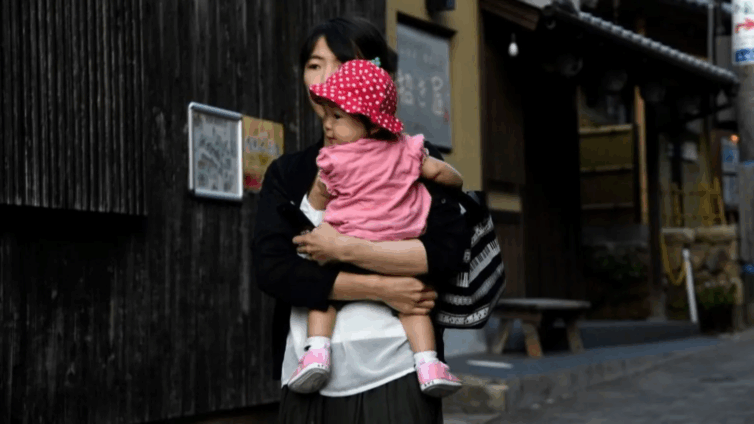
Almost a million more deaths than births were recorded in Japan last year, representing the steepest annual population decline since government surveys began in 1968.
Prime Minister Shigeru Ishiba has described the demographic crisis of Japan's ageing population as a "quiet emergency", pledging family-friendly policies such as free childcare and more flexible work hours.
But efforts to reverse the perennially low birth rates among Japanese women have so far made little impact.
New data released on Wednesday by the Ministry of Internal Affairs and Communications showed the number of Japanese nationals fell by 908,574 in 2024.
Japan recorded 686,061 births - the lowest number since records began in 1899 - while nearly 1.6 million people died, meaning for every baby born, more than two people died.
It marks the 16th consecutive year of population decline, with the squeeze being felt by the nation's pension and healthcare systems.
The number of foreign residents reached a record high of 3.6 million people as of 1 January 2025, however, representing nearly 3% of Japan's population.
The government has tentatively embraced foreign labour by launching a digital nomad visa and upskilling initiatives, but immigration remains politically fraught in the largely conservative country.
The overall population of the country declined by 0.44 per cent from 2023 to about 124.3 million at the start of the year.
Elderly people aged 65 and over now make up nearly 30% of the population - the second-highest proportion in the world after Monaco, according to the World Bank. The working-age population, defined as those between 15 and 64, has dropped to about 60%.
A growing number of towns and villages are hollowing out, with nearly four million homes abandoned over the past two decades, government data released last year showed.
The government has spent years trying to increase birth rates with incentives ranging from housing subsidies to paid parental leave. But deep-rooted cultural and economic barriers remain.
High living costs, stagnant wages and a rigid work culture deter many young people from starting families. Women, in particular, face entrenched gender roles that often leave them with limited support as primary caregivers.
Japan's fertility rate - the average number of children born to a woman over her lifetime - has been low since the 1970s, so experts warn even dramatic improvements now would take decades to bear fruit.
Latest Stories
-
Domelevo backs OSP probe into GH¢70k allegation
4 minutes -
CAF Confederation Cup: Dennis Korsah confident Nations FC can overturn Mali defeat
19 minutes -
‘Avoid political comments’ – Domelevo advises Chief Justice
1 hour -
‘I don’t trust OSP’ to probe GH¢70k ‘bribe’ allegation – Kwasi Kwarteng
1 hour -
Road inspections not to witch-hunt contractors – Kwame Agbodza
2 hours -
Inter Milan mount stunning comeback to beat Napoli
2 hours -
Modric plans to play for Croatia past 41st birthday
2 hours -
Bayern fail to score for first time in 59 games
2 hours -
Bawumia preparing new cocoa policy package for farmers – Annoh-Dompreh
2 hours -
Wa-Tumu-Bolga road upgrade will unlock agriculture, trade – Agbodza
2 hours -
Ghana Maritime Authority readies oil-spill response vessel for deployment
2 hours -
Ayariga turns to drones, AI to tackle Agbogbloshie waste mountain
2 hours -
Agbogbloshie waste heap must go – Mahama Ayariga declares
3 hours -
Government to upgrade all rural telephony sites to 4G – Communications Minister
3 hours -
Rural calls, data to become cheaper by Q1 2027 – Sam George
3 hours