

Audio By Carbonatix
There has been a significant increase in the number of UK cases of a mosquito-borne virus that can cause sudden fever and joint pain, and is normally only found in Africa and southern Asia.
The UK Health Security Agency (UKHSA) says more than 70 cases of the chikungunya virus were reported in the first six months of this year, more than double than in the same period last year – all of them linked to travel.
Chikungunya, while rarely fatal, can leave people experiencing joint pain for years.
The UKHSA is warning travellers to take precautions against mosquito bites.
In most cases, people recover fully within a couple of weeks, but for some, pain can persist for months or even years.
In very rare cases it can be fatal.
While the 73 infections seen in the UK in the first six months of this year is not a huge number, it is more than double the 27 cases over the same period last year.
An outbreak of the virus is under way in the Indian Ocean region, and almost all of the infections were linked to travel in India, Sri Lanka and Mauritius.
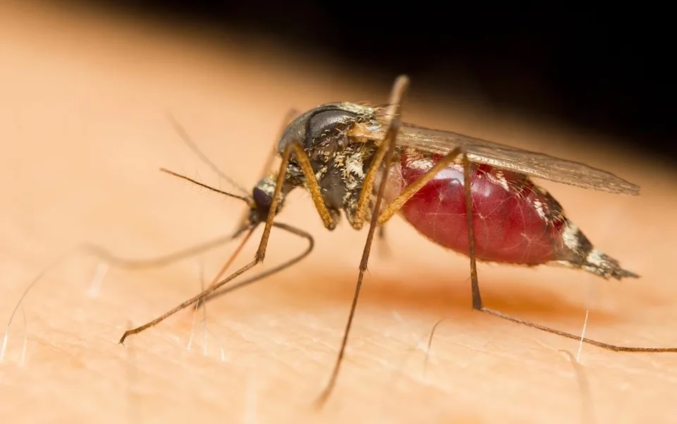
Chikungunya is spread by two types of mosquito, neither of which are present in the UK, so there is no risk on onward infection.
But Dr Philip Veal, Consultant in Public Health at UKHSA, says it is a warning to travellers to make sure they take precautions against mosquito bites.
"Chikungunya can be a nasty disease and we're seeing a worrying increase in cases among travellers returning to the UK.
"It is essential to take precautions against mosquito bites when travelling.
"Simple steps, such as using insect repellent, covering up your skin and sleeping under insecticide-treated bed nets can greatly reduce the risk.
"Before you travel, check the Travel Health Pro Website for the latest advice on your destination.
"A chikungunya vaccine may also be considered for those travelling to higher-risk regions."
The same report also says the first-ever UK cases of Oropouche virus, normally only found in Central and South America and the Caribbean, have also been detected in travellers returning from Brazil.
This virus is predominantly spread by midge bites rather than mosquitoes, with the main type of midge involved in transmission not found in Europe or the UK.
Symptoms include high fever, chills, headache, joint pain and muscle aches.
The UKHSA warns of a rise in Oropouche virus infections globally since 2024, and says pregnant travellers should take particular care following some concerns about the impact the virus can cause during pregnancy.
Latest Stories
-
Accra-Kumasi Expressway: Only nation-wreckers will oppose project – Frank Amoakohene
37 minutes -
Emerging agri-journalists gather in Croatia for global event
2 hours -
PPI Ghana congratulates Dr Abdul-Baasit Aziz-Bamba: Ghana needs a proper reset on value for money
2 hours -
Kasise Ricky Peprah writes: GBA’s face must be called out – for the record
2 hours -
Bernice Offei battled dementia for five years before death, former manager reveals
2 hours -
Jordan Ayew’s return offers Ghana timely boost ahead of AFCON qualifiers
2 hours -
De Zerbi raises doubts over Kudus’ availability for Ghana’s AFCON qualifiers
2 hours -
Ghana’s reputation must not be dented by self-centred individuals – Madina MP on cocaine seizure
2 hours -
MTN Ghana pushes digital growth for SMEs as sixth business clinic ends in Accra.
2 hours -
Black Maidens confident of WAFU B title defense ahead of Burkina Faso clash
2 hours -
5 players who deserve a Black Stars call-up for AFCON 2027 qualifiers
3 hours -
Photos: Vice President Jane Naana reviews changing of guard as Ghana Air Force takes over at Presidency
3 hours -
Africa’s richest man launches continent’s biggest share sale
3 hours -
Why Ghana’s MSMEs must rethink human capital investment: Seven strategic benefits
3 hours -
Asutifi South Assembly forms taskforce to stamp out illegal NHIS fees
3 hours