

Audio By Carbonatix
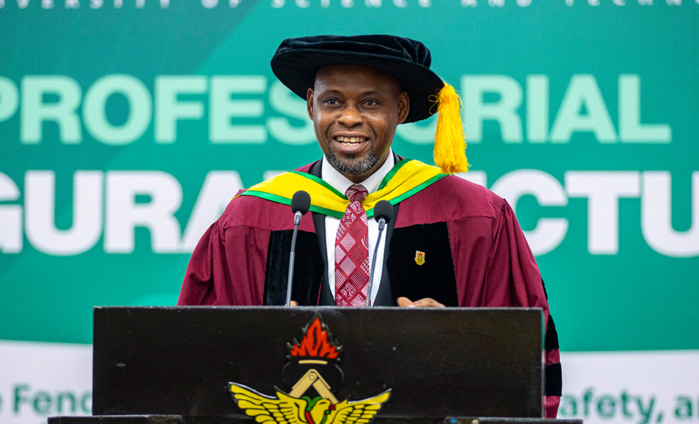
Construction project management expert Professor Emmanuel Adinyira has called for construction projects in Ghana to extend beyond delivering physical infrastructure and serve as platforms for empowering host communities with health, safety and environment (HSE) knowledge.
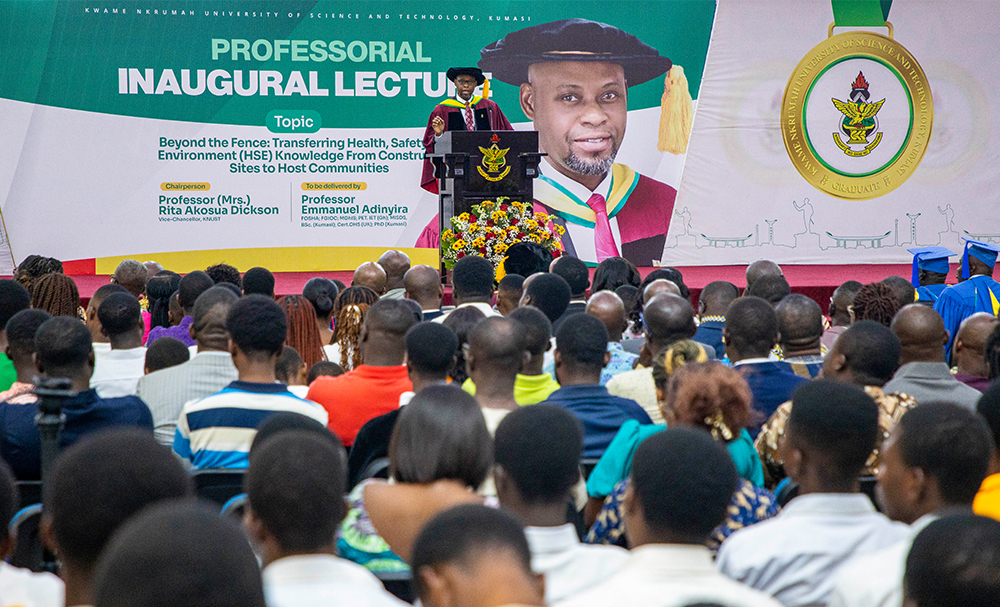
Speaking at his inaugural lecture on the theme “Beyond the Fence: Transferring Health, Safety, and Environment (HSE) Knowledge from Construction Sites to Host Communities,” Prof. Adinyira said safety practices rigorously enforced on project sites should be shared with surrounding communities to protect lives and build resilience.
He highlighted what he described as a paradox in Ghana’s construction sector: contractors operate under world-class safety standards within project boundaries, yet nearby residents remain exposed to hazards.
“Construction projects with high-class HSE compliance often leave people in the project’s geographical area unsafe and unaware. We build bridges but fail to connect with the people. We enforce protective equipment for workers, but we fail to raise awareness among families living near the site,” he said.
Adinyira’s research identified 26 hazards commonly managed on construction sites – including slips, burns, electrical accidents, poor ventilation and chemical exposure – that are also prevalent in homes and communities. While workers are protected by rules and equipment, he said, residents often lack the knowledge to guard against the same risks.
He argued that transferring HSE behaviours, rather than only managerial processes or technology, is both feasible and necessary. He proposed community safety demonstrations, greater use of media, and partnerships with schools, churches and traditional councils to spread awareness.
Adinyira urged policymakers and contractors to integrate HSE education into project delivery, called on the Public Procurement Authority to make community knowledge transfer a contractual requirement, and pressed Parliament to pass the long-delayed Occupational Safety and Health Bill.
“We need a new mindset, a change in our attitudes towards health, safety and the environment. Safety is not a gadget but a mindset,” he concluded.
Latest Stories
-
Mastercard Foundation charges AIMS Ghana Class of 2026 to drive innovation, leadership and employment across Africa
6 minutes -
Black Stars go again tonight
27 minutes -
‘AIMS rewrites the equations of your life’ — Alumna Dr Perpetual Andam Boiquaye challenges graduates to pursue bold ambitions
37 minutes -
Princess Marie Louise Children’s Hospital marks 100 years with call for greater investment in child healthcare
43 minutes -
AIMS Ghana graduates record 130 students from 24 African countries at 14th graduation ceremony
50 minutes -
Mahama assures Big Push contractors of prompt payment after project completion
58 minutes -
Logba Klikpo faces telecommunications challenges
1 hour -
Chartered Institute of Taxation warns against unauthorised tax practice
2 hours -
Appeal already filed in Larry Dogbey contempt case — Lawyer
2 hours -
Government in talks with investor to restart Komenda Sugar Factory – Mahama
2 hours -
Man allegedly kills aunt’s boyfriend in Awutu Senya West
2 hours -
Kenyasi No.1 Omanhene funds and commissions new classroom block for Roman Catholic JHS
2 hours -
“South Africa is nothing without Africa” – MTN Chairman Mcebisi Jonas condemns xenophobia
3 hours -
Ex-Trump adviser John Bolton pleads guilty to mishandling classified documents
3 hours -
Six killed in recent Nkwanta South conflict to be buried today
3 hours