

Audio By Carbonatix
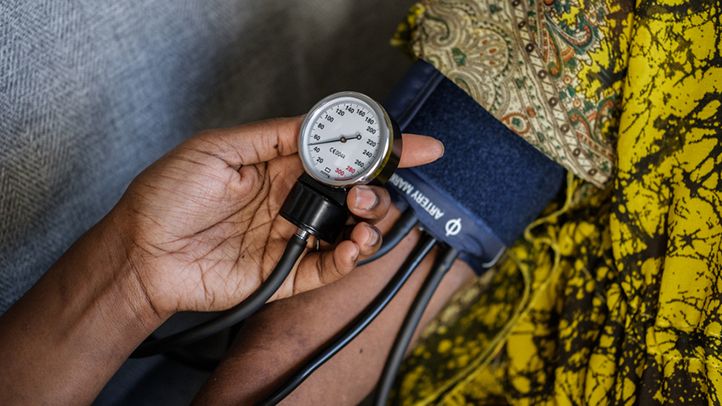
A new World Health Organisation (WHO) report revealed that 1.4 billion people worldwide were living with hypertension in 2024, yet only one in five have their condition under control through medication or lifestyle changes.
The analysis, covering 195 countries and territories, shows that 99 nations have national hypertension control rates below 20%. Most of those affected live in low- and middle-income countries, where health systems struggle with limited resources.
The report highlights major gaps in prevention, diagnosis, treatment, and long-term care. Barriers include weak policies on risk factors such as alcohol, tobacco use, physical inactivity, salt, and trans fats; limited access to validated blood pressure devices; a lack of standardised treatment protocols and trained primary care teams; unreliable supply chains and costly medicines; poor financial protection for patients; and weak information systems to track progress.
The Global Hypertension Report, launched at an event co-hosted by WHO, Bloomberg Philanthropies, and Resolve to Save Lives during the 80th United Nations General Assembly, shows that only 28% of low-income countries report the general availability of all WHO-recommended hypertension medicines in pharmacies or primary care facilities.
Hypertension is a leading cause of heart attacks, strokes, chronic kidney disease, and dementia. While preventable and treatable, WHO warns that without urgent action, millions will continue to die prematurely, and countries will face mounting economic losses. From 2011 to 2025, cardiovascular diseases, including hypertension, are projected to cost low- and middle-income countries an estimated US$3.7 trillion, about 2% of their combined GDP.
“Every hour, over 1,000 lives are lost to strokes and heart attacks from high blood pressure, and most of these deaths are preventable,” said Dr Tedros Adhanom Ghebreyesus, WHO Director-General. He said countries have the tools to change the narrative to save millions and ensure universal coverage for all. “Countries have the tools to change this narrative. With political will, investment, and reforms to embed hypertension control in health services, we can save millions and ensure universal health coverage for all.”
Dr Kelly Henning, who leads the Bloomberg Philanthropies Public Health Programme, noted that uncontrolled high blood pressure claims more than 10 million lives every year, "despite being both preventable and treatable."
Dr Henning stated that, countries that integrate hypertension care into universal health coverage and primary care are making real progress, but too many low- and middle-income countries are still left behind,” said Dr Henning. “Strong policies that raise awareness and expand access to treatment are critical to reducing preventable deaths.”
Access to medicines remains a cornerstone of progress. Blood pressure drugs are among the most cost-effective public health tools, yet only 7 of 25 low-income countries (28%) report general availability of WHO-recommended medicines, compared to 93% of high-income countries.
“Safe, effective, low-cost medicines to control blood pressure exist, but far too many people can’t get them,” said Dr Tom Frieden, President & CEO of Resolve to Save Lives. “Closing that gap will save lives—and billions of dollars every year.”
The report also points to countries that are making progress. It cited that Bangladesh increased hypertension control from 15% to 56% in some regions between 2019 and 2025 by embedding treatment services in essential health packages and strengthening screening and follow-up care.
The Philippines has scaled up community-level services nationwide by adopting the WHO’s HEARTS technical package.
South Korea has integrated reforms such as reducing costs for antihypertensive drugs and limiting patient fees, achieving a national control rate of 59% in 2022.
WHO is urging all countries to embed hypertension care into universal health coverage reforms. Implementing the recommended measures, it says, could prevent millions of premature deaths and ease the global economic toll of high blood pressure.
Hypertension in adults is defined by the WHO as a systolic blood pressure of 140 mmHg or higher, and/or a diastolic blood pressure of 90 mmHg or higher, measured on two separate days. However, health risks begin even below these levels, with systolic readings under 130 mmHg still associated with higher risks of heart and kidney disease.
Latest Stories
-
David Selassie Anthony declares bid for NDC Deputy National Organiser
5 minutes -
Amin Adam proposes 13 measures to strengthen Ghana’s debt transparency and market confidence
26 minutes -
Mahama announces $2bn annual investment to accelerate industrialisation
31 minutes -
Amin Adam urges monthly disclosure of Sinking Fund as Ghana prepares for DDEP repayments
41 minutes -
Stronger banks will fuel business growth and jobs – ADB MD
42 minutes -
Galamsey: ‘Rivers that fed our grandparents now run the colour of chocolate milk’ – Sam Jonah
44 minutes -
We have been scammed by NDC, government is only doing PR – Abanga Fuseini
45 minutes -
Republic Bank–JoyNews Habitat Fair opens in Ho today
46 minutes -
BoG pledges stability to attract investment, urges stronger Africa–Asia partnerships
50 minutes -
Amin Adam warns treasury bill dependence could expose Ghana to refinancing risks
50 minutes -
Ghana better placed to withstand commodity price shocks – IMF
53 minutes -
GAPTE intensifies efforts to increase bus availability for Aayalolo contra-flow
55 minutes -
Amin Adam warns cedi depreciation could reverse Ghana’s debt relief gains
59 minutes -
Fiscal discipline crucial for pension fund investments – Finance Minister
59 minutes -
BoG Governor rallies IMF to back Africa’s digital sovereignty
1 hour