

Audio By Carbonatix
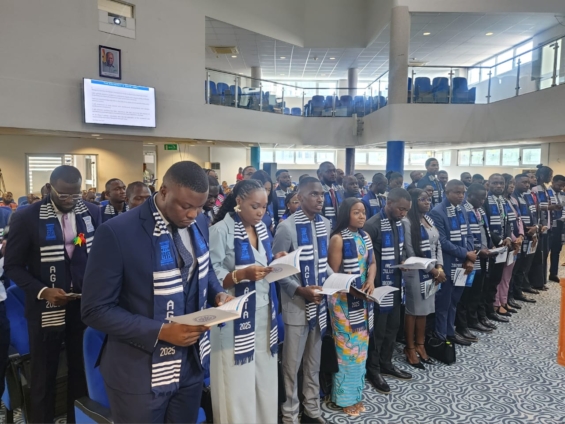
The Architects Registration Council (ARC) of Ghana has inducted forty-three (43) newly qualified architects into the distinguished professional fraternity at its 25th Induction Ceremony held under the theme: “Impact of Illegal Mining (Galamsey) Menace on Housing Delivery and Water Resources in Ghana.”
The ceremony, graced by dignitaries including the Minister for Works, Housing and Water Resources, Hon. Kenneth Adjei, the Minister for Roads and Highways, Arc. Kwame Governs Agbodza, MP, and the Deputy Minister for Works, Housing and Water Resources, Arc. Gizella Tetteh-Agbotui, brought together stakeholders in the built environment to reflect on the growing impact of illegal mining on sustainable housing and national development.
The Overall Best Candidate for the 2025 Professional Practice Examination was Alfred Kweitsu.

ARC’s Mandate and Achievements
In his welcome address, the Registrar of ARC, Arc. Dr. Emmanuel Eyiah-Botwe congratulated the inductees and reaffirmed the Council’s mandate as an agency under the Ministry of Works and Housing, established by the Architects Act, 1969 (NLCD 357), to regulate the architectural profession in Ghana.
He outlined the Council’s fivefold mandate, which includes prescribing standards of architectural education, conducting qualifying examinations, maintaining a register of architects and firms, enforcing ethical and professional standards, and controlling architectural practice nationwide.
Dr. Eyiah-Botwe, highlighted the ARC’s achievements over the past year, including Monitoring and evaluating programs at KNUST and the Central University Department of Architecture. These include, reviewing curriculum for Architectural Technology programs at the Technical Universities; Publishing an updated list of 770 registered architects and 112 architectural firms qualified to practice architecture in Ghana; Implementing a five-year strategic plan (2021–2025) aimed at upholding international best practices in the built environment and Developing a Code of Ethics and strategic policy framework focusing on education, compliance, and sustainable practice and renovating and expanding the Council’s office block.
He noted that the Council continues to enforce compliance to ensure that only qualified architects and firms practice in Ghana, adding that environmental stewardship will now be a central pillar of architectural practice in the country. “Illegal mining has a devastating impact on land, water, skilled labour, building material sources and ultimately the cost of material. Sustainable housing and resilient cities cannot be achieved if we continue on this trajectory,” Dr Eyiah-Botwe said.
“The ARC is committed to promoting eco-sensitive design, green building technologies, and responsible land use planning as part of our national response to this crisis.”
Architects as Change Agents
Addressing the ceremony, Hon. Kenneth Adjei, Minister for Works, Housing and Water Resources, commended ARC for its dedication to professionalism and ethics. He described the theme as “timely and significant,” stressing the link between illegal mining and housing delivery. “Illegal mining is not merely an environmental issue, it is a multi-sectoral crisis affecting water security, public health, housing, and economic stability,” the Minister noted.
“Mercury and other toxic substances have contaminated our water bodies, making water unsafe for use and raising construction costs. The damage to fertile land and forests threatens the foundations of our built environment.”
He urged the new architects to view their roles as nation-building partners who must design for sustainability, climate adaptation, and social equity.
“Your blueprints should tell stories of renewal and responsibility. Let your work restore dignity to communities and inspire national pride,” he added.
The Minister officially declared the 2025 batch of architects inducted.
Architectural Excellence and Ethical Practice
The Chairman of the ARC Governing Board, Arc. Kofi Essel-Appiah, in his opening remarks, reminded the new professionals of their ethical duty to protect the environment while designing spaces that improve human well-being.
“Every generation of architects faces unique challenges. For yours, the threat of ‘galamsey’ and rapid urbanisation calls for creativity, ethical leadership, and collaboration,” he stated.
“Balance professional ambition with public good. Be guided by ethics, integrity, and innovation.”
Call for Lifelong Learning and Service
The President of the Ghana Institute of Architects (GIA), Arc. Tony Asare, inspired the inductees to pursue excellence and continuous learning throughout their careers.
“Your induction signifies not just a title, but a solemn trust, to design with integrity, build with wisdom, and serve society with vision,” he said.
He urged them to uphold professional discipline, nurture collaboration, and contribute to the growth of the GIA.
“Architecture thrives on relationships and shared purpose. Lead through your work, and let excellence become your habit,” he emphasized.
Architects and Sustainable Development
Delivering the keynote address, Hon. Arc. Kwame Governs Agbodza, Minister for Roads and Highways, challenged the inductees to use architecture as a tool for sustainability and advocacy.
“Illegal mining remains one of Ghana’s biggest threats. It undermines sustainable development, public health, and national planning,” he said.
“As architects, you are not just designers of buildings, you are custodians of the environment and guardians of sustainable space. Integrate environmental resilience into every project and promote responsible land stewardship.”
He encouraged collaboration with local assemblies to educate communities on sustainable building and to promote the rehabilitation of degraded lands.
Architects Registration Council Induction Ceremony
The induction ceremony, which marks a significant step toward strengthening architectural standards and compliance in the country, was held at the Ghana Shippers Authority in Accra, under the theme, “Enhancing Architecture Compliance and Enforcement: Call for Collaboration.”
The ceremony bridges the academic and professional life of every architect. It climaxes six years of academic qualification at the university, a minimum of two years of post-qualification coaching and internship under a qualified principal architect, structured seminars and tutorials and finally a professional examination before gaining a state license to practice in Ghana.
Latest Stories
-
The ungodliness and unrighteousness underlying the National Cathedral mess!
3 minutes -
T-bills auction: Government fails to achieve target; yield on 91-day-bill remains unchanged
14 minutes -
It’s Ghana’s shame to denigrate Nkrumah when the whole world honours him as African of the Century – Asiedu Nketiah
21 minutes -
No other nationalist can compare to Nkrumah – Asiedu Nketiah
28 minutes -
Collateral Registry: Foreign banks accounted for GH¢19.9bn of secured credit in quarter 2, 2026
29 minutes -
This government should expect scrutiny – Asiedu Nketiah
54 minutes -
Two-year-old girl dies in domestic fire at Cantonments
2 hours -
Asiedu Nketiah urges better working conditions for journalists
2 hours -
JoyNews’ Precious Semevoh wins climate change reporting award at Bono GJA Awards
2 hours -
Kumasi Central Market phase 2 to begin in October after years of abandonment
2 hours -
Sentuo offers fuel supply reassurance as NPA sees steady output through December
3 hours -
Ghanaian smock showcased at Lesotho Tourism Summit
3 hours -
Four pupils to one desk: The painful plight of schools in New Juaben North
4 hours -
Ipswich launch investigation into racist abuse of Abdul Fatawu
4 hours -
Arrest of Techiman nurse is purely political persecution – ‘Ghana Jollof’
4 hours