

Audio By Carbonatix
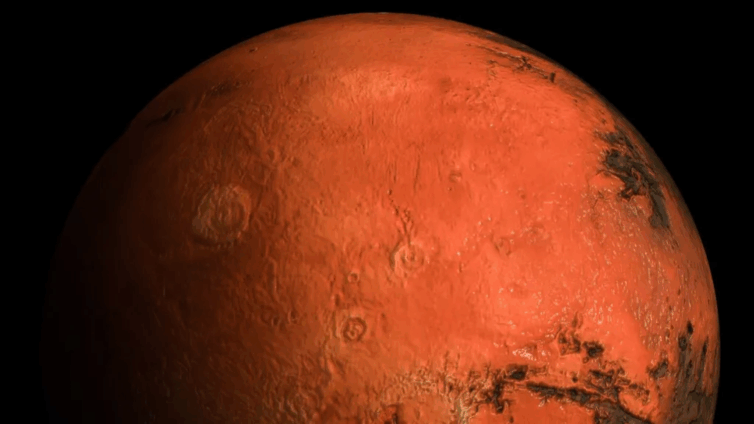
Scientists believe they have recorded electrical activity in the Martian atmosphere for the first time, suggesting the planet is capable of lightning.
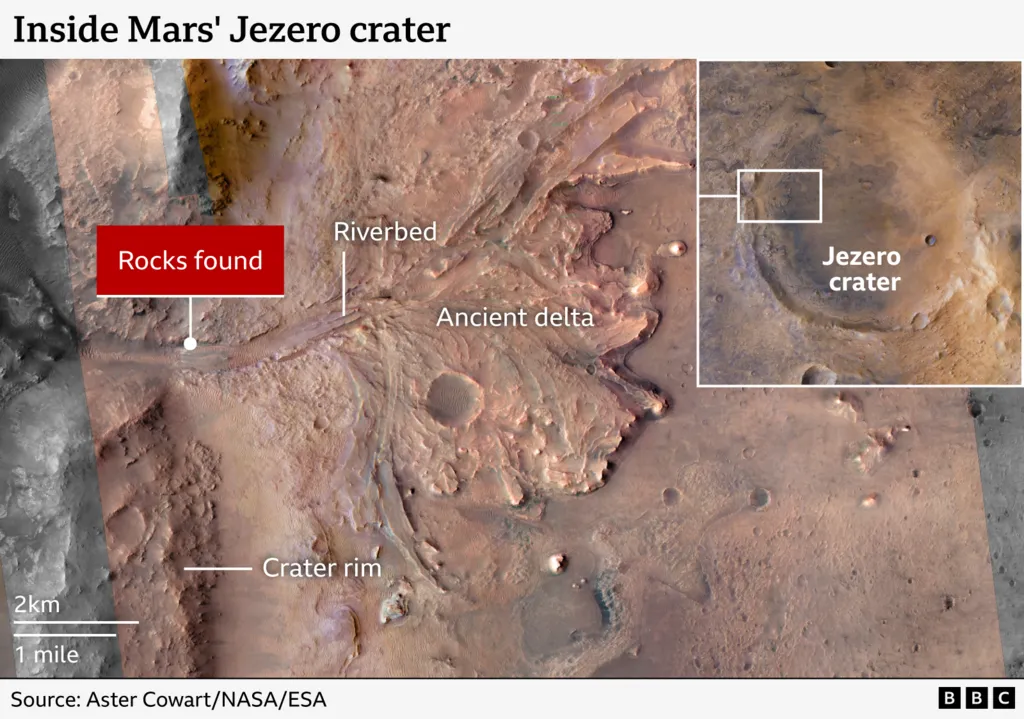
Nasa's Perseverance rover, which touched down on Mars in 2021, was sent to search for signs of biology and has spent the last four years exploring the Jezero Crater region.
Electrical discharges nicknamed "mini lightning" were picked up from audio and electromagnetic recordings made by the rover's SuperCam instrument.
Scientists hope new instruments for measuring atmospheric discharges and more-sensitive cameras could be sent to Mars to try to confirm the findings.
A team of researchers from France analysed 28 hours of microphone recordings made by the Nasa rover over two Martian years (or 1,374 Earth days).
They found that electrical discharges were normally associated with dust devils and dust storm fronts.
Dust devils are small whirlwinds that form from hot air rising from the ground, and their internal movements can give rise to electrical discharges.
Lead author of the research Dr Baptiste Chide told news agency Reuters: "These discharges represent a major discovery, with direct implications for Martian atmospheric chemistry, climate, habitability and the future of robotic and human exploration."
He and other scientists at the Institute for Research in Astrophysics and Planetology in France believe that Mars now joins Earth, Saturn and Jupiter as planets known to have atmospheric electrical activity.
Particle physicist Dr Daniel Pritchard wrote in scientific journal Nature that, although the recordings would "provide persuasive evidence of dust-induced discharges", because the discharges were only heard and not seen, "some doubt will inevitably remain as to whether this really was Martian lightning".
He added: "Given the history of this field, the debate is likely to continue for some time."
In September this year, scientists found rocks with unusual markings on Mars.
The intriguing markings, nicknamed leopard spots and poppy seeds, contain minerals produced by chemical reactions that could be associated with ancient microbes.
It is possible the minerals were produced by natural geological processes, but Nasa said the features could be the clearest signs of life ever found.
Today, Mars is a cold and arid desert. But billions of years ago there is evidence that it had a thick atmosphere and water, making it a promising place to look for past life.
Perseverance was dispatched to the Jezero Crater because it showed qualities that may have meant it was once conducive to life, including signs it was once a delta when Mars could sustain liquid surface water.
Latest Stories
-
NaCCA trains teachers to implement new Chinese language curriculum
2 minutes -
Ghana, China deepen cooperation on galamsey and mining sector
2 minutes -
JoyNews–Republic Bank Habitat Fair ends on a high note after 3 days of strong patronage, expert engagement
42 minutes -
Emma Ofosua takes West African spoken word to three UK cities
44 minutes -
Traditional artists will become more expensive because of AI – Aewura Arts
49 minutes -
Clients would disappear after I finished their artworks – Aewura Arts recounts challenges
49 minutes -
Turkish police detain dozens in raids on gay bars and homes of LGBTQ+ activists
53 minutes -
Trump doubles down on united Ireland comments on day two of visit
55 minutes -
Best friends for decades – until a DNA test revealed they were sisters
1 hour -
Russia hits Ukrainian train shortly after Boris Johnson and top European officials leave station
1 hour -
GPL 2026/27: Berekum Chelsea record first win with 3-1 victory over Dreams FC
1 hour -
GPL 2026/27: Kotoko beat Heart of Lions to end decade-long winless run
1 hour -
GPL 2026/27: Hearts of Oak come from behind to beat GoldStars
1 hour -
Construction of new Wa airport to commence soon – Mahama assures
2 hours -
Government support for the arts industry is not enough — Aewura Arts
2 hours