

Audio By Carbonatix
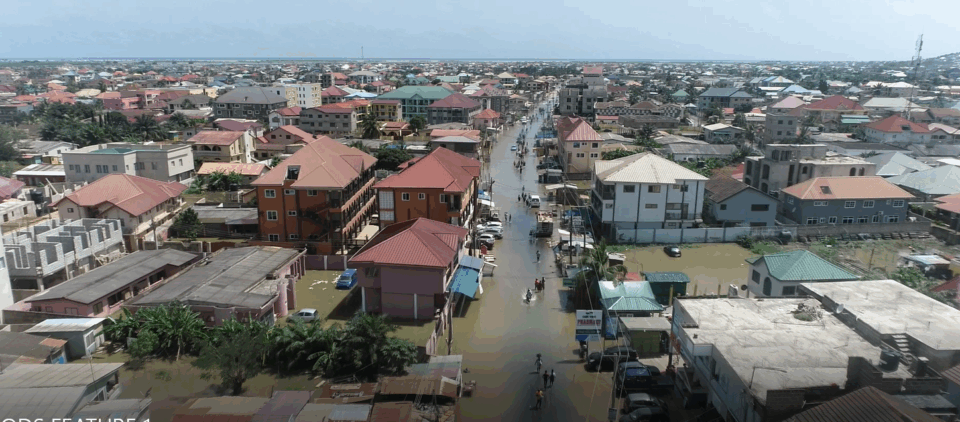
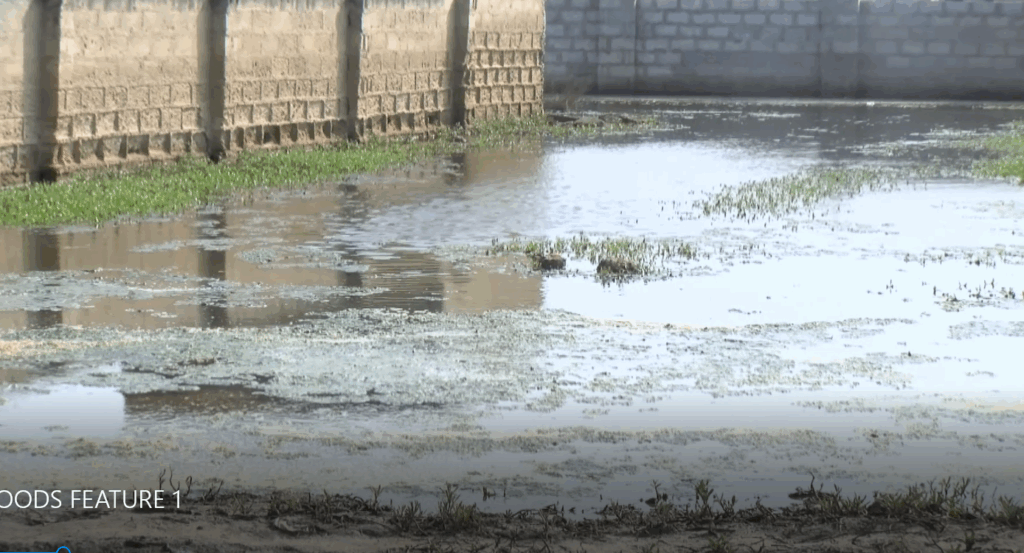
Residents of Tetegu, a community located along the banks of the Weija Dam, are once again counting their losses after the latest controlled spillage flooded homes, submerged electricity poles, and left uncompleted buildings standing in stagnant water.
Although the water level is gradually receding, many residents say the impact of the flooding remains severe, with some forced to temporarily abandon their homes to protect their lives and property.
For 42-year-old Samson Mensah, life near the dam has become a cycle of hardship every year.
“Anytime the dam is spilt, our whole life comes to a standstill. We can’t go to work, the children can’t go to school, and we are trapped indoors,” he said. “We have invested everything we have into this land, so moving away is not an option for us.”
Despite the disruptions, managers of the Weija Dam insist the controlled spillage is unavoidable. The Public Relations Officer of the Ghana Water Limited (GWL), Stanley Martey, says the annual release of excess water is a critical safety measure.
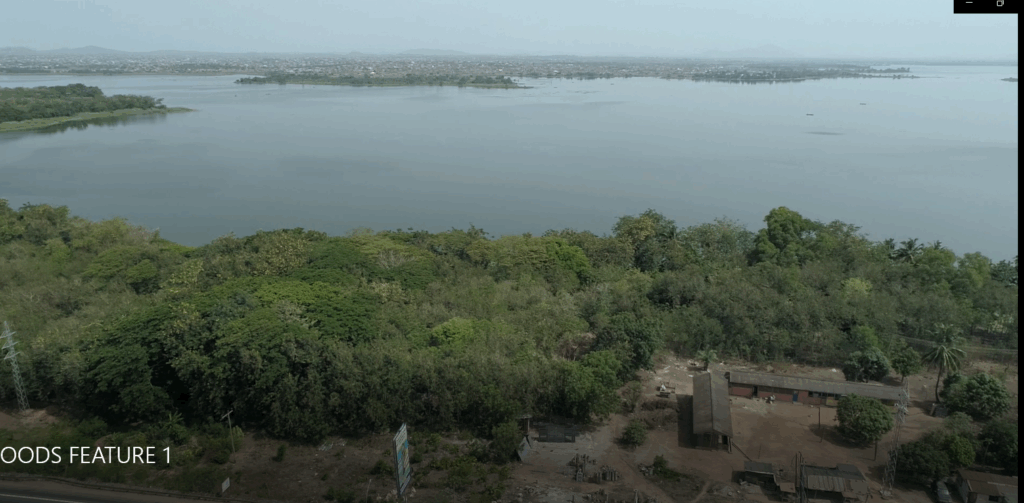
“The controlled spillage is done to protect the integrity of the dam. If we do not spill when the water reaches a certain level, the consequences could be far more disastrous,” he explained.
Samson’s experience reflects that of many residents in the community. Gideon Yeboah, who lives in Tetegu with his wife and two children, says flooding has repeatedly cut off access to his home, forcing his child to stay out of school for weeks.
“My child doesn’t miss school because I can’t pay the fees. He misses school because when the water comes, we simply cannot move in or out of the house,” Gideon said. “This land belongs to my family. My father acquired it, and I have a responsibility to protect it.”
Emergency officials, however, say such attachments are complicating disaster response efforts. The National Disaster Management Organisation (NADMO) has attributed the increasing severity of the spillages to climate change.
“In the past two years, rainfall patterns have changed significantly. The dam now reaches full capacity much earlier than expected, forcing more intense spillages,” a NADMO official noted. “Human settlement around the dam also makes evacuation very difficult.”
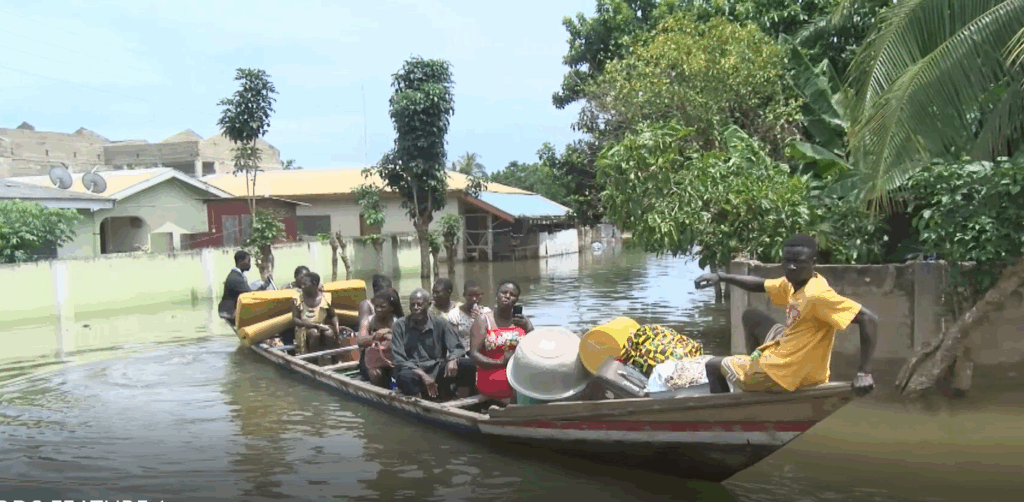
For some residents, remaining behind is no longer an option. Abdulai Ayamdago, a commercial motorbike rider who has lived in Tetegu for nearly five years, says worsening conditions forced him to relocate temporarily.
“I had to leave because the water was getting too dangerous. I couldn’t risk my life or lose everything I own,” he said.
The Weija Dam, constructed in 1978, supplies water to more than 80 per cent of the Greater Accra Region, making its protection critical to national water security.
GWL maintains that the recurring hardship could be significantly reduced if residents refrained from building along riverbanks and in flood-prone areas.
“Water will always reclaim areas that are not meant for settlement. Enforcement of land-use regulations is key to reducing these impacts,” Stanley Martey stressed.
Community leaders in Tetegu believe the situation could have been better managed with stricter enforcement of building regulations and earlier engagement with residents.
“If authorities had acted earlier to control development here, many of these losses could have been avoided,” a community leader said.
Authorities insist that long-term solutions must go beyond emergency relief. While GWCL says controlled spillage remains unavoidable, NADMO says it is working with local authorities to improve early warning systems and evacuation plans.
“Our efforts are undermined when people continue to settle in flood-prone areas, especially as climate change intensifies flooding,” the NADMO official added.
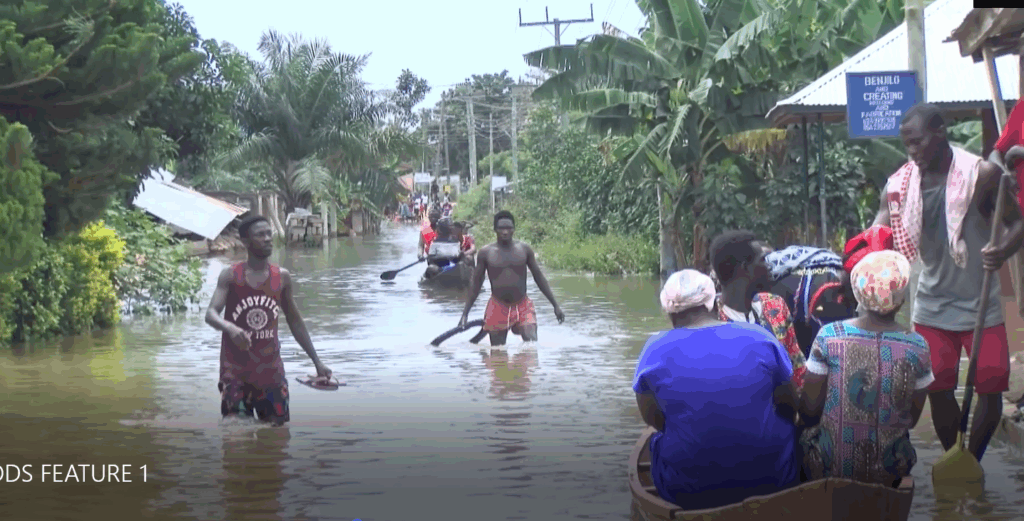
For residents of Tetegu, the waters may eventually recede, but the uncertainty remains. As climate change accelerates and urban encroachment continues, balancing the protection of critical national infrastructure with the safety of vulnerable communities remains an ongoing challenge.
Latest Stories
-
Gold slips before US payrolls data, set for second weekly loss
49 minutes -
New Mexico wants Meta to pay up to $40 billion in penalties after data privacy trial
58 minutes -
Oil rises slightly as market weighs mixed supply signals
1 hour -
Jordan ‘Last Dance’ jersey sells for £9m
1 hour -
Nigeria charges man with running fictitious government agency
1 hour -
COMAC renews call for full deregulation of fuel prices
2 hours -
Putin warns West that Russia is ready to use every weapon to protect Kaliningrad
2 hours -
Fuel sector overcrowded as 245 OMCs compete for market share – COMAC CEO
4 hours -
Mobile Money Fintech LTD, UMB train hairdressers and beauticians
4 hours -
COMAC boss blasts gov’t interference in fuel pricing, demands full deregulation
4 hours -
OpenAI fires workers for mishandling ‘sensitive information’
4 hours -
What’s gone wrong at Nike? How the world’s sportswear giant lost its mojo
4 hours -
Carney pitches oil pipeline as a response to US-Canada trade war
5 hours -
Badenoch welcomes expanded grooming gangs inquiry
5 hours -
GACL MD sues Samuel Buabeng over alleged Facebook defamation
5 hours