

Audio By Carbonatix
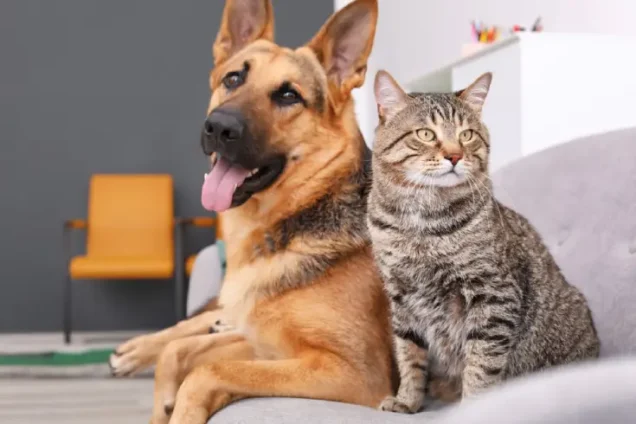
The Executive Director of the Institute of Community Sustainability (ICS), Eric Jerry Aidoo, has disclosed that women constitute a significant proportion of cat and dog meat consumers in Ghana.
In an interview with Adom News, Mr Aidoo shared findings from a recent study conducted by the institute, highlighting what he described as concerning trends in the consumption of the two animals, particularly in the Greater Accra Region.
According to him, Greater Accra recorded the highest consumption rates, surpassing even the Northern Region, where animal markets are more common.
“Our research shows that Greater Accra has the highest consumption rates of cat and dog meat, even beyond the Northern Region. There is an urgent need for a complete ban on the consumption of these animals,” he stated.
He warned that failure to act could have long-term consequences. “If the government does not prohibit the eating of cats and dogs by 2035, we may no longer see these animals freely roaming in our communities,” he cautioned.
Mr Aidoo explained that the survey revealed that out of every 100 respondents, 55 admitted to consuming cat and dog meat, with women forming the majority of that number.
“Of the 100 people we surveyed, 55 consume the meat. Out of that 55, about 35 are women, many of whom say they are unwilling to stop because of the taste,” he noted.
While Greater Accra leads in overall consumption, he pointed out that the prices of these animals are particularly high in parts of the Northern Region. In a December survey, a single dog reportedly sold for between GH¢1,500 and GH¢2,000, compared to a goat priced at around GH¢350.
“In some markets in the Northern Region, the price of a dog ranged from GH¢1,500 to GH¢2,000, while a goat was around GH¢350. We are even seeing an increase in the consumption of bulldogs,” he added.
The ICS Executive Director indicated that the institute will soon launch a nationwide sensitisation campaign to educate the public about the potential health implications of consuming cats and dogs. The campaign will cover the Northern, Volta, Western, and Greater Accra regions.
He also noted growing concerns from pet owners. “We have received reports from community members who return home from their farms and cannot find their pets. Many insist that these animals should not be consumed,” he said.
Mr Aidoo is therefore calling on the Ministry of Health and Parliament to intervene.
“We urge the Ministry of Health and Parliament to enact laws that will prohibit the consumption of cats and dogs in Ghana,” he emphasised.
Latest Stories
-
We must account for every cedi entrusted to us as public officials – Ato Forson
8 minutes -
Supreme Court rejects Solomon Asamoah’s bid to overturn Sky Train ruling
23 minutes -
Nungua Traditional Stool, WT Plastics partner to establish factory, create 1,400 jobs
25 minutes -
Mahama describes Ghana’s religious diversity as its greatest treasure, defends fairness to all faiths
30 minutes -
Police to arrest motorists who use pedestrian footbridges – ACP Obeng
31 minutes -
KNUST announces revised reopening dates, lectures begin October 19
45 minutes -
GoldBod, military engineers partner to reclaim galamsey-damaged Tano Nimri Forest
45 minutes -
NACOC educates 450 Koforidua SHS students on dangers of drug abuse
45 minutes -
First-year students stranded as Obuasi SHTS remains closed over misconduct probe
47 minutes -
Court halts promotion of 40 police officers pending IGP’s appeal
50 minutes -
Gender Ministry deploys teams nationwide to monitor LEAP cash grant payments
55 minutes -
GNFS contains Somoco warehouse fire; bushfire near TTU in Takoradi
55 minutes -
Recurring teacher-student sexual abuse cases give cause for worry – Salaga South MP
59 minutes -
D-Black shocked as only 16 radio and TV stations pay music royalties
1 hour -
Former SIC Savings and Loans MD Amma Frimpomaa Dwumah honours EOCO invitation
1 hour