

Audio By Carbonatix
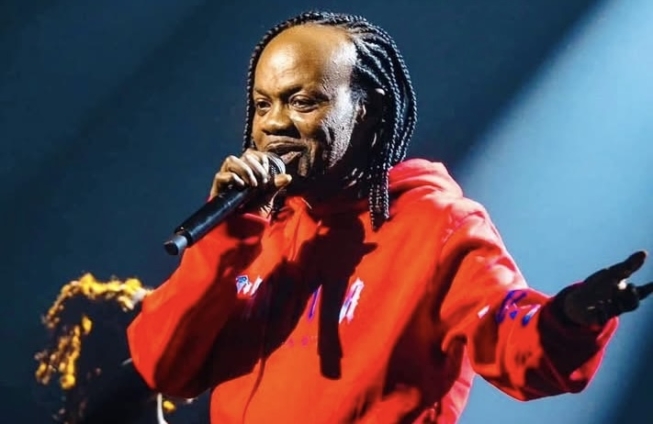
There are a few musical artistes who have addressed almost every subject matter in life, not to mention attempting it. One of the few to have successfully executed this task is Daddy Lumba. He was born on 29th September 1964 at Nsuta, in the Asante Region of Ghana.
His parents, Johnson Kwadwo Fosu and Comfort Gyamfi, popularly known as Ama Saah, were both teachers by profession. He was named Charles Kwadwo Fosu, though he was not born on a Monday; Kwadwo from his father. He attended Suame Methodist School in Kumasi for his basic education and Adu Gyamfi Senior High School in Jamasi. He completed at Juaben Secondary School in 1984 after a transfer.
At the age of sixteen (16), he developed his passion for singing whilst in secondary school as a member of the choir. He performed at talent shows, notably the Anokye Krom Cultural Centre with his group, Nkwanta Wesley Singers. He composed a song titled ‘Lumba Lumba’ in support of South Africa’s freedom advocates. It gained popularity across the region and earned him the name Daddy Lumba.
He relocated to Germany shortly after completion of his education with the help of his friend, whom he fondly acknowledged on a record; Theresa Aberese. He met Nana Acheampong, a Ghanaian musician who was resident in Germany, and together they formed Lumba Brothers, the name of the first band Daddy Lumba created at Juaben. They recorded their debut album, ‘Yɛɛ Yɛ Aka Akwantuom’ and released it in 1989. It became a commercial hit with the rawness and originality of their lyrical content. This resonated with a lot of Ghanaians in the diaspora as well as those intending to relocate. The album is widely recognised as popularising the Burger Highlife sub-genre.
Daddy Lumba began his solo career after the group split. In the year 1990, his maiden album, ‘Obi Ate Meso Boɔ’, was released. It was an instant hit with the popular song, ‘Theresa’, an ode to a lady who immensely helped him. ‘Ankwanoma’, a song highly recognised for its lyrical depth, is also enlisted his first album. He followed with ‘Sika Asɛm’ in 1991, ‘Playboy’ in 199,2 with hits such as ‘Bribi Gyegye Wo’, ‘Makra Mo’, ‘Mensɛi Da’ and the title track. He collaborated with Afua Ampofowaa in 1994 on an extended play (E.P) record titled, ‘Odo Foforɔ’. In 1995, he released two albums, ‘Seese Wo Se’ and ‘Mesom Jesus’. The former housed ‘Children of the Future’ and his personal favourite, ‘Anidaso Woho Ma Obiara’.
The following year, he was out with ‘Hwan Na Otene’. In 1997, he dropped ‘Back For Good’, which cemented his position on the Ghanaian music landscape. 1998 experienced his most popular commercial success with the global hit record, ‘Aben Wo Ha’. The year 1999 experienced the release of ‘Wo Ho Kyere’, a collaborative album with Ofori Amponsah. This housed bangers such as the album title record, ‘Anti Ataa’, ‘Odo Mmra Fie’, amongst other hits. After two years, ‘Mato Odo Mu’ was released. Two albums followed in 2001: ‘Fa Woho Bɔ Jesus’ with Selina Orleans and ‘Poison’, also a hit titled track and mega hit, ‘Menya Mpo’. According to his longtime record producer, Kwaku Mensah, Daddy Lumba informed him that ‘Menya Mpo’ was his highest-selling album. Outselling the popular, ‘Aben Wo Ha’, which most people tout as his highest-selling album.
The following year, he was out with ‘Mɛ Ma Afa Wotrim Mu Nɛ’ and ‘Aseɛ Hɔ’, a collaborative album with Borax. ‘Bubra’ was on in 2003, ‘Ahenfo Kyiniye’ with Pat Thomas in 2004, ‘Give Peace A Chance’ in 2005 and ‘Area Boy’ alongside Afua Ampofowaa in the same year. Followed by his witty signature hit record, ‘Tokrom’ in 2006. Subsequent albums such as ‘Agenda’ (2007), ‘Sika’ (2008), ‘Awarepa Ye Anibre’ (2009), and Kɔ Hye Po (2011). His latter-day releases include ‘Awosoo’ (2014), ‘Hosanna’ (2015) with Kwadwo Ampong, and ‘Enko Den’ (2016).
It is evident that Daddy Lumba exhausted his talent considerably. By squeezing out his creative juices and stamping the timeline with incredibly memorable bodies of work. At the maiden edition of the Ghana Music Awards in 1999, he won three awards, Artist of the Year, Album of the Year and Most Popular Song of the Year with ‘Aben Wo Ha’. He swept the Contemporary Highlife categories by winning all three awards in 2003: ‘Poison’ for album, ‘Menya Mpo’ for song and him for artiste. He supported the candidature of Ghana’s former president, Nana Addo Dankwa Akufo-Addo, in the 2008, 2012, 2016 and 2020 general elections with his popular song, ‘Nana Yɛ Winner’.
His notable last popular song was ‘Ɔfon Na Ɛdi Asɛm Fo’ released in 2022.
In 2018, Daddy Lumba received the Lifetime Achievement Award at the Ghana Music Awards. He was honoured with the Grand Medal at the 2024 National Honours and Awards. He was an extraordinary songwriter with an enormous range in his lyrical compositions. He addressed a plethora of topics that resonated with everyone. He simply captured life on his records. With unique lyrical delivery, he captivated consumers of his music with relatable depth in content. He is ranked as the greatest Ghanaian musical artiste of all-time by many a Ghanaian. He had faced some health challenges post-2013, which, according to him, resulted in a spinal surgery.
Daddy Lumba transitioned on the 26th of July, 2025, at the Bank Hospital in Accra after falling ill. News of his death sent shock waves across Ghana and beyond, with multiple vigils being held all over the world. He will be remembered for his immense contribution to not only the highlife genre, which he championed, but the entire Ghanaian music-scape.
Latest Stories
-
Tinubu files case in US court to block release of alleged drug trafficking record – Lawyer
1 hour -
‘Powder Guy’ denies $32,000 visa fraud charges
1 hour -
Two suspects arrested over lynching at Daboya
2 hours -
Mobile phones contributing to Christians’ spiritual decline – Bishop Patu
2 hours -
“We are one house – let’s settle this at home” – Atomaase Royal family calls for unity, rallies behind Twafohene
3 hours -
The Missing Middle and the Overlooked Small: Why Ghana Must Serve Both the ‘S’ and ‘M’ in MSME’s
3 hours -
Mahama returns from Angola after AU extraordinary summit
3 hours -
Ghana qualifies for quarterfinals of Africa Volleyball Nations Cup after beating Zambia
3 hours -
WAFU B WCLQ: Ampem Darkoa Ladies come from behind to beat Edo Queens
4 hours -
Photos: National Youth Authority Festival
4 hours -
Bawumia commissions St Jude’s Catholic Church he funded to completion at Weija
4 hours -
Government defends new beer exercise rates; sliding scale has not been abolished
4 hours -
Bolgatanga Assembly denies blanket ban on events beyond 8pm
4 hours -
Photos: Ghana Immigration Service removes 1,055 street beggars from Accra, Kumasi streets
5 hours -
‘He always comes to our aid’ – Fr. Campbell recounts Bawumia’s support for Church, poor
5 hours