

Audio By Carbonatix
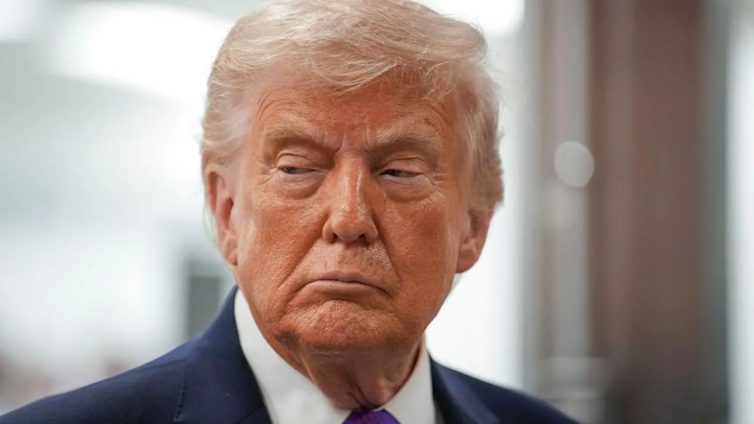
Egypt’s President Abdel Fattah al-Sisi urged U.S. President Donald Trump on Monday to stop the Iran war, saying only he could do so, and warned that fears of oil prices rising above $200 a barrel were not exaggerated.
"I tell President Trump: nobody can stop the war in our region in the Gulf but you," Sisi said at the Egypt Energy Show 2026 conference in Cairo.
"Please, Mr President, please. Please help us stop the war. You are capable of doing so," he added.
Egypt, long a recipient of U.S. military aid and support from wealthy Gulf countries, has also condemned Iranian attacks on Gulf Arab states and pushed diplomatic efforts to avoid a wider regional war.
TWIN SHOCKS OF SHORTAGES, PRICE RISES FEARED
The war will trigger twin shocks of supply shortages and price rises, the full extent of which have yet to be felt, Sisi told the conference.
"I fear that targeting energy facilities, whether production or refineries, will have very serious repercussions for the global economy and fuel prices," he said. Market watchers had warned "the price of a barrel of oil could reach more than $200, and this is not an exaggeration," he added.
Sisi also warned of a looming crisis for global food supplies, noting that disruptions to fertilizer exports will have a massive impact on prices.
"Wealthy countries might be able to absorb this, but for middle-income and fragile economies, it could have a very, very severe impact on their stability," he said.
Egypt and Israel have had diplomatic relations since a 1979 peace treaty that returned the Sinai Peninsula, which Israel had captured in the 1967 war. However, the relationship is often termed a cold peace, and Cairo has long been wary that Palestinians could be forced from Gaza across its border.
Sisi credited Trump with ending the war in Gaza, noting that he had also said only the U.S. president could stop that conflict before a ceasefire agreement was signed in the Egyptian resort city of Sharm el-Sheikh in November.
GCC SEC-GEN SAYS IRAN ATTACKS VIOLATE INTERNATIONAL LAW
Earlier, the Gulf Cooperation Council bloc's Secretary-General Jasem Mohamed Albudaiwi urged the international community to protect vital maritime corridors, condemning Iran's closure of the Strait of Hormuz and its attacks on regional energy infrastructure.
Addressing the conference virtually, he said Iranian aggression was a threat to the world.
"The brutal Iranian threats against energy facilities and the closure of the Strait of Hormuz constitute not only a blatant violation of international law but also a direct threat to global energy," he said.
GCC member states - Saudi Arabia, the United Arab Emirates, Qatar, Kuwait, Oman and Bahrain - have faced drone and missile attacks. The closure of the Strait of Hormuz has choked off a crucial route that previously handled about a fifth of global oil supplies.
Latest Stories
-
Ghana’s economic salvation lies not in shifting geo-political allegiances – Dr Atuahene
1 minute -
BoG proposes tougher rules on loan repayment assessment
6 minutes -
Government plans mandatory drug tests for public service jobs — Muntaka
11 minutes -
Media urged to intensify awareness campaigns on breast cancer
16 minutes -
Interior Minister urges public to share drug intelligence
22 minutes -
Afadzato South DCE commissions water projects, teachers’ bungalow
27 minutes -
Council of State urges sustained dialogue, negotiations as teachers resume work
32 minutes -
We are committed to leaving a legacy in Mandari – Bole-Bamboi MP
36 minutes -
Greater Accra teachers resume work after strike suspension
44 minutes -
Education Minister assures teachers of salary adjustments by October 16
49 minutes -
Abass Osabutey declares bid for NDC Deputy National Organiser position
51 minutes -
Education Minister inaugurates NDU Governing Council, announces $25m seed funding
59 minutes -
THE LAW 101: La Beach Demolitions – The State’s own documents, the courts’ orders – and the bulldozers
1 hour -
DVLA contributes GH¢17.7m to Consolidated Fund in 2025
1 hour -
Why disaster risk reduction must connect early warnings, preparedness and financial protection to household-level resilience
1 hour