

Audio By Carbonatix
The CEO of the National Youth Authority (NYA), Osman Abdulai Ayariga, has called for urgent global action on youth development.
He stressed that it must be treated as a core governance priority rather than an afterthought.
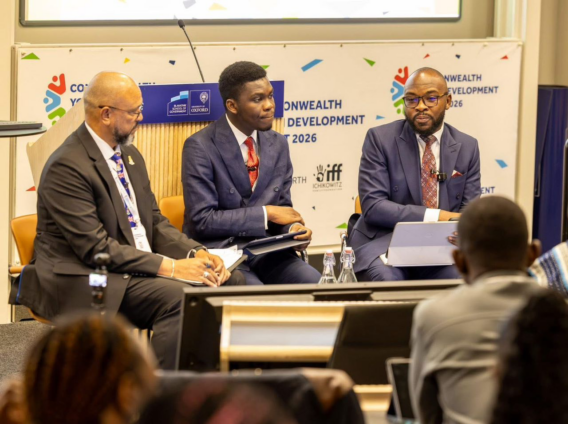
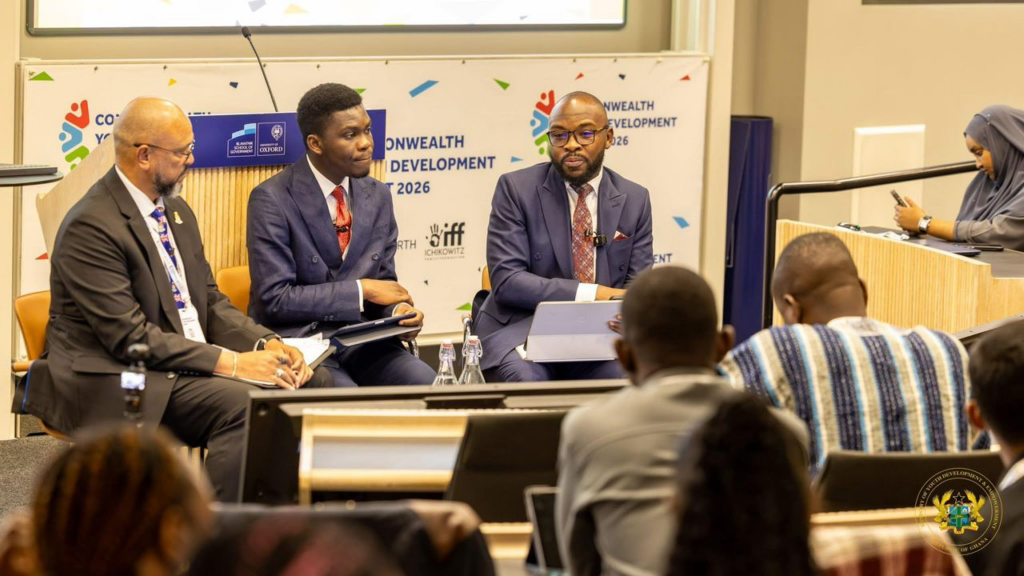
He made the remarks during a panel discussion at the Commonwealth Youth Development Summit, organised by the Commonwealth Youth Council at the University of Oxford.
Mr. Ayariga explained that Ghana’s approach to youth development is anchored in its National Youth Policy principle: “Benefit for youth, involve youth — together for a prosperous future.”
He emphasised that this is not a slogan, but a governance philosophy that shapes policy design, institutional structures, and programme delivery in Ghana.
According to him, inclusion must be deliberately built into systems at every level, rather than treated as an optional add-on.
Outlining Ghana’s model, he noted that youth inclusion has been institutionalised through leadership representation and participatory governance structures.
He highlighted that marginalised groups, including persons with disabilities, are actively involved in decision-making processes within youth governance structures.
He cited the representation of persons with disabilities in leadership roles at the NYA, explaining that such appointments ensure lived experiences directly shape policy and programme delivery.
He also noted that representatives of marginalised youth groups serve on district and regional youth committees and on the governing boards of youth institutions, thereby strengthening accountability and oversight.
Mr Ayariga further explained that Ghana has moved beyond consultation to intentional programme design, ensuring inclusion is embedded from the outset.
He referenced flagship interventions such as the National Apprenticeship Programme and the Adwumawura Programme, which include quota systems for marginalised youth, targeted outreach strategies, and pre-implementation consultations with disabled youth, rural youth, displaced populations, and refugees.
He stressed that these consultations are not symbolic but directly influence programme structure and implementation.
To ensure sustainability, he said Ghana is building permanent structures for youth participation.
These include platforms such as the Ghana Network of Youth with Disabilities, which serves as a national advocacy and coordination body.
He also disclosed ongoing efforts to establish a structured platform for refugee youth to strengthen their participation in national development processes.
Mr Ayariga urged countries across the Commonwealth to adopt three key approaches: shift from participation to co-decision-making, in which young people actively influence decisions; integrate inclusion into programme design from the outset; and institutionalise youth engagement through permanent governance structures.
He emphasised that meaningful youth development is not just about expanding access, but about redistributing voice, power, and opportunity.
“Youth development must be treated with urgency and not as an afterthought,” he reiterated, calling for stronger global commitment to youth inclusion as a driver of sustainable development.
Latest Stories
-
EducationUSA urges students to look beyond academic scholarships
5 minutes -
White House to roll out the red carpet for historic Xi Jinping visit
11 minutes -
Reports of violence against women in Gaza surge, UN agency finds
12 minutes -
Banks should mobilise $10bn for medium and large-scale farming – Kojo Akoto Boateng
13 minutes -
Trump administration accuses banned media outlets of ‘falsehoods’ ahead of court hearing
34 minutes -
US and Iran hold first talks since June after Trump’s ‘annihilation’ threat at UN
35 minutes -
More than 170,000 respiratory cases recorded in haze-choked Indonesia
40 minutes -
UK to review Chagos Islands deal over lack of US support, Streeting tells BBC
45 minutes -
BoG weighs on rising inflation risks as inflation climbs to 5%
47 minutes -
AFCON 2027Q: Kurt Okraku backs ‘good enough’ Black Stars to fight for Ghana
56 minutes -
Debt financing, expenditure are key risks to liquidity, exchange rate – BoG
59 minutes -
BoG warns of pressure on reserves as GoldBod pauses exports
1 hour -
No player will intentionally decline national team call-up – Kurt Okraku
1 hour -
AFCON 2027Q: ‘No player deliberately turned down Ghana’ – Kurt defends injury withdrawals
2 hours -
The Luckiest launches 4th edition of annual promotion with nationwide activations
2 hours