

Audio By Carbonatix
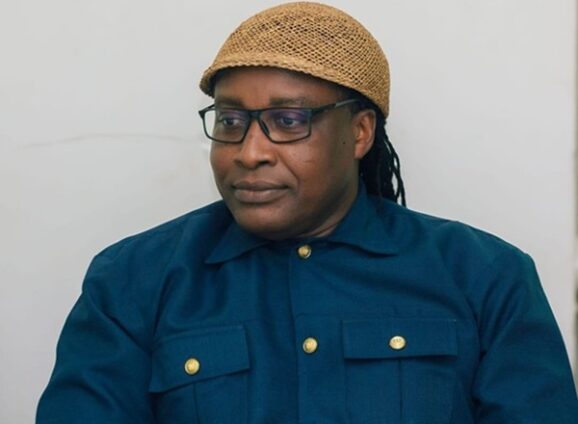
Distinguished archaeologist and Dean of the School of Arts at the University of Ghana, Prof. Wazi Apoh, has issued a rebuttal to a viral social media narrative that falsely links his academic work to a claim that the biblical Mother Mary lived in the Volta Region.
The controversy stems from a video featuring a tour guide, identified as a watchman at the Volta Regional Museum, who asserted that "Mother Mary spent 40 years in Agbenoxoe", a town in Kpando.
The video inaccurately cited Prof. Apoh’s research poster, currently on display at the museum, as evidence for this narrative.
Setting the Record Straight
In a press statement issued on Monday, 27 April 2026, Prof. Apoh described the claims as "outrageous and false," stating emphatically that his extensive research in the Agbenoxoe community, which spans from 1996 to the present, has never uncovered any such story.
“I have neither documented, written, nor published any such claim anywhere that would justify linking my name to this story,” Prof. Apoh stated, noting that the misinformation is a defamatory misrepresentation of his professional legacy.
Formal Petitions to Authorities
The Professor has taken swift administrative action to protect his reputation, officially notifying Mr. Essel Blankson, the Acting Executive Director of the Volta Regional Museum, and Dzifa Gomashie, the Minister of Tourism, Culture and Creative Arts.
Prof. Apoh has formally requested that both the Ministry and the Museum management issue an immediate press release to clear his name and correct the inaccurate reportage.
He has further demanded that all social media posts bearing this false narrative and linking him to the claim must cease circulation immediately.
A Legacy of Academic Integrity
Prof. Apoh is a prominent figure in the global archaeological community, known for his work on the archaeology of colonisation and his advocacy for the repatriation of looted African artefacts.
His research, including the influential book "Revelations of Domination and Resilience", focuses on the tangible past of the Akpini and Akan peoples during the German and British eras.
The Professor’s demand for a retraction underscores the growing challenge of "fake news" and the misinterpretation of academic research by social media influencers and unauthorised guides.
Latest Stories
-
Nepal rescuers blast hillside in search of hydropower workers as families wait anxiously
7 minutes -
Teachers who pass promotional exam to get January 2026 start date after gov’t resolves promotion dispute – Apaak
10 minutes -
NSMQ 2026: St. John’s School rally from slow start to book semi-final spot
10 minutes -
Promotion pay row: Gov’t gives teachers September to complete salary adjustments
21 minutes -
Financial irregularities plummet by 62.9% as state tightens fiscal controls
22 minutes -
DVLA to expand mobile services to underserved communities in Ghana’s Eastern Corridor of the Northern Region
38 minutes -
GUTA urges GPHA to act swiftly to end Tema Port congestion to avert rising business costs
38 minutes -
Port congestion could undermine 24-hour economy policy – GUTA
38 minutes -
NSA opens three-day window to resolve national service biodata mismatches
48 minutes -
Abu Jinapor highlights increased gold exports after Domestic Gold Purchase Programme
52 minutes -
NPP UK branch calls for independent audit into gold purchasing operations and parliamentary probe
1 hour -
Zanetor Agyeman-Rawlings pledges decisive action on climate change, galamsey and environmental degradation
1 hour -
Bawumia was brainchild behind Domestic Gold Purchase Programme – Samuel Jinapor
2 hours -
Fuel prices set to go up from September 1, Petrol to sell at GHC 16.69 and Diesel, GHC 17.90 – COMAC
2 hours -
Our World Our People withdrawn due to curriculum duplication, not politics – Adutwum’s spokesperson
2 hours