

Audio By Carbonatix
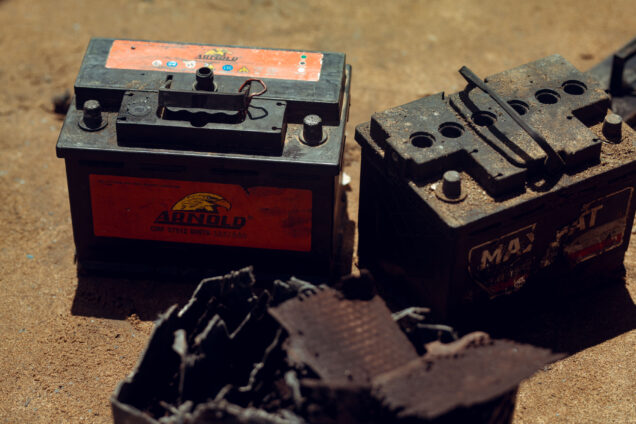
Inside a crowded mechanic enclave in southern Ghana, “Kojo” bends over a damaged vehicle battery with his bare hands. Dark dust covers nearby tools. Acid stains mark the floor as sparks fly from welding machines and engines roar around him.
For many years, this has been his daily routine. “I started this work when I was young,” he says. “It is how I raised my family.”
Kojo is not his real name. His identity and exact location are being withheld for safety and privacy reasons.
Every day, he repairs, opens and charges old vehicle batteries, exposing himself to lead substances and dangerous chemicals. Yet like many informal workers, he does the job without gloves, masks or protective clothing.
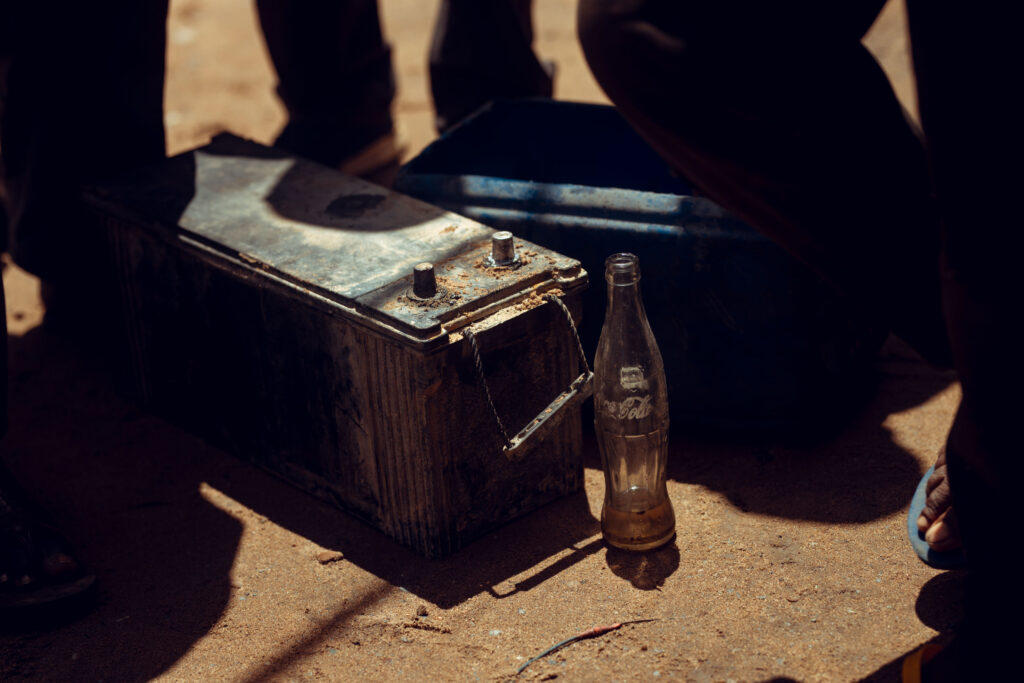
Instead, he relies on simple personal habits he believes reduce the risk. “Before I leave the workshop every day, I bath,” he explains. “I also do not allow my children inside the shop. If they come around, they stay outside.”
But health experts say those precautions are not enough. Lead is a toxic metal that can enter the body through contaminated dust, polluted surfaces or unwashed hands. Long-term exposure can damage the brain, kidneys, nerves and blood system. It is linked to headaches, fatigue, memory loss and high blood pressure.

In busy mechanic yards like Kojo’s, the danger is often invisible. Food vendors move through the area selling tea, rice among others while workers eat close to battery waste, engine oil and chemical residue.
Experts say exposure can happen gradually over many years without workers realizing the damage being done to their bodies.
Lead is commonly associated with industrial activities such as mining, battery recycling and smelting. But health specialists warn it can also be found in paints, pipes, contaminated soil, cosmetics, jewellery, spices, toys and some traditional medicines.
Because of its widespread presence, experts describe lead poisoning as a growing but largely overlooked public health crisis.
A growing public health crisis in Ghana
In Ghana, the problem remains a major public health concern. Although awareness about the dangers of lead is gradually increasing, experts say public understanding of common exposure sources and warning signs remains low.
“There is no safe level of lead exposure,” health experts stress.
They also warn that there is no cure for lead poisoning, while treatment options for many of its long-term health effects remain limited in Ghana. Experts say all cases of lead exposure are entirely preventable.
Globally, the health burden linked to lead exposure continues to rise. Globally, the health burden linked to lead exposure continues to rise. Research published in The Lancet Planetary Health estimated that lead exposure caused about 5.5 million adult cardiovascular disease deaths worldwide in 2019. More recent Global Burden of Disease (GBD) data estimated about 3.5 million deaths in 2023 alone, excluding some stroke-related cases linked to lead poisoning.
Children remain among the most affected. An estimated 800 million children worldwide roughly one in every three are believed to have unsafe blood lead levels. Health experts say more than 90 percent of the global disease burden linked to lead exposure occurs in low- and middle-income countries, particularly in regions such as Sub-Saharan Africa, South Asia and parts of Latin America.
Experts say the crisis is closely tied to poverty, weak regulations and informal work sectors where safety standards are limited or poorly enforced.
Studies also show that lead exposure contributes significantly to learning difficulties among children. Researchers estimate that lead is responsible for nearly 20 percent of the learning gap between children in low- and middle-income countries and those in wealthier countries.
Health specialists further warn that exposure during pregnancy or early childhood may increase the risk of criminal behaviour later in life.
Beyond its human cost, the economic impact is enormous. Global estimates suggest lead exposure cost the world economy about US$6 trillion in 2019, representing nearly 7 percent of global GDP. Researchers also estimate that about 21.7 million years of healthy life were lost globally due to lead-related illnesses in the same year.
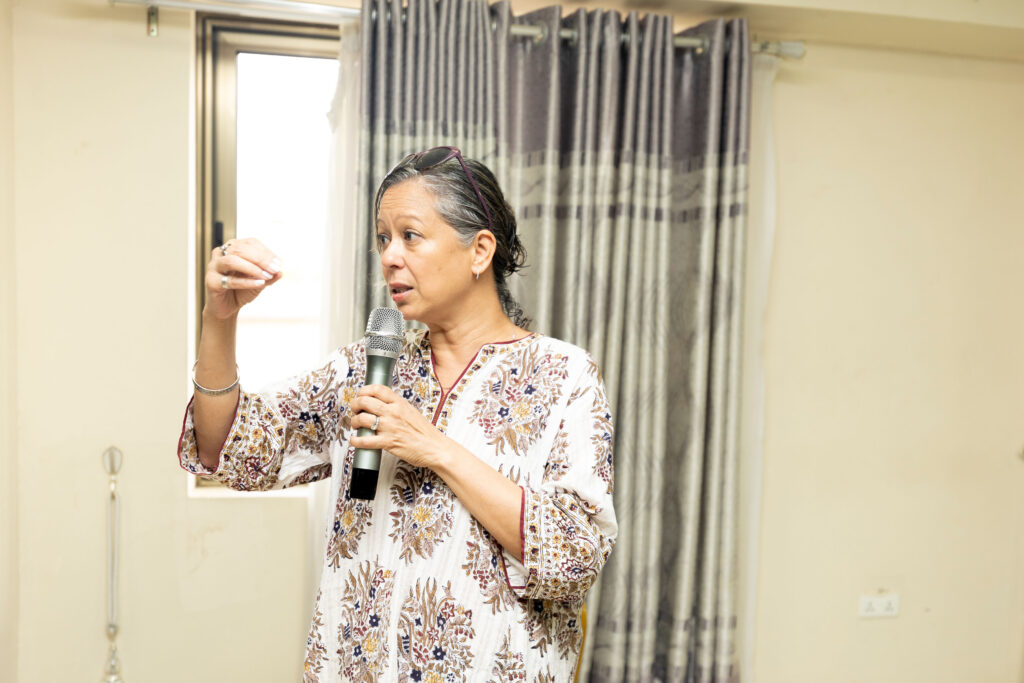
Vice President, environment, climate and urban health at Vital Strategies, Dr Sumi Mehta, says symptoms of lead poisoning are often difficult to identify in the early stages.
“Even people who appear healthy may already have high levels of lead in their blood,” she explains.
In Ghana, the scale of exposure remains alarming. According to 2025 estimates from the Institute for Health Metrics and Evaluation, about 32 percent of children under five years old have blood lead levels of five micrograms per decilitre or higher a level experts consider unsafe and requiring public health action.
Researchers also estimate that children exposed to lead lose an average of 4.8 IQ points, while Ghana’s economy loses billions of dollars annually through reduced productivity and health costs.
The Global Burden of Disease 2023 study further estimates that lead exposure contributes to more than 5,000 cardiovascular deaths each year in Ghana.
Health experts say the figures highlight not only a health emergency, but also a social and economic burden affecting communities and national development.
In 2023, more than 1.4 million children under five were estimated to have unsafe blood lead levels.
Survival over safety in the informal sector
Workers in battery repair shops remain among the most vulnerable. Some informal workers say they often experiences headaches, weakness and body pain after work. Yet they has never undergone a medical test for lead poisoning.
“We always go for malaria test,” one of them said.
For many workers, the biggest obstacle is cost. Proper safety equipment such as respirators, gloves and protective clothing can cost thousands of Ghana cedis — far beyond the reach of many informal labourers struggling to survive.
“For us, survival comes first,” another worker says. “If I use all my money to buy equipment, how will I feed my family?”
A few metres away from the mechanic yard, “Yaw” faces similar risks inside a small paint shop. Containers of blue, red, yellow and black pigments line in-front of his shop the strong smell of paint fills the air. Customers arrive throughout the day requesting custom paint colours for homes and businesses.
Yaw, whose real name is also being withheld, spends hours mixing paints, often without gloves or a proper mask.
At the time of the visit, different paint products were spotted across the floor as he explained how he blends colours. “The mask makes it hard to breathe and you are more exposed because of the heat,” he explains. “So sometimes I remove it.”
Like Kojo, he believes opening windows and washing his hands after work provide enough protection.
But environmental health experts warn that some paint pigments and older paint products may still contain harmful levels of lead and other toxic substances.
Yaw says long hours at work sometimes leave him with breathing discomfort. Still, he continues working.
“If I stop working, how will I survive?” he asks.
The experiences of Kojo and Yaw reflect a wider challenge across Ghana’s informal sector, where thousands of workers handle batteries, paints, scrap metals and industrial chemicals daily with little protection.
Many work in crowded spaces with poor ventilation and limited access to health screening.
Experts say economic hardship often forces workers to prioritise daily income over long-term health risks. In many workshops, experience is seen as protection, with older workers believing years on the job mean they are safe.
But specialists warn that lead poisoning develops slowly and silently over time.
Beyond headlines: the push for deeper reporting
Despite the growing risks, media coverage of lead exposure in Ghana has largely focused on health warnings, expert commentary and research findings, particularly around children’s health, e-waste, cookware, battery recycling and contaminated consumer products.
Experts say coverage is still limited and sometimes becomes alarm-driven whenever new reports emerge. They believe there is now a stronger need for journalism that goes beyond warning stories to focus on accountability, public education and the lived experiences of affected communities.
That is part of the reason Vital Strategies recently brought together journalists from across Ghana for a three-day training programme in Koforidua on lead poisoning and environmental health reporting.
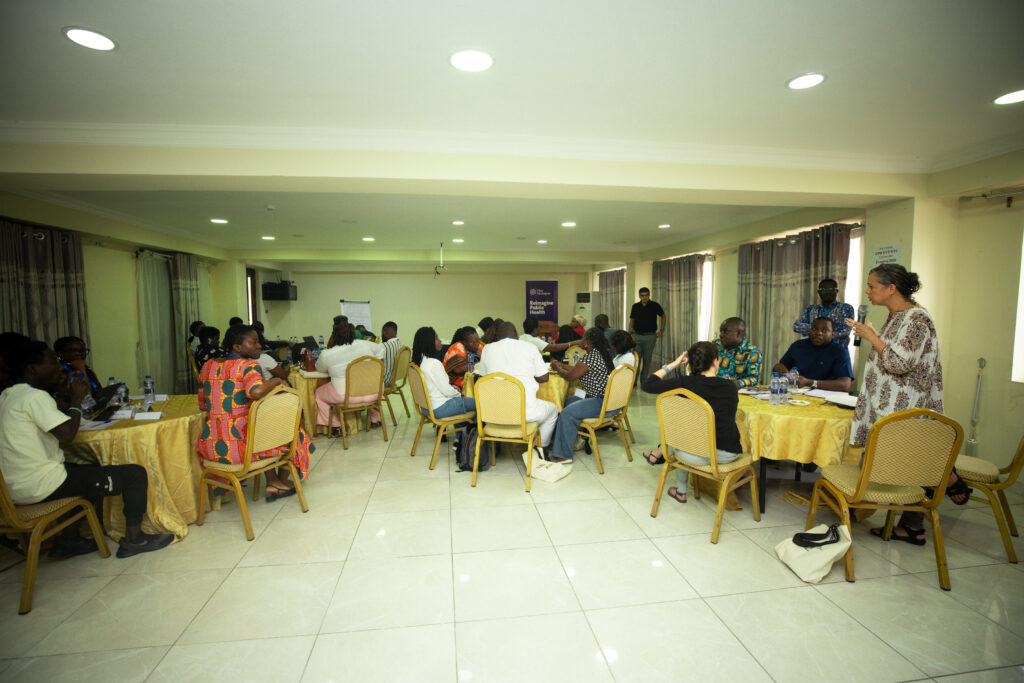
The programme, supported by Bloomberg Philanthropies, forms part of broader efforts targeting countries in Africa, Asia and South America considered highly vulnerable to lead exposure.
Participants received mentoring from health experts and experienced journalists on how to analyze lead exposure data, conduct field reporting and produce evidence-based stories.
The training also sought to bridge what organizers described as a major gap between scientific evidence and public awareness.
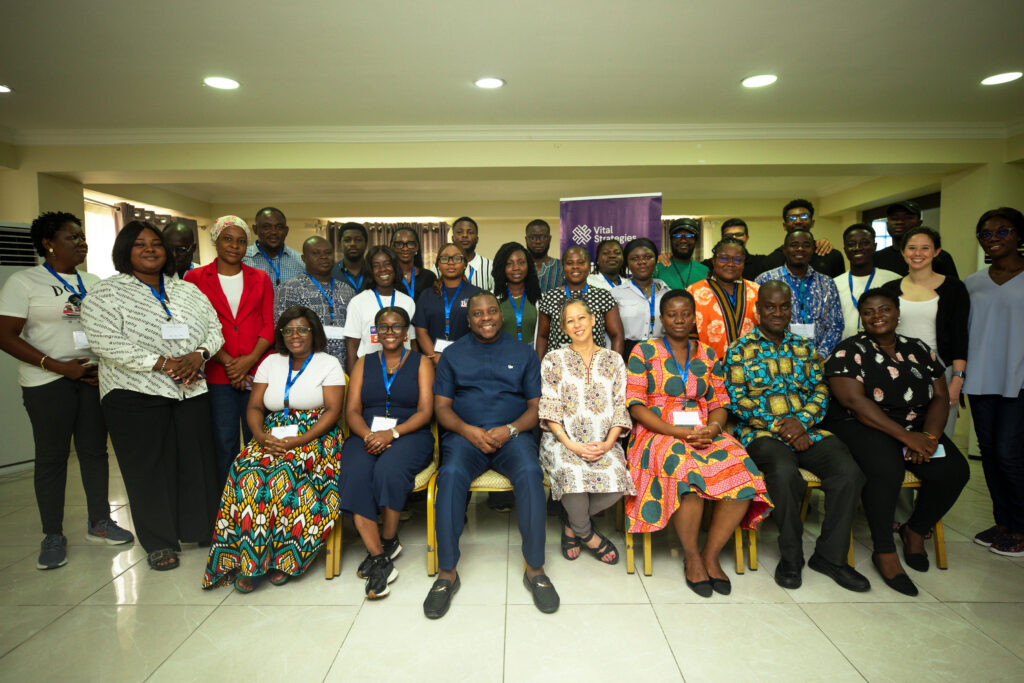
Sessions included field visits where journalists observed how informal workers regularly handle batteries, paints and chemicals without adequate protection.
Health experts at the training noted that many symptoms associated with lead poisoning including headaches, fatigue, dizziness and memory loss are often mistaken for stress, ageing or ordinary illness.
Health experts at the training noted that many symptoms associated with lead poisoning including headaches, fatigue, dizziness and memory loss are often mistaken for stress, ageing or ordinary illness.
Surveillance Coordinators at Vital Strategies, Justice Sitsofe Yevugah and Benjamin Nobel Adjei, said some sources of lead exposure remain deeply tied to culture and everyday practices.
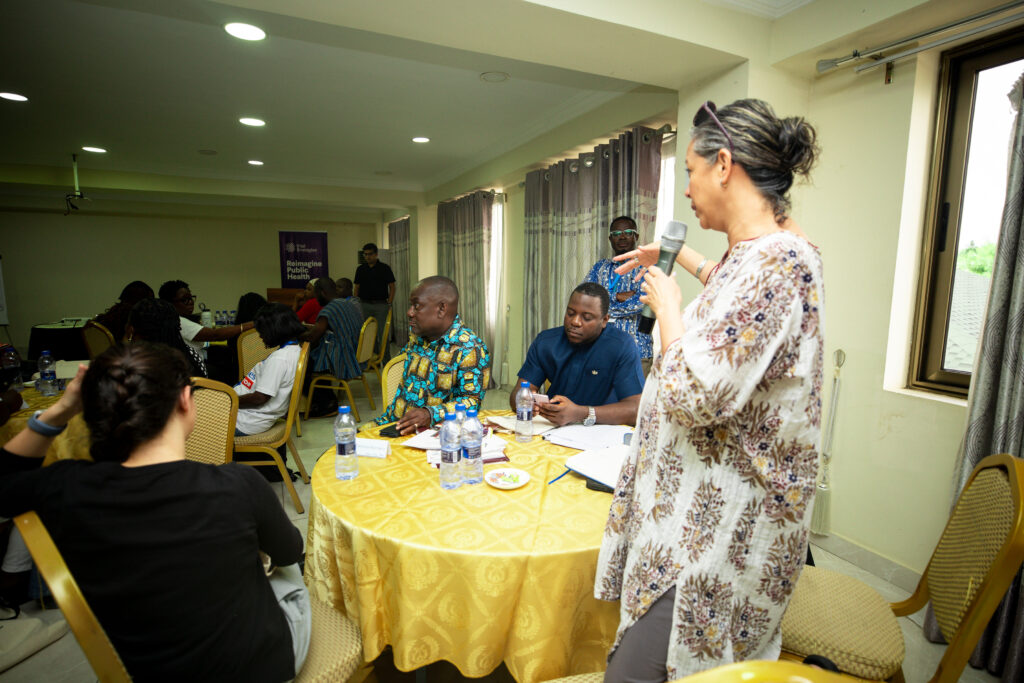
“Many practices, such as the application of kohl to children’s eyes, are deeply rooted in Ghanaian culture and tradition. Eliminating the use of lead-containing substances, especially in households and among children, will take time and sustained effort,” they said.
The concerns were echoed by other experts at the training, including Dr. Mehta.
Experts warn treatment options remain limited
Health experts explained that the first step in treating lead exposure is identifying and removing the source of contamination.
For pregnant women and children with blood lead levels of five micrograms per decilitre or higher, experts recommend calcium or iron supplementation. They added that chelation therapy may be considered when blood lead levels reach 45 micrograms per decilitre or higher.
The experts said World Health Organization guidelines support treatment decisions but stress that eliminating the source of exposure remains critical.
Although the Government of Ghana has taken steps to reduce lead exposure, including working with the Food and Drugs Authority and partners to study lead in consumer products, experts say major challenges remain.
They point to weak regulatory enforcement and limited controls on high-risk imported products such as kohl and turmeric, which continue to enter the country through ports and markets.
Latest Stories
-
Banks accounted for 86% total enquiries for credit in 2025
10 minutes -
Over 25m enquiries conducted by financial institutions for credit appraisals, others in 2025
26 minutes -
Eiffel Tower chief to quit after female staff replaced by men during religious visit
49 minutes -
South Africa to clean up high-risk areas after 12 women killed
59 minutes -
Kpandai case sets the precedent – Habib Iddrisu challenges Speaker’s rejection of drug probe
1 hour -
Habib Iddrisu questions Speaker Bagbin’s rejection of motion after Parliament recall
1 hour -
More than 400 detained as France student protests escalate
2 hours -
Ballon d’Or Power Rankings: Lamine Yamal leads race for Golden Ball ahead of Rodri and Kane
3 hours -
‘Nothing worked for us’ – Gideon Mensah takes responsibility for Gambia defeat
3 hours -
Habib Iddrisu says rejected motion was exactly what triggered Parliament recall
4 hours -
Spain announces ban on evictions after protests over 87-year-old woman’s removal from flat
4 hours -
Habib Iddrisu ‘very surprised’ as Speaker rejects Parliament recall motion
4 hours -
Speaker’s decision to reject recall motion catches Dep Minority Chief Whip off guard
5 hours -
2026 Women’s Super Cup: FC Savannah beat Epiphany Warriors to win trophy for first time
5 hours -
Fifa accuses Uefa of ‘misinformation campaign’
5 hours