

Audio By Carbonatix
Ten communities in the Atwima Mponua District of the Ashanti Region remain sceptical about imminent electricity access, following reports that the contractor in charge of their rural electrification project has walked off the job again.
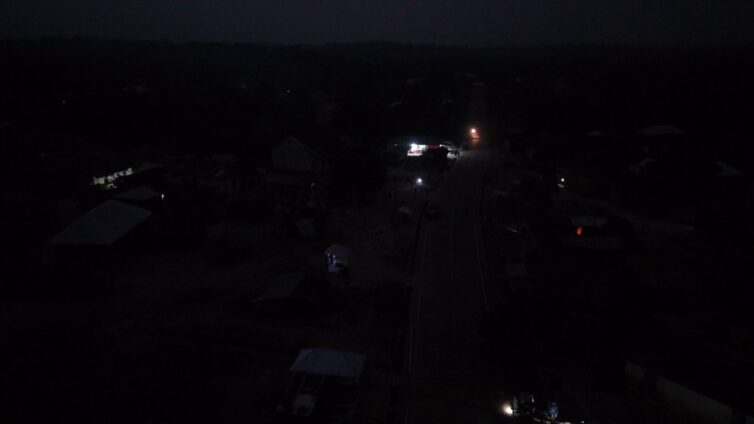
This follows JoyNews and Adom News’ story, titled “A Dark Village”, which revealed that Bedabour, Mansaso and eight other communities in the district are becoming ghost towns.
Hundreds of residents, especially the youth, have fled homes they once inhabited after decades without electricity.
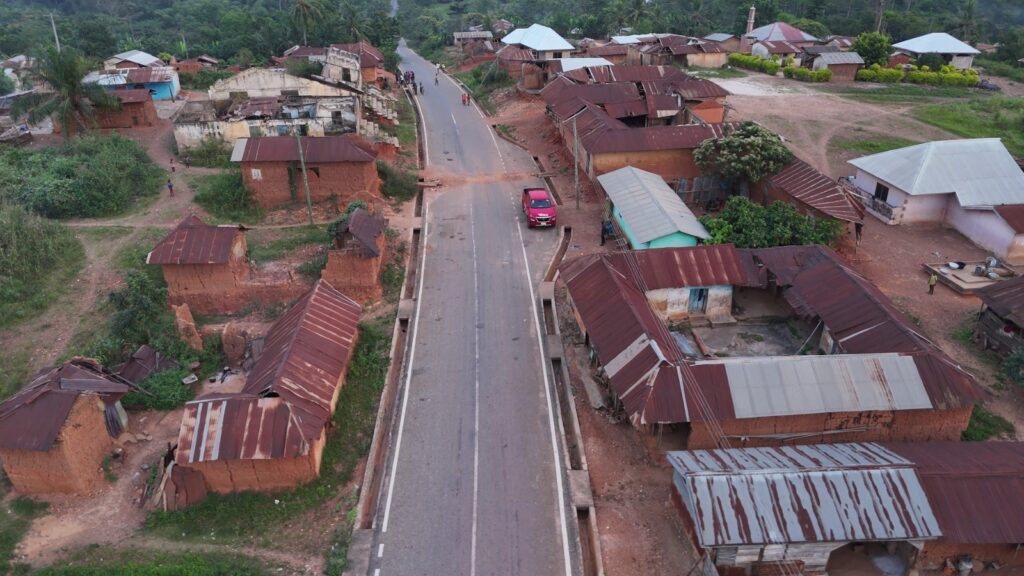
As captured in the report, the electrification project to connect the communities to the national grid was awarded in 2013 but remains uncompleted as of 2026.
Poles and transformers worth millions of cedis procured for the project have been abandoned to rot under the caprices of the weather.
The electrification project was contracted to Possible Power Limited in 2015 to facilitate the extension of electricity access to these communities, but the project has yet to materialise.
Following the broadcast of the story on March 26, 2026, the Atwima Mponua District Chief Executive, Ibrahim Issahak, told Joy News the contractor had resumed work after a decade-long absence and promised the project would be commissioned by the end of April 2026.
“With the way the contractor is progressing with the project, I can assure you the electrification project will be completed by the end of April,” the DCE assured on JoyNews desk.
However, on a follow-up visit to the communities on May 30, 2026, a month after the deadline, producers of the feature, Emmanuel Bright Quaicoe and Francis Mensah, found that the contractor had pulled out again before the Easter holidays, with works left unfinished.
The excitement that greeted the communities after seeing the contractor back on site in March 2026 is now shadowed with scepticism.
Bedabour residents frustrated
Speaking to the news team, Bedabour Chief, Nana Akwesi Yaboah, acknowledged the current government’s efforts to extend the grid but expressed deep frustration over the delays.
He said broken promises from past administrations have left residents wary that history could repeat itself.
Nana Yaboah added that the contractor’s return in March briefly revived hopes of imminent connection, only for work to halt once more during the Easter break, with no sign of a return.
“We acknowledge that this government has helped connect our communities to the national grid, but it needs to expedite work to finish the project. The contractor was installing poles and transformers, but left before Easter and hasn’t returned since,” he said.
The prolonged darkness is taking a toll on the people. For as long as the 500 residents of Bedabour could remember, they and their neighbours have lived in darkness.
Only five houses in the entire community have electricity, and that is because their owners can afford solar panels or power generators.
So, when workers arrived in 2013 to erect electric poles and string wires across the village, the mood changed. Some of them spoke about finally buying fridges and televisions. Others imagined their children studying under proper light.
“I haven’t drunk cold water before because I have no fridge in my house to cool my water. My daughter also cannot study at night because we have no proper flashlight to aid her learning,” assembly member, Isaac Asamoah, said.
Youth fleeing Mansaso
A few kilometres from Bedabour lies Mansaso, an almost abandoned village. The story is no different.
The residents recollect the joy they exuded when workers of Possible Power Limited arrived to erect electric poles. Some even joined in, helping to carry poles and clearing paths, hopeful that their community would finally light up at night.
“When they got here, we all, including the old and young joined to help them erect the poles. We cleared the trees that obstructed their work. We felt we would finally see light after that. But no show up to now,” Otabil, a youth in the community, said.
Our news team scoured the community and found out parts of the installation that were already falling apart, with some of the wires dangling loosely, during the earlier visit, continued to be in the same state.
The absence of power running through the wires continues to force a significant number of the community folks to neighbouring towns with access to electricity.
Thatched houses in the community are now engulfed in weeds; their rooms are breaking away with metallic roofs ripping off and rusting away.
The community that once boasted of hundreds of families who once enjoyed their darkness in hope of seeing their skyline light up one day are fed up and moving out of their homes.
“All the youth here are leaving to seek greener pastures in nearby villages with light. We are losing our generation who could protect our lands for us,” Maame Adwoa Achiaa, a resident, lamented.
When is work resuming?
Possible Power Limited, on their return to the site, began work on the high-tension poles that lined up the skyline of the ten communities. Some conductors were laid on pylons that had for years been without any.
But after some weeks of work, they left the site.
When the news team contacted Kwaku Duah, Chief Executive Officer for Possible Power Limited, he insisted that the electrification project remains active despite the absence of workers on site after the Easter break.
Mr Duah explained that installation was halted pending the delivery of specialised equipment needed to complete the remaining phase of the project.
He said the Ministry of Energy had now concluded the procurement process and that his company is awaiting delivery of the materials.
"The awaited materials have arrived. The ministry is now processing them. Even on Friday, the Director of Power called me and told me they're working on it, and the package will be released soon, giving me the contact of the transporter. So, we're set to receive and get back on site to finish the project and connect the affected areas to the grid," the contractor stated.
Mr Duah attributes the delays in the project to the theft of essential materials and not funding, revealing that some of the perpetrators, including a community coordinator, have been arrested and are currently facing prosecution, while others have been fined.
"Money for the project has never been an issue for me. The project was officially started in 2015, and when the NPP government took over power, all the materials for the electrification project were stolen. Ask the residents how many times our materials have gone missing. Even a coordinator stole some of the materials and was caught. When we sent him to court, he was fined less than ¢1000," Kwaku Duah noted.
"So, if the government purchases the materials and they keep going missing, will the government be able to keep providing the materials?” he queried.
Mr Kwaku Duah, however, assured work would resume sometime in June when the company takes delivery of the procured materials from the Energy Ministry.
Communities waiting in earnest
Residents say the absence of electricity is severely undermining education and livelihoods. Students are unable to study after dark, leaving many unable to complete assignments or prepare adequately for exams.
Traders and small-scale business owners are also bearing the brunt. Those depending on the alternative power for refrigeration, milling, and other operations are distraught over dwindling sales.
Many of the residents who hope to utilise the electricity for energy-dependent business ventures wait in earnest to go after their trading goals.
Assemblyman for the Bedabour electoral area, Isaac Asamoah, is requesting the government to either reassign the contractor or compel a return to the site to complete the stalled project without further delay.
He says their patience is waning with the many years of what appears to be political deceit.
“We have done everything required of us, yet the project remains stalled. I want to appeal to the government to either reassign the contractor or compel a return to the site, because we can no longer hold our patience,” he said.
The residents argue that electricity is fundamental to education, commerce, and overall community development.
They warn that prolonged delays in connecting the communities to the national grid will only deepen poverty and limit opportunities for the youth.
The thousands of residents in Bedabour, Mansaso, Kwame Dwaa, Kyenkyentaa, Beposo, Abompe, Kojo Fordjourkrom, Yaw Bua, are demanding that the state and the local assembly act swiftly to provide them with what is a basic necessity for the country’s aim to attain Goal 7 of the Sustainable Development Goals by 2030.
Latest Stories
-
Ghana still needs landfills but Accra should prioritise waste-to-energy – Waste Care Associates CEO
6 minutes -
Godwin Mahama declares bid for NDC Greater Accra Regional Secretary
9 minutes -
Bawumia unveils NPP plan to scout parliamentary candidates capable of winning parliamentary seats
14 minutes -
NPP Chairmanship race: How APL’s survey made a near-perfect prediction
14 minutes -
Remember Adomako-Boateng: Aduana right-back regains consciousness after collapsing during a league match
14 minutes -
Today’s front pages: Monday, October 5, 2026
15 minutes -
Families still selling homes, exhausting savings to pay for specialised care – GMTF Administrator
36 minutes -
Unity is what we need, Shatta Wale has reminded us
39 minutes -
Ghana Medical Trust Fund has exceeded expectations in first year – Health Minister
44 minutes -
One-Week Observation for Mrs Janet Gyasi Boakye
57 minutes -
Before the bulldozers arrive: What the state owes workers in the informal economy
57 minutes -
NIA extends Ghana Card registration for children in North East and Upper East
1 hour -
Volta Team wins NPA 2026 Welfare Week Quiz championship
1 hour -
Maxwell Klu turns birthday into relief mission for Hohoe flood victims
1 hour -
NDC congratulates NPP, calls for national interest to rise above party politics
1 hour