

Audio By Carbonatix
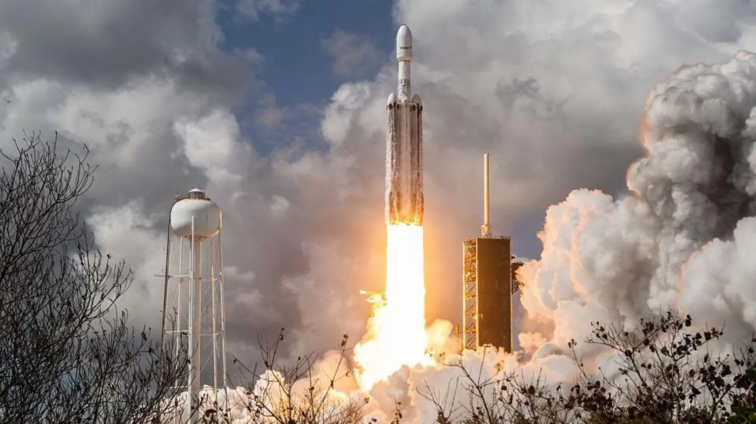
Elon Musk's SpaceX has released a suggested share price ahead of its planned listing, which would make it the largest initial public sale in history.
In a filing setting out plans for its initial public offering (IPO), SpaceX said its shares should go for $135 (£100) each, ratcheting up its own valuation of the firm to roughly $1.75tn.
Setting an estimated price for its stock listing so far in advance is a rare move, and the amount represents a large increase in SpaceX's previous valuation of $1.25tn earlier this year.
The revelation does not mean its shares will sell for the proposed price, as this will ultimately be decided by buyers. The price could go up or down.
The move by SpaceX, which builds space exploration rockets and infrastructure but also owns xAI and Starlink, to reveal its estimated share price more than a week before its public debut is unusual.
Companies typically only reveal the price they want to sell their shares at the day before they begin trading on the open market.
SpaceX is expected to start trading on the Nasdaq stock index on 12 June, making its price estimate one of, if not the earliest price estimates, in stock market history.
The company is aiming to raise $75bn, which would be a record high for an IPO. The current record is held by oil giant Saudi Aramco, which raised $25.6bn in 2019.
Should the company's shares sell at or above the expected $135 price, it will immediately become one of the most valuable companies in the world.
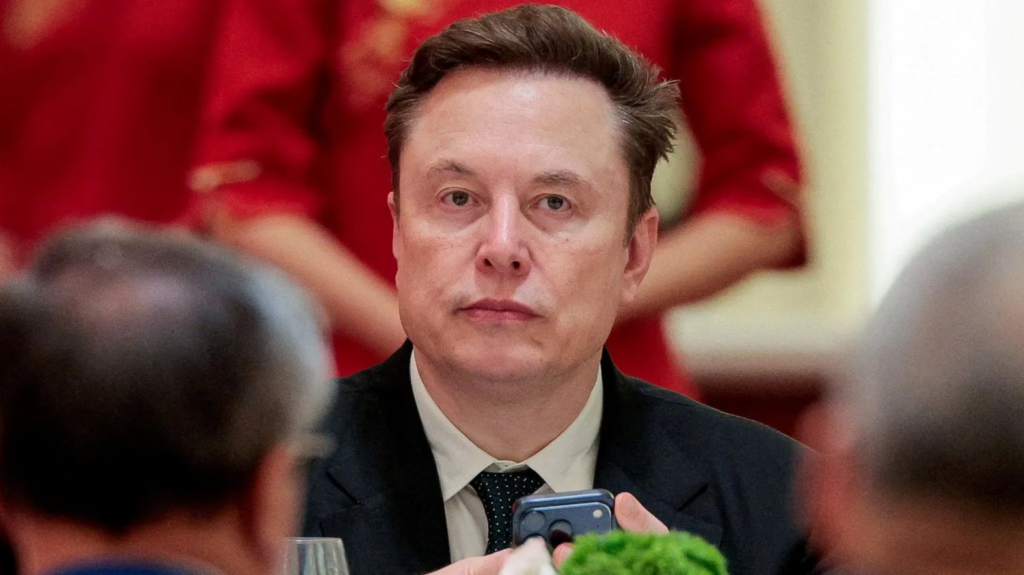
And Musk, who controls more than 80% of SpaceX with his own stock holdings in the firm, could become a trillionaire.
However, such an outcome is not certain.
According to data from Dealogic, which conducts research on the capital markets, almost half of companies that have gone public in the last 30 years have seen their value decrease compared to when they listed.
"There is no doubt the valuation is incredibly rich," Samuel Kerr, head of equity capital markets research at Mergermarket, said.
He noted that SpaceX was pricing itself compared to its sales at a ratio that is higher than any other major company included in what investors refer to as the "Mag 7" - Alphabet, Amazon, Apple, Meta, Nvidia, Microsoft and Tesla, another of Musk's companies.
"But SpaceX is being valued on future earnings and revenue rather than the here and now, so some investors might be willing to overlook that," Kerr added.
Last year, Space Exploration Technologies - as SpaceX is officially known - brought in $18.6bn (£13.8bn) in revenue but had a net loss of $4.9bn.
In the first three months of this year, it achieved $4.7bn in sales but made a net loss of $4.3bn. Its balance sheet shows it has $102bn in assets, such as rockets and other equipment, but also carries $60.5bn of debt.
Besides space exploration, the company is investing heavily in artificial intelligence (AI), social media, space-based internet services and data centres.
Earlier this year, SpaceX acquired xAI, another one of Musk's businesses which is known for its Grok chatbot.
xAI started as part of X, formerly known as Twitter, and used its access to live text and information on the platform for AI training data.
Musk has long believed that developing infrastructure in space is the best way to secure the resources needed to power AI, given that land on Earth is scarce.
He has outlined plans to launch AI satellites and eventually build data centres in orbit.
"SpaceX used to be a simple business, it was a launch company and then it was also a satellite broadband provider, and now it's a social media company and it's an AI lab," Laurence Pevsner, a partner at venture capital firm Lux Capital, told the BBC's Today programme.
"The AI lab is what's really spiking the valuation and I think it's a risky bet to put onto shareholders," he added.
SpaceX's listing comes as other tech giants are looking to raise more cash to fund their spending on AI.
Earlier this week, AI firm Anthropic revealed its plans for a public share sale later this year, while Google's owner Alphabet said it wanted to raise $80bn to spend on AI investment.
OpenAI is also reportedly considering going public this year.
Latest Stories
-
Major Accra roads to get facelift ahead of Ghana’s 70th Independence anniversary – Agbodza
6 minutes -
Account for GH¢650bn allocated to existing programmes before new economy – Oppong Nkrumah to gov’t
18 minutes -
‘You’re an action man’ – Abena Osei-Asare hails Rent Commissioner’s hostel fee crackdown
19 minutes -
Mahama directs Finance Minister to allocate GH¢1bn for Housing Fund in 2027 Budget
25 minutes -
NPP celebrates Bawumia on birthday, prays for 2028 election victory
25 minutes -
Mahama recounts ‘exhausting and frustrating’ struggle to find a home as a young spouse
31 minutes -
‘Take damaged banknotes to commercial banks for replacement’ – BoG warns against repairing cedi notes for resale
38 minutes -
Lebanon’s Hezbollah gets $200 million from Iran to help displaced, sources say
39 minutes -
Bisa Kdei to launch annual Highlife music event ‘The Convention’
39 minutes -
BoG cautions public against digital financial fraud, ‘double-your-money’ schemes
40 minutes -
WPL 2026/27: Ampem Darkoa Ladies to start title defence against Northern Ladies
51 minutes -
WPL 2026/27: Hasaacas Ladies face Army Ladies in opening round as GFA announce Southern Zone fixtures
1 hour -
Eduwatch calls for urgent resolution of teachers’ strike and reforms
1 hour -
Media worker, journalist remanded over alleged GH¢800k fraud
1 hour -
Safeguard all personal, financial information, including Mobile Money PINs, ATM PINs – BoG to general public
1 hour