

Audio By Carbonatix
The committee investigating the fire at the Akosombo Substation has concluded that the incident was caused by insulation failure linked to the ageing condition of the facility, ruling out any deliberate human action.
The findings were presented to the Minister for Energy and Green Transition, John Abdulai Jinapor, on Thursday, with the committee describing the fire as a technical and structural failure rather than an act of sabotage.
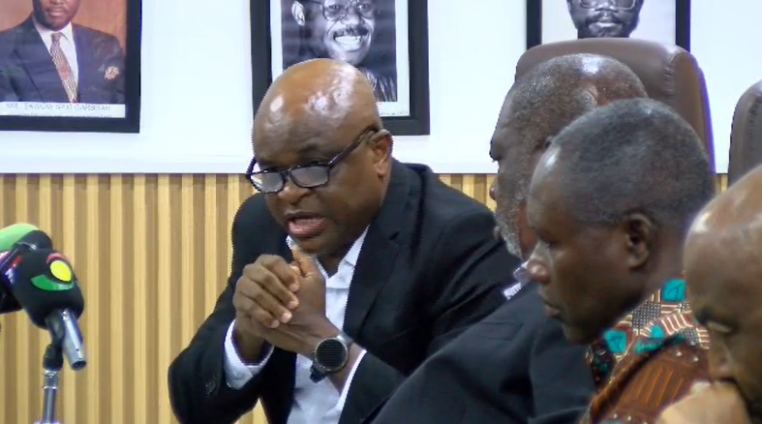
Committee Chairman, Engineer William Amuna, explained that the blaze started in the changeover section of the low-voltage (LV) panel, where cables installed decades ago had deteriorated over time.
"The fire actually started from that changeover area of the LV panel. That building was started, I mean, the first structure came up around 1964 or so."
According to him, many of the cables had become brittle after years of use, leading to insulation failure that allowed electrical current to flow abnormally.
"Some of the cables have gone brittle," Engineer Amuna said.
"Once they were in metal encasements, there was what we call some kind of fault where the current just flowed because of the insulation of the materials over there."
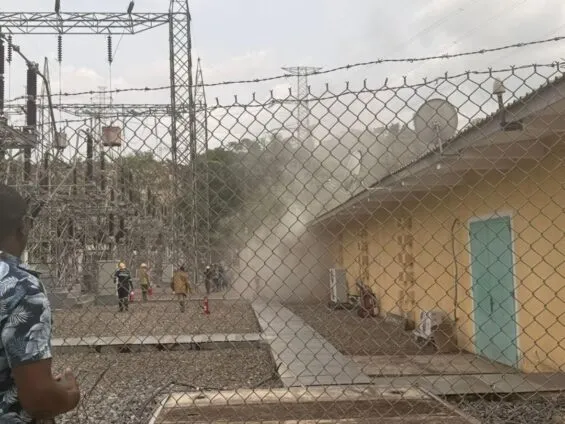
He explained that the initial power supply from the powerhouse automatically tripped at 311 amps after detecting the fault. However, a second transformer immediately took over the supply, continuing to feed electricity into the damaged section.
"The second transformer nearby took over and started supplying. So it means it was feeding into the fault," he said.
Engineer Amuna said that the second transformer was configured to trip only at 450 amps, allowing the fault to continue and generate excessive heat.
"Within a short time, the insulation, which is like plastic, caught fire," he said.
The fire quickly spread because the affected LV panel was connected to another panel and surrounded by numerous control cables serving the large substation.
"Akosombo substation is a very big one. It has 11 outgoing circuits. They had a lot of cables in there, and the LV cables were within those cables. They started burning, and within a short time the whole place was ablaze," he explained.
He stressed that the investigation found no evidence of human interference.
"It actually started from insulation failure from some of the cables in the LV panel, and not anybody going to turn something or twist something or whatever," Engineer Amuna stated.
The committee has recommended immediate and long-term measures to improve the safety and reliability of the facility.
Engineer Amuna said an interim arrangement is already being implemented to transfer the protection and control functions from the damaged station to the Akosombo Power Plant.
"We are expecting that by the end of August, this interim arrangement should be in so that we can transfer the protection and the control back to that arrangement being undertaken by GRIDCo and the VRA," he said.
He added that the committee is recommending the construction of a new permanent control building to replace the ageing facility.
"We must put up a new control building. We have identified the Pokuase Substation. That is a new substation that meets all the safety standards and everything," he said.
Engineer Amuna expressed optimism that a modern control building could be completed within 18 to 24 months.
"So hopefully we should have a state-of-the-art permanent control building. I expect that such a building could come up within 18 and 24 months," he said.
Receiving the report, Energy Minister John Abdulai Jinapor assured the committee that its recommendations would be fully considered and implemented.
"Let me assure you that we will take this report seriously. We will digest all the contents of the reports and implement the report to the letter," he said.
The minister commended engineers for restoring electricity after the incident, but said that accountability would remain a priority if any negligence was established.
"Yes, it is true. The engineers did a good job in restoring power. But that is not to say that if somebody is found culpable, that person will not be held to account. That is the call of duty," he stated.
Mr Jinapor said the incident should serve as a lesson for the country's energy sector, saying that some corrective measures had already been introduced following earlier briefings from the committee.
"We've taken some action. We've gotten them to be a bit more proactive," he said.
He added that the findings highlighted the need for stronger maintenance practices and greater investment in electricity infrastructure.
"This should be a wake-up call for us so that we can strengthen the system, make it more responsive, improve our emergency response system, maintenance culture and, more importantly, invest in the grid in order to have a resilient energy sector," the minister said.
The Ghana Grid Company Limited, on April 23, announced that a fire outbreak at the Akosombo Substation had disrupted operations and affected electricity supply in parts of the country.
According to the company, the fire has impacted power generation and transmission within the national grid, leading to outages in several areas.
Latest Stories
-
Afenyo-Markin’s lawsuit against Sammy Gyamfi takes focus away from development – Kpebu
5 minutes -
FWSC urges media to guard against misinformation in proposed IPEC transition
5 minutes -
MoMo Fest 2026: Shatta Wale to Rock Accra Stadium on October 17
7 minutes -
Zimbabwean author denies using AI to write award-winning story
27 minutes -
GTEC’s letter directing public universities to reopen by October 16 is unprofessional – GAUA
27 minutes -
Suspect in viral video assaulting wife jailed for 3 months
28 minutes -
GAUA insists strike will end only after Fair Wages addresses market premium issue
28 minutes -
Kpemka seeks compensation as he sues BOST over alleged unlawful termination
31 minutes -
GES asks applicants to check status of 2026 promotion applications on October 15
55 minutes -
Kobe Boujee joins Olympics.com team for Dakar 2026 Youth Olympic Games
1 hour -
Slaty egret’s shifting nesting sites offer clues to changing ecosystems
1 hour -
First phase of arrears for promoted teachers to be paid on Friday – Haruna Iddrisu announces
1 hour -
Caveman Watches partners with Mfantsipim School for 150th anniversary
2 hours -
We’ll pursue GH¢15m defamation suit against Sammy Gyamfi to its logical conclusion – Afenyo-Markin’s lawyers
2 hours -
Martin Kpebu urges Afenyo-Markin not to return to court over Sammy Gyamfi lawsuit
2 hours