

Audio By Carbonatix
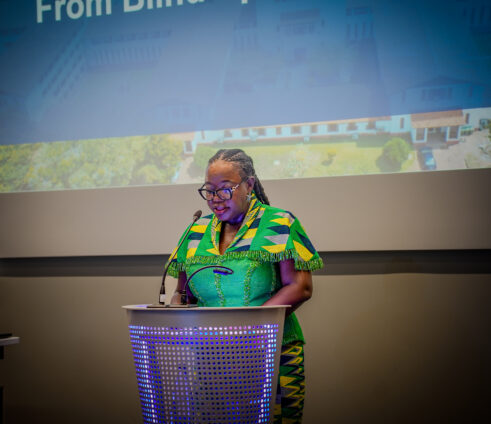
The Vice-Chancellor of the University of Ghana, Professor Nana Aba Appiah Amfo, has called for the intentional inclusion of African languages in artificial intelligence (AI) systems, warning that the continent risks being marginalised in the global AI revolution if its voices and knowledge systems remain underrepresented.
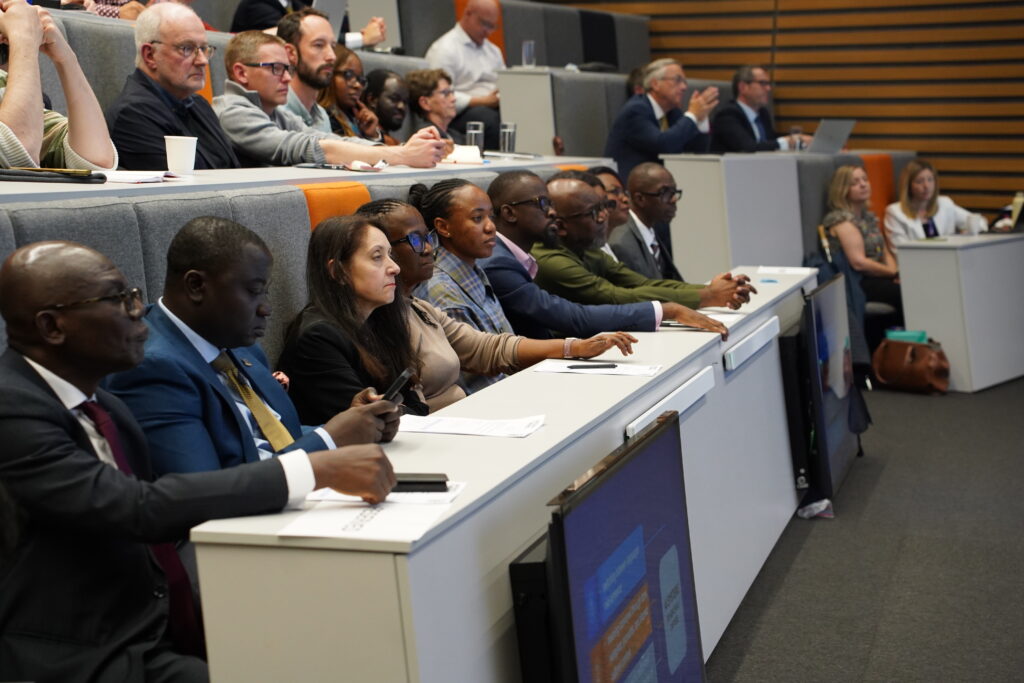
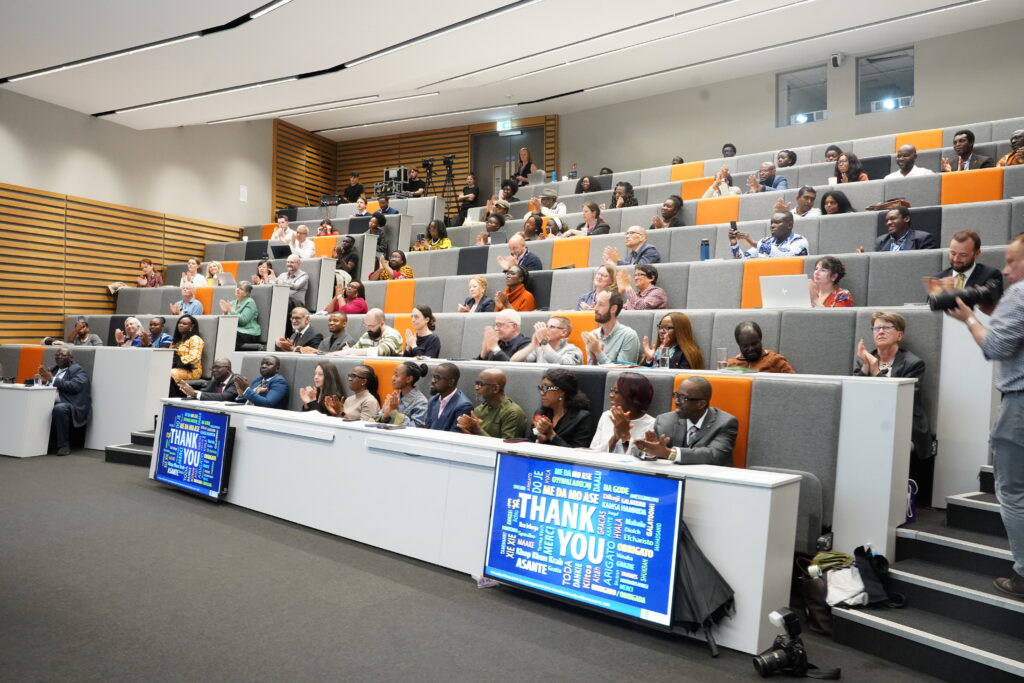
Speaking at the Fifth Warwick Distinguished Africa Lecture at the University of Warwick in the United Kingdom on Thursday, June 11, 2026, Prof. Appiah Amfo argued that Africa's linguistic diversity should be viewed as a valuable resource rather than a barrier to technological advancement.
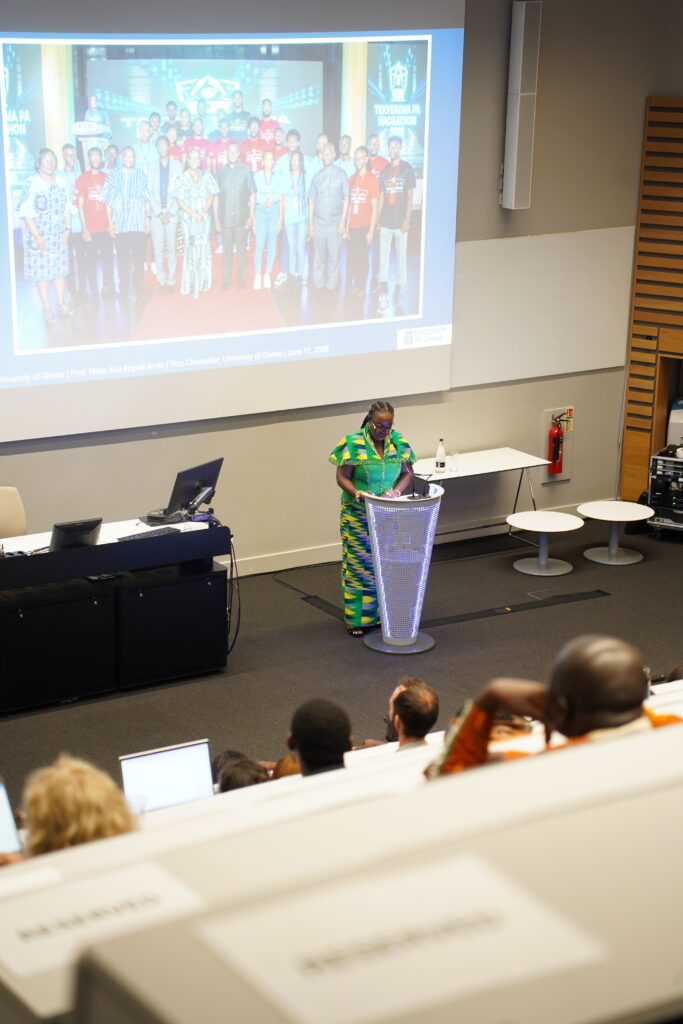
Delivering a lecture titled “Whose Language Counts? African Voices, Knowledge Systems, and the Future of AI,” she said the future of AI must reflect the languages, cultures and knowledge systems of all people if it is to serve humanity equitably.
“Without embedding African languages in the design of Artificial Intelligence, the systems being built to serve the world will serve only part of it,” she stated.
Prof. Appiah Amfo noted that although Africa is home to more than 2,000 living languages spoken by over 1.4 billion people, a recent UNESCO report described African languages as a “blind spot in AI” because they remain significantly underrepresented in the datasets used to train large language models.
She stressed that the issue extends beyond language representation and touches on questions of knowledge, visibility and equity.
“When a language is absent from the digital corpus, it is not merely a translation problem. It is a visibility problem. It is a knowledge problem. And ultimately, it becomes a question of justice,” she said.
According to her, AI systems trained predominantly on English and other widely spoken languages risk reinforcing Western perspectives while overlooking African philosophical traditions, indigenous knowledge systems and cultural nuances.
To illustrate the challenge, Prof. Appiah Amfo cited the development of “Nana Aba AI,” a voice assistant being built by University of Ghana students to provide verified information to staff and students.
While the system was able to replicate her voice effectively in English, she said it struggled with Ghanaian names, places and local expressions.
“The system could reproduce 'me' in English with considerable success. The moment it encountered Ghanaian names, places, and phrases, the voice I was hearing no longer sounded like me. My own name did not sound like mine,” she said.
She added that developers have since asked her to record her voice in a studio to help the system better learn Ghanaian pronunciations and languages.
“AI does not struggle with African languages because they are too complex. It struggles because we have not yet been seen,” she remarked.
The Vice-Chancellor challenged policymakers, researchers and technology developers to ensure Africa participates not merely as a consumer of AI technologies but as a contributor to the values, assumptions and knowledge systems embedded within them.
The lecture comes shortly after the launch of Ghana’s National AI Strategy, a 10-year framework backed by a $250 million government commitment aimed at positioning the country as a leader in Africa’s AI ecosystem. The strategy includes plans to establish a world-class AI computing centre and strengthen natural language processing capabilities in Ghanaian languages.
Prof. Appiah Amfo also disclosed that the University of Ghana, which recently adopted its own AI Policy, will introduce a compulsory Digital Literacy and Applied AI course for all students beginning next academic year.
Vice-Chancellor and President of the University of Warwick, Professor Stuart Croft, praised Prof. Appiah Amfo’s contribution, describing it as a reminder of the importance of diverse perspectives in shaping the future of research and innovation.
Professor Nana Aba Appiah Amfo is only the second Ghanaian to deliver the Warwick Distinguished Africa Lecture since its inception, following former University of Ghana Vice-Chancellor, Emeritus Professor Ernest Aryeetey.
Latest Stories
-
THE LAW 101: La Beach Demolitions – The State’s own documents, the courts’ orders – and the bulldozers
4 minutes -
DVLA contributes GH¢17.7m to Consolidated Fund in 2025
7 minutes -
Why disaster risk reduction must connect early warnings, preparedness and financial protection to household-level resilience
14 minutes -
The AI Gold Rush: Who strikes gold and who gets left behind?
38 minutes -
What Is Wrong With Us: We queue for the Colosseum while our own Castles crumble
1 hour -
Dangote IPO fever could deepen Africa’s capital markets, Citi Bank executive says
2 hours -
US hopes diesel deal can ‘soften’ Moscow on peace talks, sources say
2 hours -
Oil falls as Russia diesel supply prospects counter Gulf supply risks
2 hours -
Moroccan centrist party agrees to form coalition government with three other parties
2 hours -
IMF cites AI slowdown, spiking yields as looming global market risks
2 hours -
Nvidia’s China AI-chip share falls as Huawei closes gap, report finds
2 hours -
Trump says he does not believe China and Russia are helping Iran ‘at all’
2 hours -
One dead and several hurt after rollercoaster incident at Six Flags
4 hours -
Afrobeats singer Ayra Starr on making history at her NFL half-time show
4 hours -
South Africa’s deputy police chief resigns after being charged with sexual offences
4 hours