

Audio By Carbonatix
Senior security and peacebuilding officials from Ghana and Austria have called for increased investment in political advisory expertise across Africa, warning that the continent's rapidly evolving security landscape demands a new generation of professionals capable of providing informed strategic guidance to peace support operations.
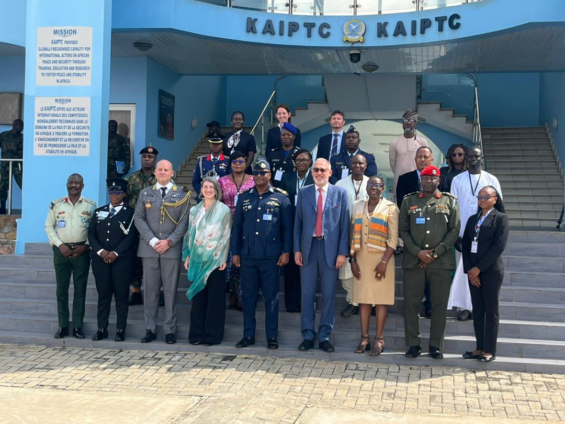
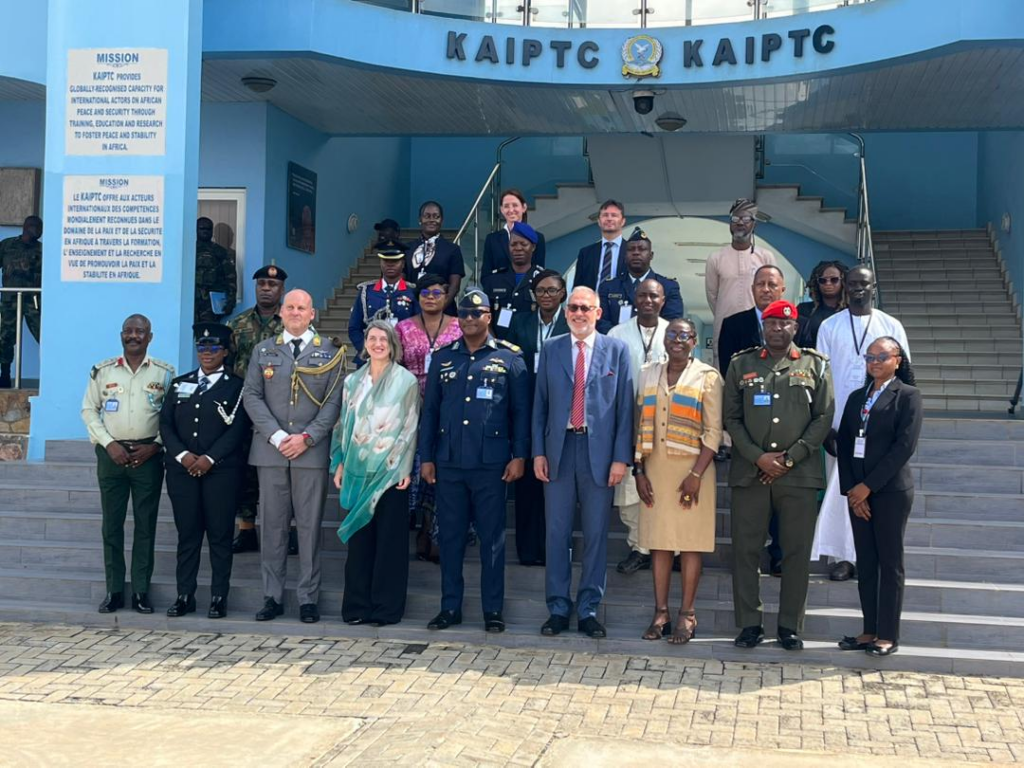
The call was made at the opening of the 9th Political Advisors Course for African Operations at the Kofi Annan International Peacekeeping Training Centre (KAIPTC) in Accra on Monday, June 15.
The two-week programme, jointly organised by KAIPTC and the Austrian Ministry of Defence, is designed to strengthen the capacity of Political Advisors serving in United Nations (UN), African Union (AU), ECOWAS and other peace support missions across the continent.
Addressing participants, facilitators and distinguished guests, the Commandant of KAIPTC, Air Vice Marshal David A. Akrong, described the course as both timely and essential as African countries grapple with increasingly complex and interconnected security threats.
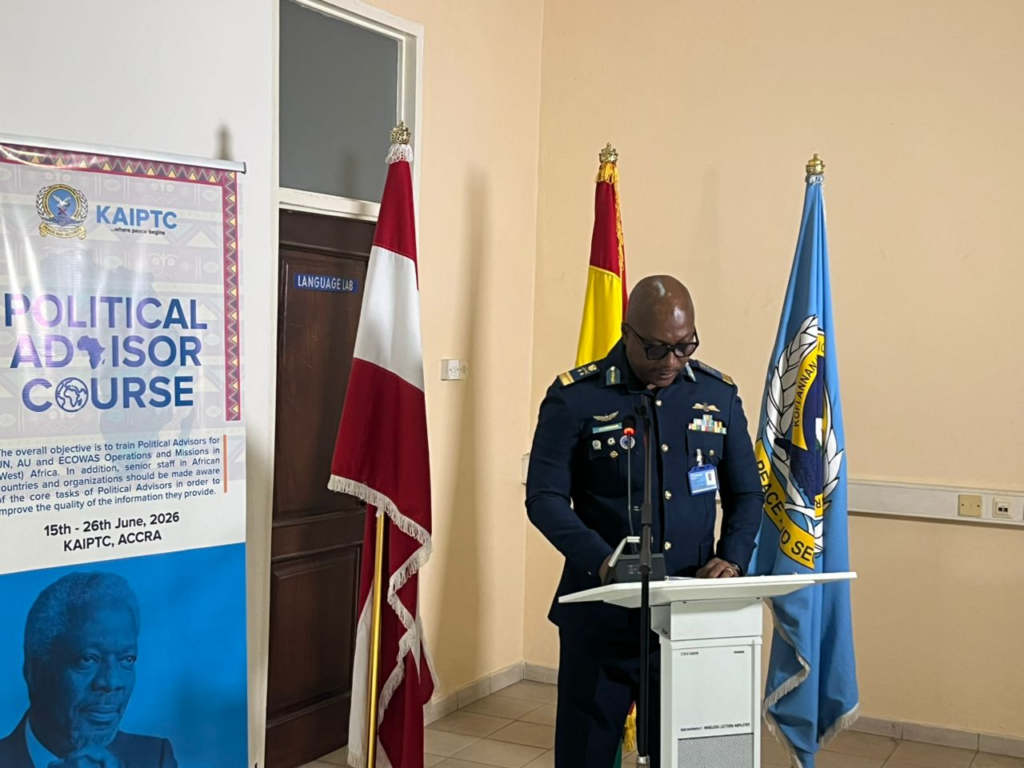
"It is both an honour and a privilege to join you this morning for the opening of the Political Advisor Course for Peace Support Operations in Africa 2026," he said, welcoming participants from across Africa and beyond.
The Commandant noted that the continent's security environment has undergone significant changes in recent years, driven by the spread of violent extremism, organised crime, political instability, humanitarian crises and cross-border security threats.
"The instability affecting parts of the Sahel, the rise of violent extremism, transnational crime, political transitions and growing humanitarian pressures continue to test the resilience of states and institutions throughout our region," he said.
According to Air Vice Marshal Akrong, the challenges facing Africa can no longer be addressed through military responses alone. Instead, they require integrated approaches that combine security interventions with political engagement, dialogue, mediation and strategic decision-making.
He cautioned that even relatively stable countries are vulnerable to the ripple effects of regional instability.
"Ghana, which is also exposed to these challenges and is already experiencing their initial effects, is not immune to these developments," he observed.
The Commandant stressed that strengthening preparedness, institutional resilience and conflict prevention mechanisms has become an urgent priority for governments and regional organisations alike.
Central to Air Vice Marshal Akrong's remarks was the growing importance of Political Advisors in contemporary peace support operations.
He argued that today's conflicts are increasingly shaped by political, economic, social and humanitarian factors, making political analysis and strategic foresight indispensable tools for mission success.
"In this environment, the role of the Political Advisor has never been more important," he said.
Political Advisors, he explained, help commanders, mission leaders and policymakers understand complex political environments, anticipate emerging risks and develop informed responses to crises.
Their work often involves mediation, negotiation, stakeholder engagement and strategic communication aimed at preventing conflicts from escalating.
The Commandant said the course would equip participants with practical skills in political analysis, negotiation, mediation, reporting, public diplomacy and strategic communication.
"These skills are indispensable in today's multidimensional operational environments, where military, political, humanitarian and development actors must work together to achieve sustainable peace," he stated.
He further encouraged participants to learn from one another, describing the diversity of professional and national experiences represented in the classroom as one of the programme's greatest assets.
"I encourage you to learn from one another. The diversity of experiences represented in this room is one of the greatest strengths of this programme," he remarked.
Air Vice Marshal Akrong stressed that peace remains the foundation upon which development, prosperity and security are built.
"Peace remains the foundation upon which security, prosperity and development are built," he said.
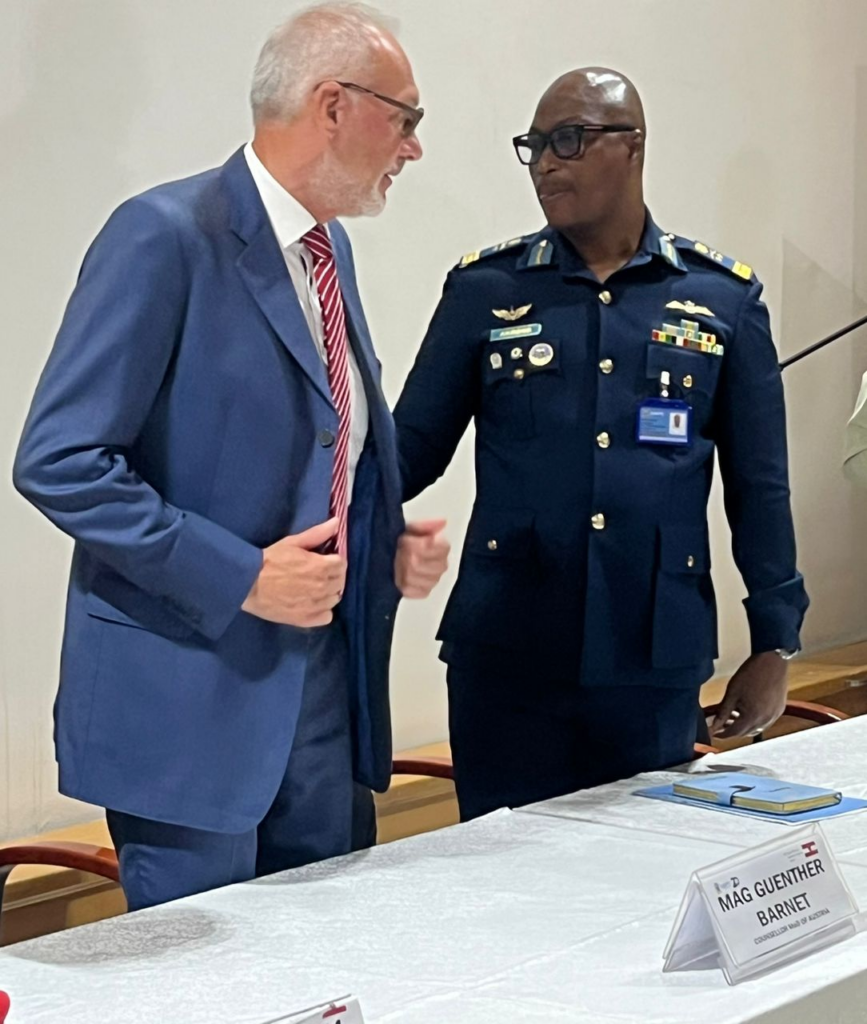
Also speaking at the ceremony, Mr Günther Barnet, Coordinator of the National Security Council in Austria's Ministry of Defence, reflected on the long-standing partnership between Austria and Ghana that gave birth to the Political Advisors Course.
According to Mr Barnet, discussions on establishing the programme began in 2015, leading to the inaugural course in 2017.
Since then, the initiative has become a flagship cooperation project between KAIPTC and the Austrian Ministry of Defence.
"This is a long-standing effort and collaboration between those two entities, the Kofi Annan International Peacekeeping Training Centre here in Ghana and the Austrian Ministry of Defence in Europe," he said.
The only interruption to the programme came in 2020, when the COVID-19 pandemic made it impossible to organise the course.
"The first year of COVID was the only year that we did not run the course because of circumstances that came from outside," he noted.
Mr Barnet expressed optimism that the collaboration would continue well into the future, with plans already being considered for the programme's tenth anniversary milestone in 2027.
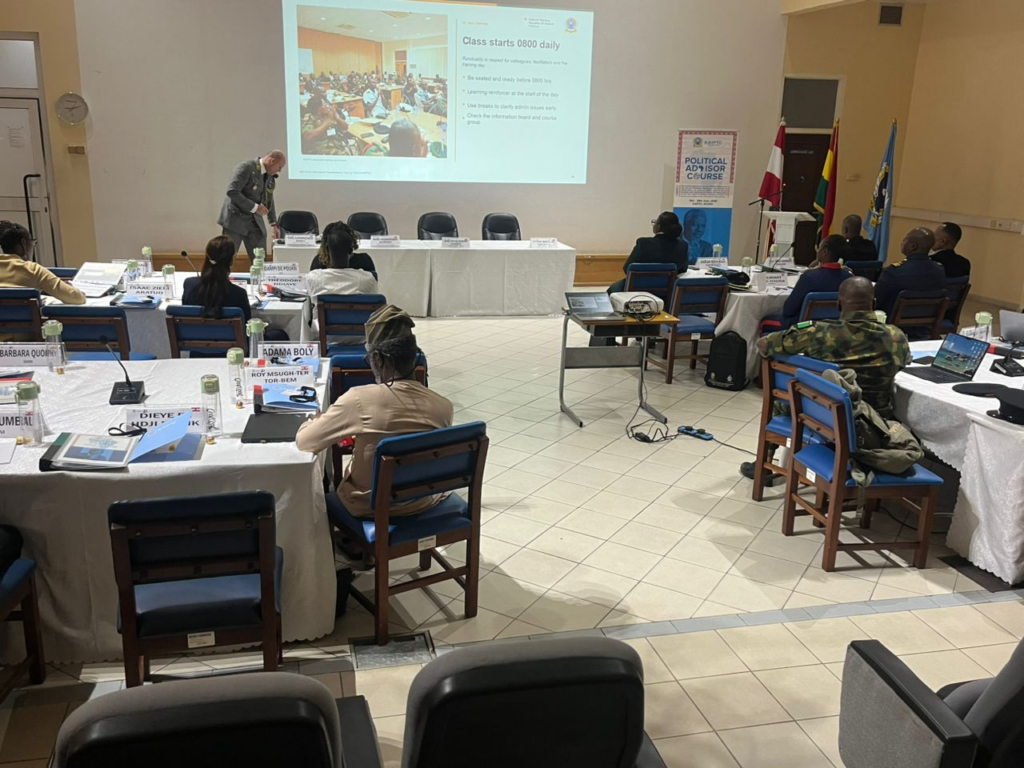
Reflecting on the circumstances that led to the creation of the course, Mr Barnet recalled a period when international optimism surrounded efforts to stabilise Mali and the wider Sahel region.
At the time, organisations such as the United Nations, African Union, ECOWAS and the European Union believed coordinated interventions could help restore security, strengthen governance and create conditions for sustainable development.
"We thought that we should collaboratively work together in the Sahel, starting with Mali and reaching out to neighbouring countries, to restore security, transform the country, develop the people and bring lasting peace," he said.
However, he acknowledged that developments over the past decade have demonstrated the immense complexity of modern conflicts.
The withdrawal of several international missions, shifting political alliances and the continued expansion of extremist groups and organised criminal networks have highlighted the limitations of conventional approaches to conflict management.
"So despite all our efforts, we didn't succeed until now," he admitted.
Despite these setbacks, Mr Barnet argued that the challenges facing the Sahel only reinforce the need for stronger political advisory capabilities and more informed decision-making.
A major theme of Mr Barnet's address was that effective political advising involves more than technical knowledge.
While Political Advisors must master analytical frameworks and conflict management tools, they must also understand how political leaders think and how decisions are made under pressure.
"Good political advising is not only about the skills and tools that you will hear about during this course. It is also the understanding of when should I advise what," he said.
He described political advising as both a professional discipline and an art, requiring practitioners to navigate complex political realities while helping decision-makers achieve better outcomes.
According to him, advisors often operate in situations where perfect solutions are unavailable, making it essential to focus on achieving practical improvements rather than ideal outcomes.
"You might think of something as the best decision ever, but with your advice you may only be able to achieve a better situation than the one that exists now," he explained.
Mr Barnet also used his remarks to reflect on broader global changes affecting international peace and security.
Drawing on the writings of Italian political philosopher Antonio Gramsci, he described the current international environment as a period of profound uncertainty.
Quoting Gramsci's famous observation that "the old world is dying, the new one is not born", Mr Barnet suggested that today's geopolitical transitions are creating opportunities for conflict, extremism and criminality to flourish.
He characterised the present era as "the time of monsters", warning that the challenges confronting Africa mirror wider global trends.
In such circumstances, he argued, the quality of political advice provided to leaders can have far-reaching consequences for peace and security.
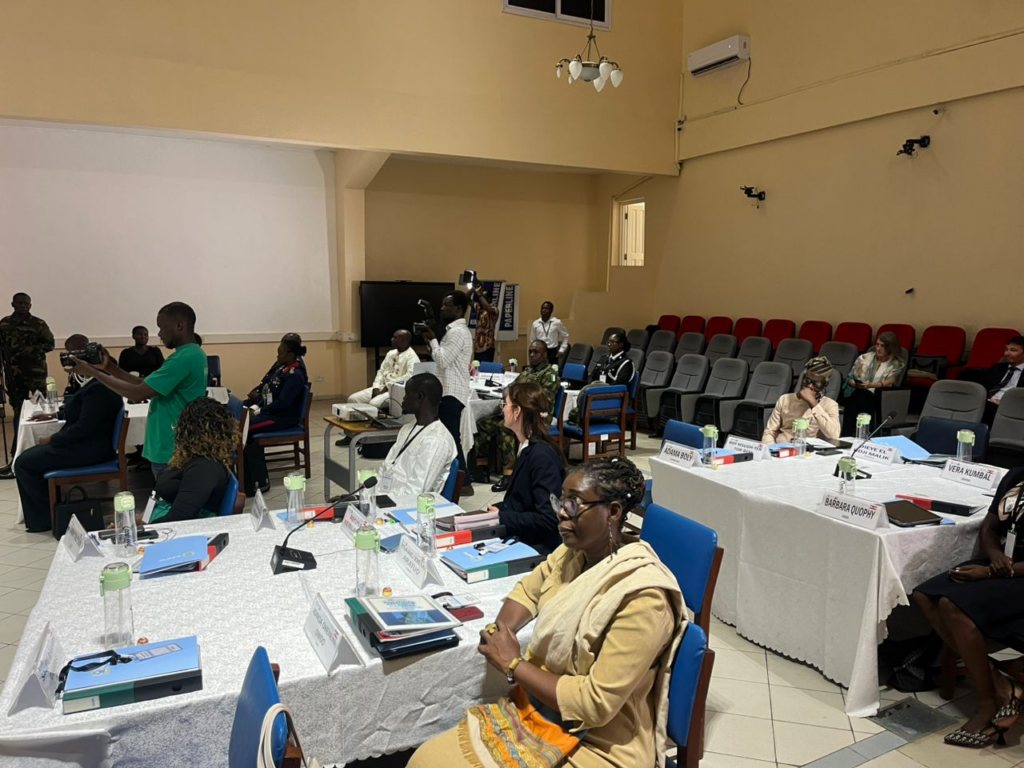
The Political Advisors Course brings together participants from West Africa, Central Africa, East Africa and the Sahel region, providing a platform for professional exchange, networking and practical learning.
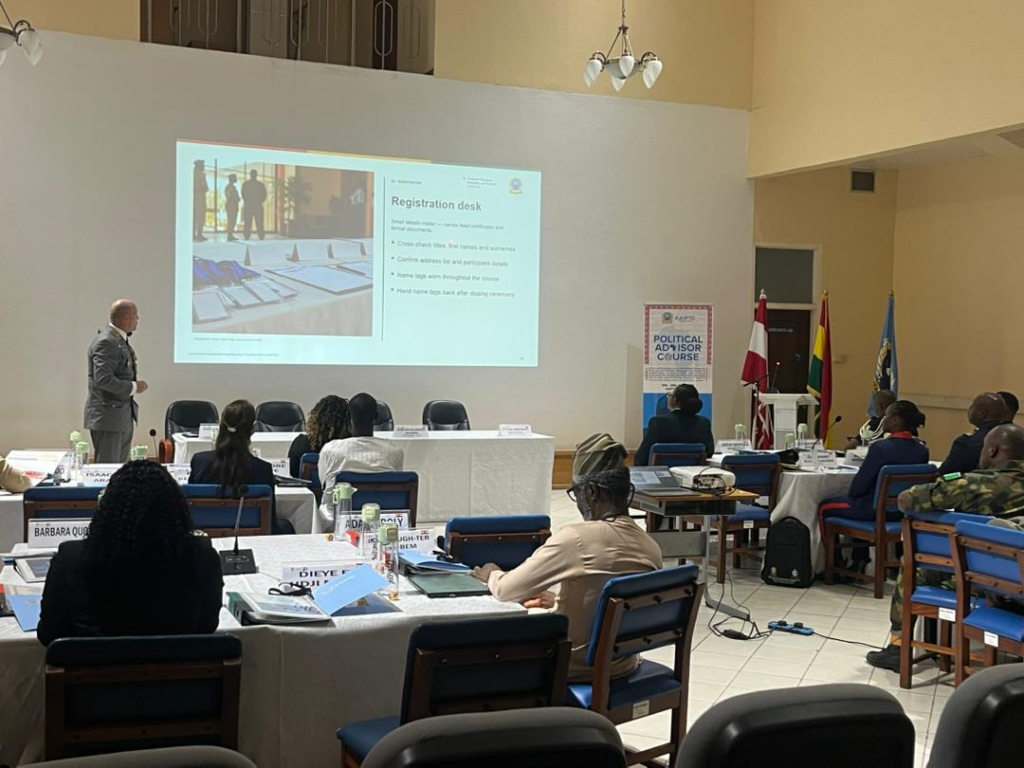
Organisers believe the programme will strengthen Africa's capacity to respond to emerging threats while enhancing the effectiveness of peace support missions operating across the continent.
He called on governments, regional organisations and international partners to continue investing in people and institutions capable of preventing conflict and promoting stability.
The opening ceremony highlighted the shared commitment of Ghana and Austria to building sustainable peace through knowledge, cooperation and professional development.
As participants begin two weeks of intensive training, organisers hope they will emerge better equipped to provide the political insight, strategic analysis and leadership support required to navigate Africa's increasingly complex security environment.
Formally opening the course, Mr Barnet expressed confidence that participants would gain valuable skills and practical knowledge that would strengthen peace operations across the continent.
"I formally declare this course open and hope we have some good two weeks together," he said.
Latest Stories
-
The Inconvenient Truth: We cannot pray for the cure while protecting the disease
14 minutes -
MTN Ghana trains civil society organisations on artificial intelligence
51 minutes -
GoldBod FX framework aims to make dollar supply predictable – Acheampong
1 hour -
How does a Ghanaian team make it to the BAL?
2 hours -
Ghana’s investment climate presents opportunities for industrial growth and job creation.
2 hours -
‘I paid thousands to a company for jobs that never came’
2 hours -
SSNIT intensifies informal sector enrolment drive with Techiman float
2 hours -
Ghana seeks long-term mining investments that benefit local communities – Armah-Kofi Buah
2 hours -
GHATOF demands compensation for 85 businesses affected by La Pleasure Beach demolition
2 hours -
Bono Regional Minister calls for investor education to drive economic growth
2 hours -
Ghana’s Ambassador to China, Kojo Bonsu, presents credentials to Nepalese President
3 hours -
Fairtrade Africa’s Cocoa Hubs Project strengthens rural service centres in cocoa-growing communities
3 hours -
MPs are not development officers – Edem Kpotosu
3 hours -
SEC cautions investors against fraudulent investment schemes
3 hours -
Land Ministry urges rCOMSDEP operators to reserve earnings for land reclamation
3 hours