

Audio By Carbonatix
For thousands of National Service Personnel, what appeared to be a simple option to opt out of paying for the National Service cloth has turned into a source of frustration. Many members of the 2025/26 service year say they clicked the "Cancel" button on the National Service Authority's (NSA) online portal, believing they had successfully withdrawn from the subscription.
Instead, the system failed to process their requests, leaving them enrolled and deductions continuing despite their attempts to opt out.
In this article, I explored the concerns of the personnel through in-person interviews, a randomised online survey, what the ‘deceptive button’ means in electronic transactions, and the larger conversation over whether or not the association members need a cloth, some of them claim to be “useless”.
“They’ve provided an option to cancel. But when you press the button, it doesn’t cancel. Not everyone wants the cloth. I just don’t need it,” Akosua Acheampong (not her real name) recounts her frustration using the online portal of the National Service Authority, as she hit the cancel button several times to terminate a subscription to pay for a cloth.
On June 17, 2026, Akosua logged into the NSA portal to check an activity and download her evaluation form. But she was struck by a notification at the ‘My Subscription’ column of the portal.
It indicated that she had subscribed to the National Service Personnel Association (NASPA) cloth, even though she did not subscribe or order to receive any cloth from the Authority nor the Association. This brought a bit of discomfort to her momentarily, as she began to recollect a possible instance of hitting a subscription button on the portal to purchase the cloth.
However, she couldn’t flash back to any moment.
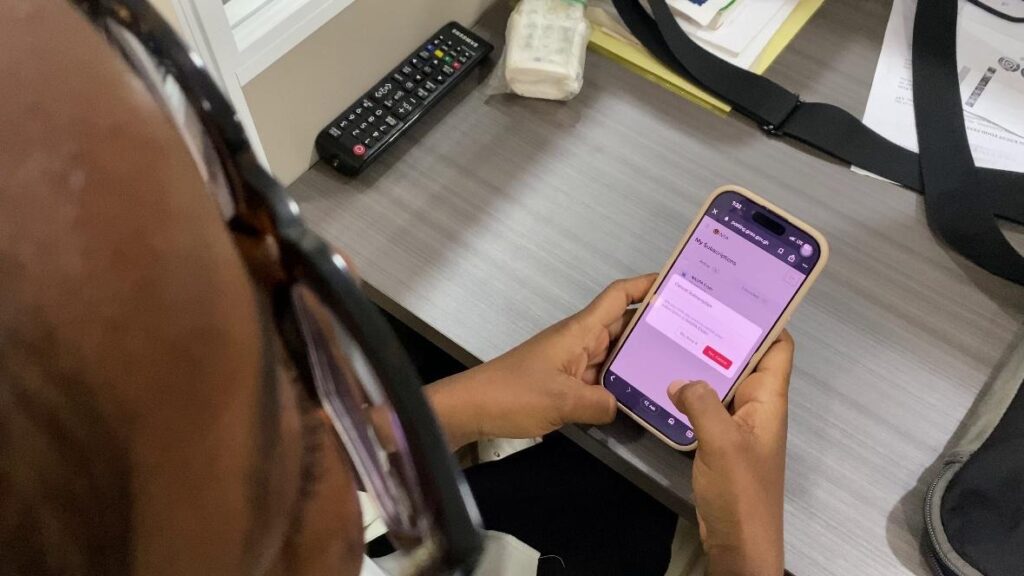
Photo Credit: Emmanuel Bright Quaicoe
Her uneasiness grew after noticing that a 100-cedi fee would be deducted from her monthly allowance of 715 cedis for unwittingly subscribing to own a cloth, she says, she doesn’t need.
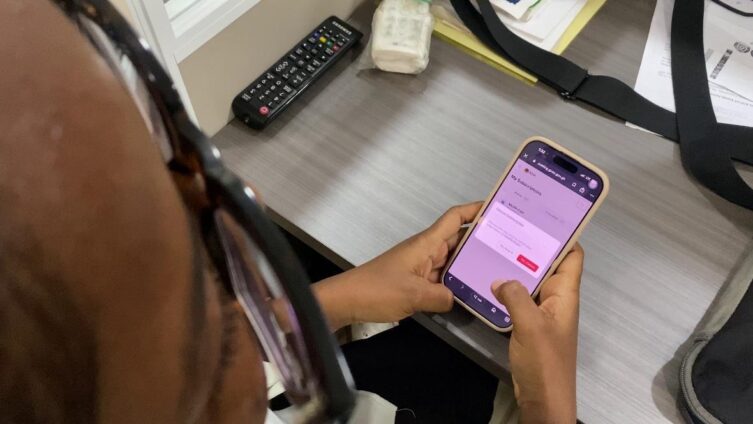
Seeing an option to cancel the subscription in the dialogue box of the ‘My Subscription’ page brought immediate and a tad of relief to her. She quickly tapped on the option to terminate the subscription, but to her dismay, it did not work.
After several attempts, the muscles of frustration on her face couldn’t straighten back to a sigh of relief. Her portal kept reading:
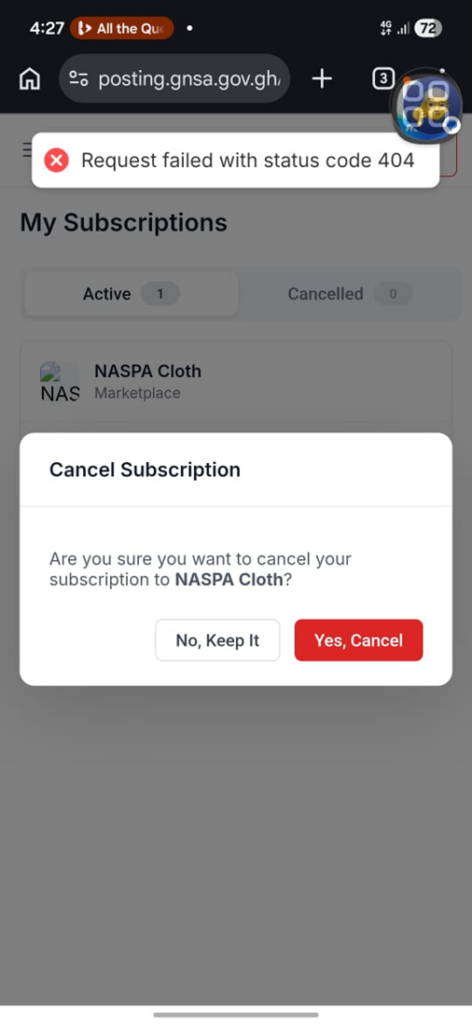
“Request failed with status code 404” – indicating she cannot unsubscribe.
Akosua thought she was alone. But her colleague, Belinda Gyasi (also not her real name), complained about a similar challenge when they met at the office. Belinda also attempted to activate the cancel option on the portal, but all to a fruitless exercise.
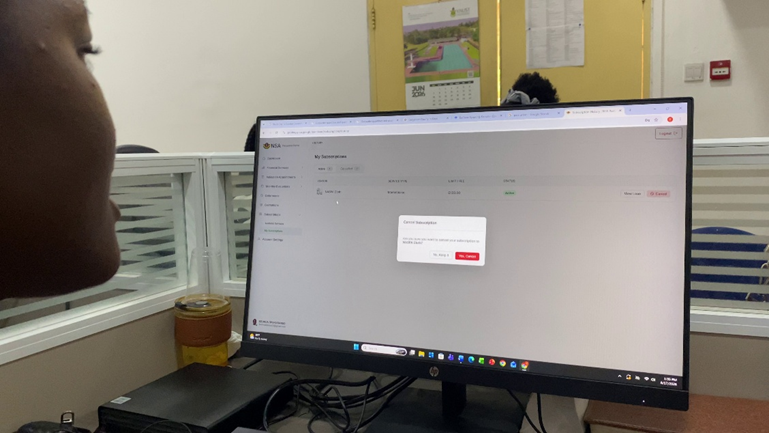
Photo Credit: Emmanuel Bright Quaicoe
Following several failed attempts, she reckoned the portal probably had technical challenges. So, she decided to continue with her attempts the following day, but nothing changed.
Even after trying for at least three days, she was unsuccessful in opting out.
‘Request failed with status code 404’
Akosua and Belinda’s quagmire mirrored that of many service personnel serving in public workplaces across various parts of the country. The technical challenge on the portal appeared not only to frustrate the two service personnel, but also a larger section of the 2025/2026 batch.
|Photo Credit: Akosua (Service Personnel)
A randomised online survey I conducted among the current service personnel showed many of them encountered the same frustrations. The study identified the number of personnel who experienced similar technical challenges, specifically asking whether or not the personnel were able to cancel the subscription after they saw the subscription on their portals.
It also sought to find out from the respondent if they were interested in possessing the NASPA cloth and their concerns over the cost. One hundred and twenty (120) personnel at various work stations across the country responded to the online survey.
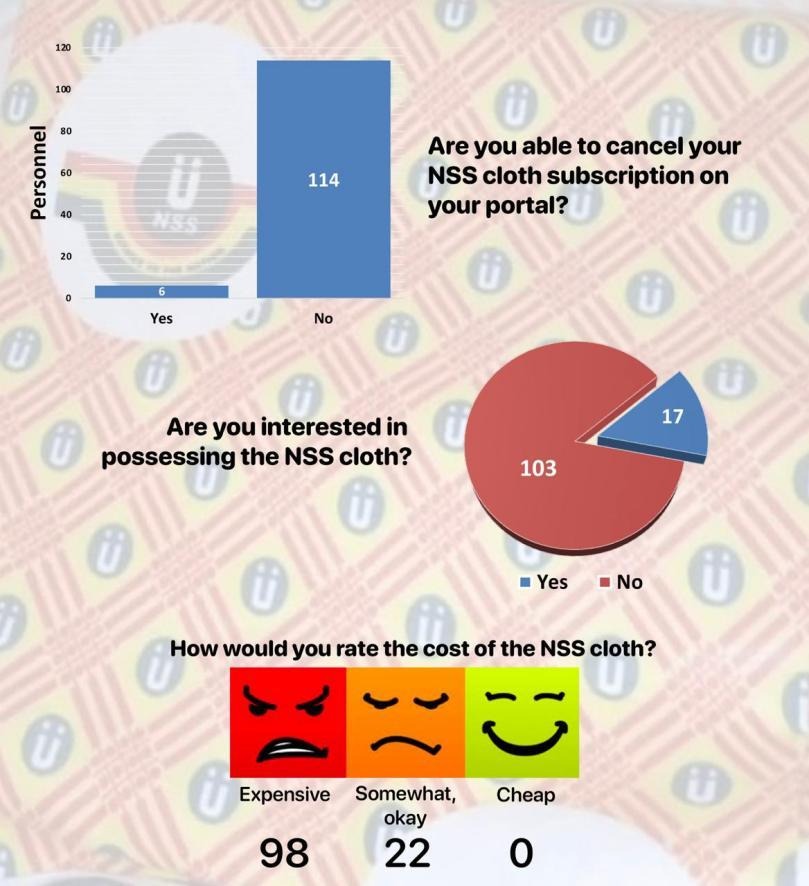
Similarly, as Akosua and Belinda, 114 of them were frustrated over their inability to cancel their subscriptions despite several attempts. Their portal kept reading “Request failed with status code 404”.
The challenge appeared to be a widespread dilemma amongst the thousands of service personnel who were eager to opt out.
The new NSA portal
In 2025, the National Service Authority launched a new online registration portal, requiring all prospective service personnel under the 2025/2026 service year to re-register. This follows a directive from President John Dramani Mahama for the Authority to develop a new website after suspected payroll fraud under the erstwhile administration of the Authority.
The portal was consequently developed and officially launched on October 7, 2025, in Accra by the NSA. The Director-General, Ruth Dela Seddoh, who led the unveiling of the digital platform, explained that the development of the portal came at no cost to the government as instructed by the President.
She further clarified that the portal was set up internally in collaboration with the National Identification Authority (NIA) and the Ghana Interbank Payment and Settlement Systems (GhIPPSS).
At a press conference, Ms Dela Seddoh emphasised that meticulous measures had been taken to ensure transparency and also tackle any technological challenges that expose the portal to vulnerabilities that could lead to any fraudulent activities.
“Management has taken stringent IT reforms and enhanced internal controls with proper banking trails to combat payroll fraud. To effect these changes and reforms, the old system was shut down and a new system centralized and robust management system, was developed and deployed to replace the old one,” she noted.
The Authority declared that an earlier registration in June 2025 with the old digital portal was ‘null and void’, compelling prospective service personnel to register with the new system.
But the recent challenges on the portal experienced by the personnel are rather leaving some cyber experts and web developers sceptical over whether or not the systems are indeed resilient against the menace of fraud.
The challenge persisted for weeks after initial complaints to the Authority.
“Status code 404” still shows
On June 30, 2026, I contacted the National Service Authority, particularly the Deputy Director in charge of Programs and Operations, Lieutenant Colonel Moses Dok Nach Kpeungu, to draw their attention to the observation.
He assured me of resolving the challenge.
“This hasn’t come to our attention. I will engage my IT personnel to resolve the issue,” he assured.
However, weeks after that engagement, the challenge “Status code 404” persisted after confirming from number of service personnel.
But could the technical challenge on the portal be overwhelmingly difficult to resolve by its developers at the Authority?
My enquiries from some experts in the field indicated that the nature of the technical complication required less time to address.
Software developer and Cybersecurity expert, Samuel Kwame Adomako, explains that such a technical glitch requires not a lengthy period to resolve. He intimated that the developer would need less than a week to address the challenge following the complaints.
“This shouldn’t take a week to resolve if it has been brought to their attention,” he said.
This is also corroborated by Kofi Adjei, a private Product Manager, who says: “This shouldn’t be any big issue to solve. It didn’t make sense from a user’s perspective that you gave me the option to cancel something, but if I try to do it, it doesn’t work. This should take a week or less to resolve”.
Unfair digital practice?
The Electronic Transactions Act, 2008 (Act 772) protects users against online manipulation, dark patterns, deceptive e-commerce, and predatory digital behaviour, which are essentially deemed unfair digital practices.
The Anti-Spam and Unsolicited Goods sections of the Act provide that companies or institutions cannot legally charge for unsolicited goods or force opt-ins. It provides that digital platforms must provide an easy, mandatory opt-out function.
The NSA platform provided an option to cancel, but it failed to function.
The Deputy Director of the Authority, Lt. Col. Kpeungu disagrees that the existing “Status code 404” challenge amounts to unfair digital practice.
“I don’t consider this an unfair digital practice, because this is something that has just been brought to our attention and we would resolve it,” he said.
He quizzed that: “If the cloth has been procured and you opt out, who pays for it?”
For Samuel Kwame Adomako, the early rollout of the platform, within less than three (3) months, without an effective test run, could have probably compromised its integrity.
He explains the new portal could have been run concurrently with the old portal to identify any inefficiencies with the newer portal, until ultimately phasing out the previous portal.
“The country rushed to roll out this system. Ideally, it should have been used simultaneously with the old system. We didn’t have time to test the new one to know its vulnerabilities or bugs technically,” he noted.
He continued that: “At least it should have been tested rigorously before it was rolled out. What we developers see during the development stage of software is different from what the user sees. We might feel that this shouldn’t be done by the user, but the user might go the extra mile of doing what you don’t want them to do. This portal was intended to fight the ghost names, so a lot of things should have been considered before rolling out”.
From my interrogations with the respondents, the crux of why many of the personnel were eager to hit on the displayed option to cancel their cloth subscription is over the “relevance of the NASPA cloth and fee charged”.
The 100-cedi NASPA cloth
For years now, the National Service Personnel Association (NASPA) distributes a mandatory branded fabric – the National Service Cloth – to service personnel working in public offices and agencies across various districts of the country.
According to the Immediate Past President of NASPA, Andy Amuaku, the decision was taken nearly two decades ago by the Congress – the highest decision-making body of the Association – for the personnel to purchase and wear the cloth.
“For the past 20 years, it’s a compulsory thing. Once Congress approves something, it is binding on every NSP across the country. People still have the interest to decline; others have the interest in getting the cloth. Once Congress approves, the NSP can’t do anything again, because it’s bound by the association’s constitution,” he noted.
The yellow and green patterned cloth with dominant display of the NSA logo is a uniform intended to identify service personnel and promote unity among members. However, its introduction has since faced backlash from some service personnel, with even recent personnel disagreeing to own one.
Their discontent has always stemmed from the cloth’s relevance and fee deductions. The price for the cloth has seen increases over the years.
The cost of fabric has moved from its initial 50 cedis charged in 2020 to 2022 to 100 cedis in 2025, as announced by the Association.
While some see the Cloth as a useful initiative, others are concerned about the impact of the deductions on their already modest allowances.
So, in the survey, I sought to understand if they were interested in possessing the cloth; their answers corroborated why many of them wanted to opt out of the subscriptions.
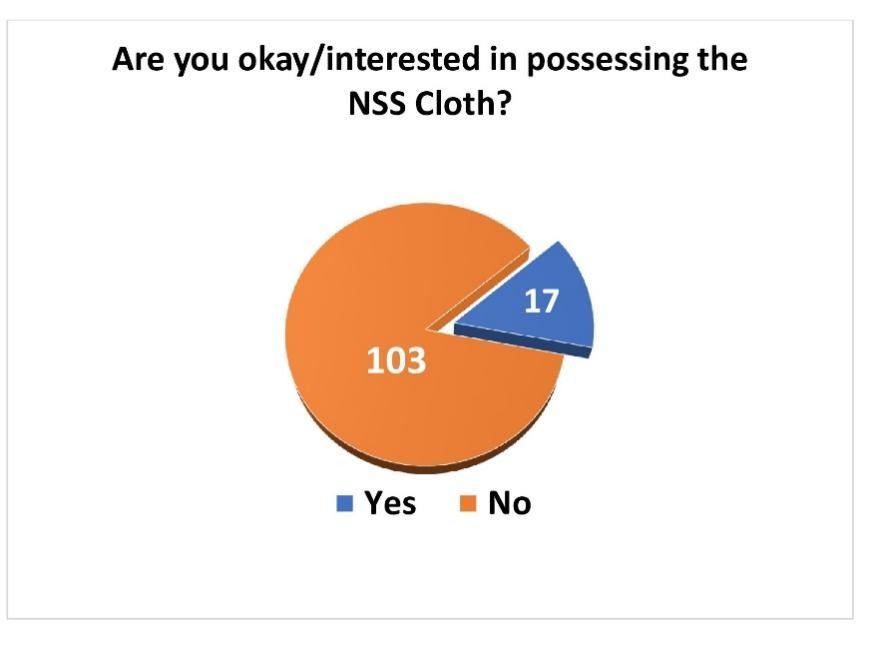
Source: Luv News Survey, 2026
A majority of them, numbering 103, indicated their non-interest in possessing the cloth, with 17 of the respondents opting to have the cloth. A significant number of them also deemed the cloth as costly, and believed a reduction was necessary.
Delayed cloth, relevance?
The cloth, according to leadership of the association, is intended to be worn ideally as a “Friday wear” and to any functions of the NASPA. However, to some past and current personnel, the relevance of the cloth is “highly questionable”.
They observe that the fabrics usually arrive during the dying days of the service year.
“We are almost ending the service; what would I need the cloth for?” Akosua bemoaned.
It is expected that the 2025/26 batch will end their service in either September or October, depending on their commencement dates. But as of now, a horde of them are yet to receive the cloth.
The Immediate Past NASPA President, Andy Amuaku, who was directly involved in this year’s procurement process of the cloth in consultation with the current leadership, disclosed that the delays were as a result of a change in the fabric design.
“The logo in the cloth used to be that of NSS, but now the logo has been changed to the NASPA logo. This caused the delays,” Mr Amuaku noted as he debunked claims of the service regularly delaying the disbursement of the cloth.
According to him, the national office of the Association began disbursement of the cloths to the various districts on Friday, June 19, 2026 and were expected to arrive at the regional level on the 22nd of June, 2026. He noted that all the yards of cloth have been dispatched to the regional offices for distribution to the personnel.
In an attempt to find out the use of the cloth, it was realised that many of the personnel who had received their cloth in previous years found other purposes for them.
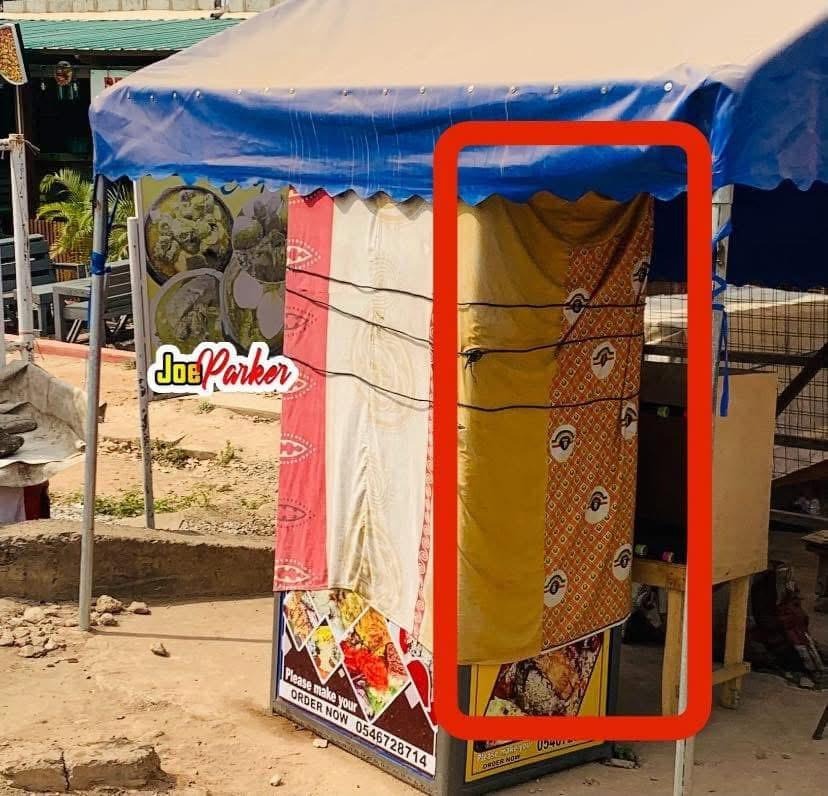
Source: Joe Parker on Facebook
In some cases, they had been turned into cloth covering ironing boards at home, while others found a rather ‘unpleasant’ purpose of using them as protective gear for their stalls.
This obvious trend of cloth usage among ex-service personnel raises concerns over whether the cloth is a need for the personnel.
So, I asked the respondents if they wished the NASPA and the NSA make the cloth optional. A significant number of them do not want the cloth to be made mandatory.
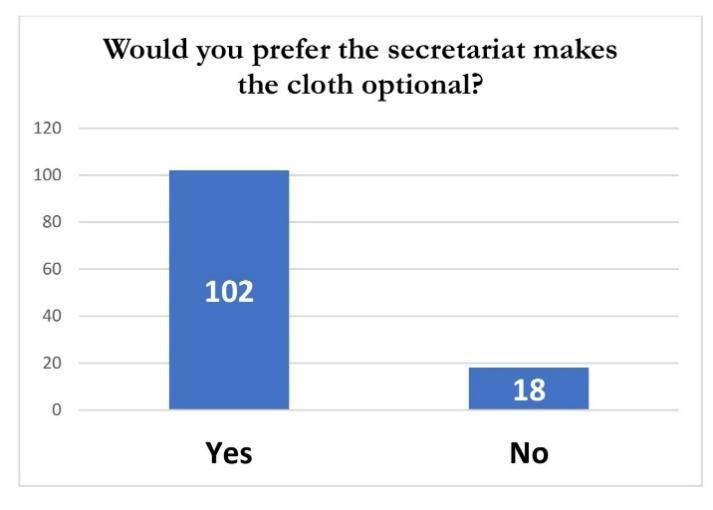
Procurement Specialist and Management Consultant, Kobina Ata-Bedu, believes nobody must be compelled to own a cloth, particularly when the laws of the country allow citizens to have a choice to associate.
“Why would anybody force anyone to buy a cloth they don’t want to? Nobody should be forced to buy a cloth at the end of the national service if they have no use for it?” he quizzed.
He elaborated that the relevance of the cloth must match its urgency for distribution to the personnel.
“If indeed it’s relevant, then they should be receiving it at the beginning of the service period and not at the end, because it’s of no use,” he added.
Deputy Director of NSA, Lt. Col. Kpeungu agrees.
“If you get it at the end of the service, then the essence of the cloth becomes useless. So, I agree that in principle they are supposed to get it at least at the beginning or middle part of the service,” he noted.
Recipe for corruption?
At least 80,000 personnel are expected to obtain their cloths by the end of the service period this year following the disbursement. However, there are sceptics over whether indeed everyone would receive them, although they would move to their regional offices for them.
Comments of past service personnel on social media platforms, particularly on Facebook, indicate that although they were deducted for the cloth, they never received the fabric.
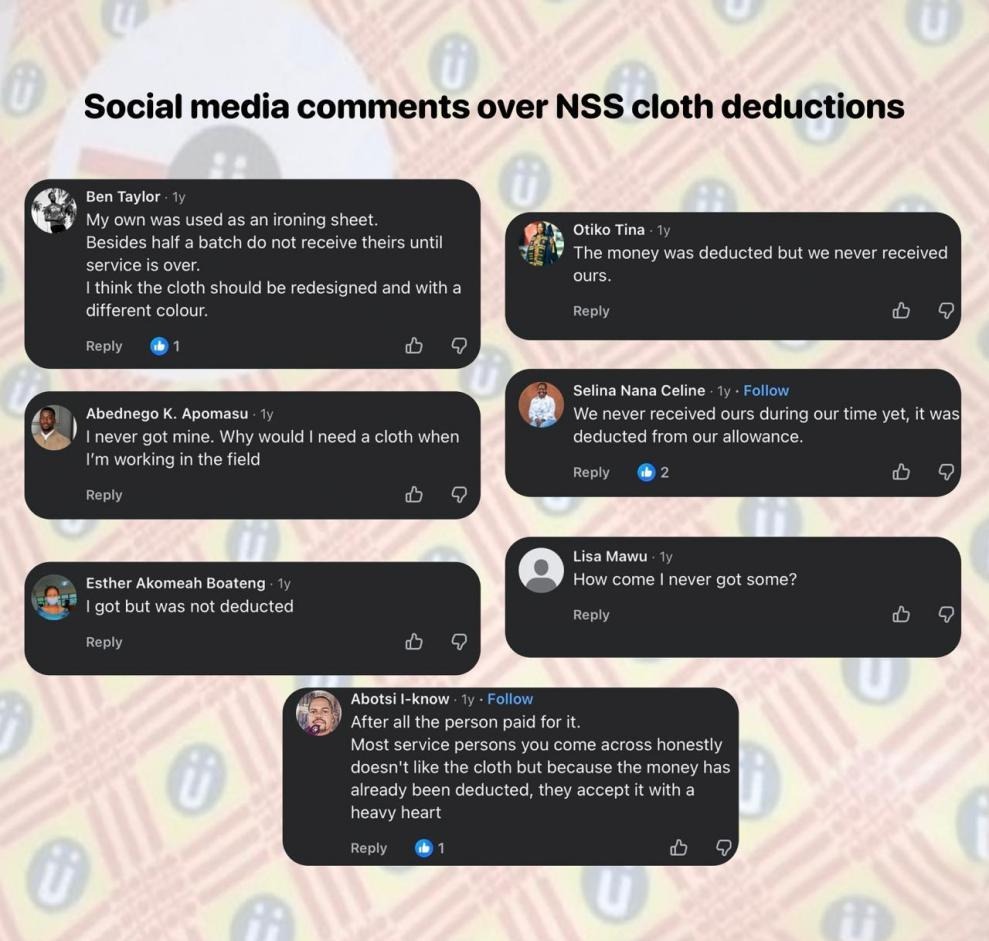
Procurement Specialist, Kobina Ata-Bedu, is convinced the deductions for the cloth are only a “recipe for fraud and corruption” but don’t serve the interest of the personnel.
“We all know it’s part of the process for skimming money from the service personnel. Something doesn’t sit right in this transaction. Once they end the service, how’re they going to get the fabric to them? Meanwhile, everyone will be deducted,” he noted.
Already, the Auditor-General in its technical and forensic report on the CSMP and Metric App of the NSA flagged that over 9.2 million cedis was paid to the Association between the period of 2017 and 2024 without formal agreements or memoranda of understanding between the Authority and the Association defining the terms, purpose, scope and conditions under which the funds were transferred.
According to the report, there was no evidence of accountability or retirement of the funds by NASPA leadership to justify how the monies were applied.
Mr Ata-Bedu suggests an immediate audit of the procurement and transactions of the NASPA cloth, given the past experiences.
“This is a recipe for fraud and corruption. So, we need the Auditor-General to go and look into this area,” he emphasised.
Automatic NASPA membership
All of these deductions by the Association have been premised on the NASPA Constitution, which ‘automatically’ makes all registered service personnel at post members of the association.
“Once you’ve been registered and deployed to do your national service, you automatically become a member of the Association [NASPA]. And every decision taken by Congress is binding on you,” Andy Amuaku, the former NASPA President, emphasises Article Six (6) of the National Service Personnel Association (NASPA) Constitution.
The constitution provides that membership of the association shall consist of “All Mandatory and voluntary service personnel officially posted and at post”, and all district, regional and national ex-officio members as well as honorary members.
But this begs the question of its constitutionality, as some service personnel believe their membership in the association infringes on their Freedom of Association as provided in the 1992 Constitution. A significant number of the personnel argue they shouldn’t be forced to be a part of an association which is not their choosing.
Private Legal Practitioner with Owusu Afriyie Chambers, Kwabena Gyamfi, who acknowledges that although an association could be a force in fighting for the welfare of its members, it cannot compel individuals to be a part of it, given the provisions of Article 21 clause (e) of the 1992 Constitution of Ghana.
“Even though it is a good thing to unite and to get a common front in fighting for the grievances of National Service personnel, I don’t think any association to have compulsory membership juxtaposed with Article 21 of the Constitution can stand the test of time. The law or policy compelling them to belong to the association automatically is in contravention of Article 21,” he noted.
He noted that the service personnel could renounce their membership as provided under the Constitution.
“As it is now, they have a cause for action. But first they must seek to renounce their membership, which right is guaranteed under the Freedom of Association. Once they do that, then they will be free from all those deductions,” he advised.
It’s now established that a majority of the service personnel are unhappy over the decision to procure and disburse the NASPA cloth to them. Therefore, it is only appropriate that the Congress – the highest NASPA body – reconsiders and assesses the needs of the members while the Authority also enhances technological structures to protect the new system against any fraudulent threats. Additionally, questions over the automatic membership in the Association are concerns the Authority and other stakeholders should consider reviewing.
Latest Stories
-
Government has improved sanitation in one-and-a-half years — Salaga South MP
2 hours -
Nkwanta North Assembly to appear before Parliament over DACF sanitation spending
3 hours -
Mourinho prints out ‘red card’ incidents after Real lose derby
3 hours -
Atletico beat 10-man Real in feisty Madrid derby
3 hours -
Twelve Tribes of Israel Ghana to mark 40 years with anniversary celebration
4 hours -
GPL 2026/27: Hearts held by Bechem as Kotoko, Samartex share spoils
4 hours -
My Story (Kwaku Antwi-Boasiako)
4 hours -
We expect growth rate to re-accelerate in second-half of 2026 – IC Insights
4 hours -
The ungodliness and unrighteousness underlying the National Cathedral mess!
4 hours -
T-bills auction: Government fails to achieve target; yield on 91-day-bill remains unchanged
4 hours -
It’s Ghana’s shame to denigrate Nkrumah when the whole world honours him as African of the Century – Asiedu Nketiah
5 hours -
No other nationalist can compare to Nkrumah – Asiedu Nketiah
5 hours -
Collateral Registry: Foreign banks accounted for GH¢19.9bn of secured credit in quarter 2, 2026
5 hours -
This government should expect scrutiny – Asiedu Nketiah
5 hours -
Two-year-old girl dies in domestic fire at Cantonments
6 hours