

Audio By Carbonatix
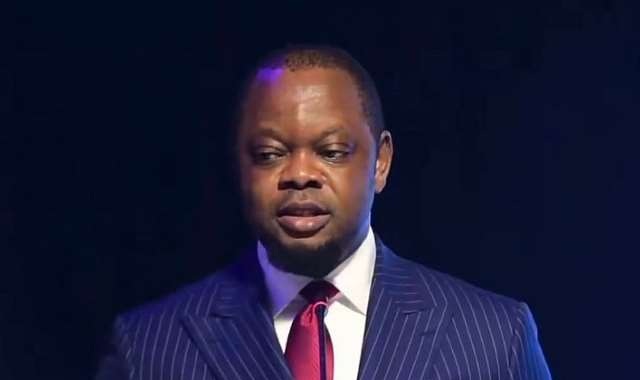
Deputy Attorney-General and Minister for Justice, Dr Justice Srem-Sai, has reiterated that the Office of the Special Prosecutor (OSP) was established through ordinary legislation under Article 106 of the 1992 Constitution and not through a constitutional amendment process.
He said the OSP Act, being an ordinary Act of Parliament, cannot alter the constitutional powers of the Attorney-General or create an independent prosecutorial authority outside the framework provided by the Constitution.
Speaking on The Law with Samson Lardy Anyenini on JoyNews on Sunday, July 26, Dr Srem-Sai said Parliament followed the ordinary legislative procedure in passing the OSP Act.
"The OSP Act is an ordinary legislation passed under Article 106, not under the constitutional amendment procedures."
According to him, the nature of the legislation means it cannot be interpreted as having amended Article 88 of the Constitution, which gives the Attorney-General authority over public prosecutions.
"It is difficult for me to say or to accept the view that the OSP Act has changed the provision of the Constitution, especially when the provision that we are even standing on says ‘subject to’."
READ ALSO: High Court refuses OSP application to stay ruling halting independent prosecutions
Supreme Court sets July 29 for verdict on powers of OSP
The Supreme Court will on July 29, 2026, deliver judgment in a suit challenging the prosecutorial powers of the Office of the Special Prosecutor (OSP).
A seven-member panel, chaired by Chief Justice Paul Baffoe-Bonnie, fixed the date after parties concluded arguments in the case brought by private legal practitioner, Noah Adamtey.
Mr Adamtey is challenging the constitutionality of the Office of the Special Prosecutor Act, 2017 (Act 959), arguing that it unlawfully grants the OSP independent prosecutorial authority.
He is seeking a declaration that provisions of the Act conferring original and insulated prosecutorial powers on the OSP are inconsistent with Articles 1 (2), 88 (3) and (4), 93 (2) and 296 of the 1992 Constitution and are, therefore, null and void.
He further contends that Sections 3 (3) and 4 of Act 959, which make the OSP independent of the Attorney-General in initiating, conducting and terminating prosecutions, which violate the Constitution.
The Attorney-General, represented by Deputy Attorney-General, Dr Justice Srem-Sai, maintains that Article 88 (3) vests prosecutorial authority solely in the Attorney-General. He argues that Parliament acted unconstitutionally by requiring the Attorney-General to delegate part of those powers to the OSP.
According to him, the law effectively limits the Attorney-General’s constitutional responsibility for prosecuting criminal offences by carving out cases for the OSP.
In January, the Supreme Court unanimously rejected an application by the OSP to join the case as an interested party. The court held that the constitutional issues raised could be fully determined between the plaintiff and the Attorney-General without the OSP’s direct participation.
However, the court accepted an application by 14 civil society organisations to join the proceedings. Their lawyer, Kizito Beyuo, argued that the groups played a key role in the establishment of the OSP and possess expertise that could assist the court.
The organisations, including Transparency International Ghana, CDD-Ghana, IMANI Africa and Ghana Anti-Corruption Coalition, say their intervention is motivated by a commitment to constitutionalism, accountability, anti-corruption and the preservation of independent public institutions.
Latest Stories
-
National Peace Council urges investment in youth to sustain Ghana’s peace
19 minutes -
Afenyo-Markin urges youth to speak up against injustice
30 minutes -
CAF annuls Edo Queens victory, orders WAFU B final to resume from extra time
52 minutes -
Interior Minister urges traditional authorities to enforce anti-bushfire bye-laws
54 minutes -
3rd Republic Bank-JoyNews Habitat Fair Clinic ends on a high note after three days of strong patronage
55 minutes -
Ten climbers missing after avalanche hits Himalayan base camp
2 hours -
NPP had more permanent fuel relief measures than current GH¢2 diesel cut – Amin Adam
2 hours -
Photos from the 3rd Republic Bank-JoyNews Habitat Fair Clinic
2 hours -
Ethiopia’s army promises restraint amid fears of new civil war
2 hours -
Amin Adam calls for review of fuel taxes as diesel prices remain above GH¢18
3 hours -
World Vision Ghana, Ahafo districts sign MoU for universal WASH coverage
3 hours -
When the gold engine stutters: What Ghana’s Cedi and reserves are telling us about the new economic architecture
3 hours -
Two reportedly die after being trapped in mining pit at Juaboso
4 hours -
Petrosol cleans up Wa Municipal Hospital, to donate medical equipment
4 hours -
‘If NPP was ‘insensitive’ over fuel prices, NDC must accept same description now’ — Amin Adam
4 hours